Find Your UK Ring Size: Easy Methods, Conversion Chart & Practical Tips
-

- April 07th, 2026
- 332 views

Get a free topical map and start building content authority today.
Finding the right ring size avoids returns, resizing delays, and disappointment. This UK ring size guide explains how sizes work in the UK, shows quick at-home measurement methods, and includes a clear conversion chart so purchases fit first time.
- Most UK ring sizes are letter-based (A–Z+). Measure finger circumference or use a ring that already fits.
- Best methods: jeweller’s sizing, printable ring sizer or measuring string at home, and conversion chart checks.
- Allow for seasonal swelling, ring width, and dominant hand differences.
- Detected intent: Informational
UK ring size guide: Quick overview and what the letters mean
The UK ring size guide uses letters (A, B, C … Z, Z+1) to label internal circumference or diameter ranges; sizes are not the same as US numeric sizes. For a reliable fit, measure finger circumference in millimetres, then compare to a ring size chart. This article includes a practical conversion table and step-by-step methods to measure or convert sizes.
How UK sizes relate to measurements and conversions
UK sizes are based on internal circumference. Two useful secondary keywords appear in practice here: a ring size chart UK and simple ways to measure ring size at home. The key conversions used by jewellers map letter sizes to internal circumference (mm) and diameter (mm), and to international sizes (US, EU).
Quick conversion table (common sizes)
Use this short reference to convert measured circumference to a UK letter. For precise purchases, check the seller’s own chart.
| UK Size | Internal Circumference (mm) | Approx. US Size |
|---|---|---|
| J | 50.0 | 5 |
| L | 52.0 | 6 |
| N | 54.5 | 7 |
| P | 56.5 | 8 |
Local jewellers and retailers sometimes use slightly different conversions; when precision matters, ask for the internal circumference in millimetres.
Step-by-step: Measure ring size at home (3 reliable methods)
Method A — Use an existing ring
Place the ring over a ruler and measure the internal diameter in millimetres. Convert diameter to circumference (circumference = diameter × π) or use the conversion table. This works well for rings that already fit the intended finger.
Method B — Paper or string method (measure finger circumference)
- Wrap a thin strip of paper or non-stretchy string snugly around the base of the finger.
- Mark where it overlaps, then measure that length with a millimetre ruler.
- Compare the mm value to the conversion chart above to find the UK letter size.
Method C — Printable ring sizer or smartphone apps
Printable sizers and many jewellers provide a PDF ring sizer. Confirm the print scale with a ruler before use. Smartphone apps can help but verify with a physical measurement for accuracy.
S.I.Z.E. checklist: A simple framework for accurate ring buying
Use the S.I.Z.E. checklist to reduce errors when measuring or ordering:
- Select the correct finger and time: measure at the end of the day when fingers are warm.
- Inspect existing rings: measure internal diameter of a well-fitting ring if available.
- Zero in on width: remember wider rings need a slightly larger size.
- Evaluate and re-measure if unsure: measure twice on different days before ordering.
Practical example: Buying an engagement ring
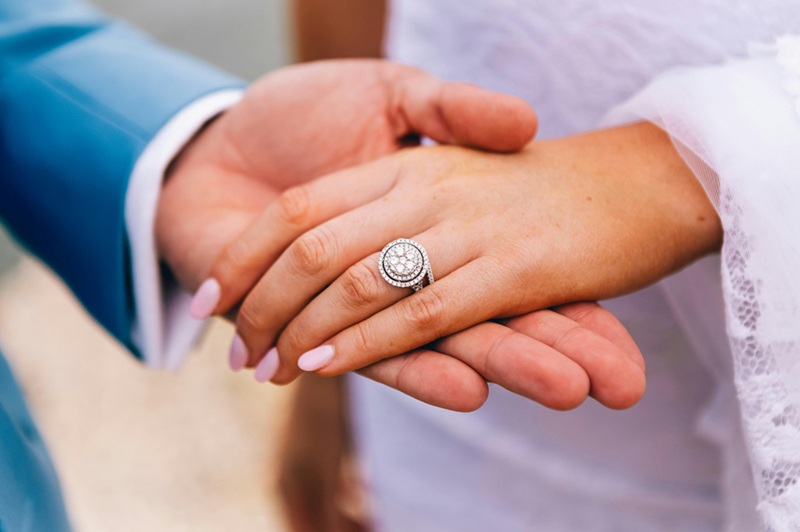
Scenario: A purchase is planned as a surprise. An existing ring fitted to the correct finger measures 18.1 mm internal diameter. Diameter × π = 18.1 × 3.1416 ≈ 56.9 mm circumference. The conversion table shows this is about a UK P. To be safe, confirm with a jeweller—P or P½ are common choices depending on width.
Practical tips
- Measure at the end of the day and when warm—fingers shrink when cold.
- Allow 0.5–1 full size up for very wide bands (6 mm+).
- If buying as a surprise, borrow a ring from the target finger for measurement if possible.
- Check the seller’s return or resizing policy before purchase.
Common mistakes and trade-offs
Common mistakes include relying on a single quick measurement, using a stretchable string, or ignoring ring width. Trade-offs: measuring at home is convenient but less accurate than a professional sizing. Buying slightly larger reduces the risk of a tight ring but may feel loose on thin fingers.
Where to get professional help and standards reference
For critical purchases (expensive stones, heirlooms), a jeweller’s sizing mandrel gives better accuracy. Jewellery retailers and independent jewellers use standard measuring tools. For industry standards and best-practice references, see the British Standards Institution: British Standards Institution (BSI).
Core cluster questions (use these as link targets or further articles)
- How to measure ring size at home without a ring?
- What is the difference between UK and US ring sizes?
- How does ring width affect the size needed?
- Can a ring be resized and what sizes are adjustable?
- How accurate are printable ring sizers compared to jeweller measurement?
Closing checklist before ordering
- Re-measure finger twice, different times of day.
- Confirm seller’s measurement system and return/resizing policy.
- Consider band width and any future resizing limits.
What is the UK ring size guide and how to use it?
The UK ring size guide maps letter sizes to internal circumference and diameter measurements. Measure finger circumference in millimetres or measure the internal diameter of a ring that fits, then use a conversion table to find the correct UK letter size.
Can a ring be resized after purchase?
Many rings can be resized up or down by one or two sizes depending on the metal and design. Complex settings, inlays, or certain metals (tungsten, some titanium) may be difficult or impossible to resize—check with a jeweller first.
How accurate is measuring with string or paper?
String or paper methods are accurate to about half a size when done carefully. Use a non-stretch material, mark precisely, and measure with a millimetre ruler. For best accuracy, verify with a jeweller’s mandrel.
How should seasonal swelling or body changes influence size choice?
Finger size varies with temperature, activity, and health. Measure when fingers are warm and avoid ordering a very tight fit. Allow slightly more room in summer or if weight fluctuation is expected.
How do UK ring sizes compare internationally?
UK sizes are letter-based and differ from US numerical sizes and European numeric systems. Always convert using a trusted chart and, when possible, request measurements in millimetres from the retailer for clarity.