How to Start Preparing for the IELTS Exam
-

- Published Updated
- 2,118 views
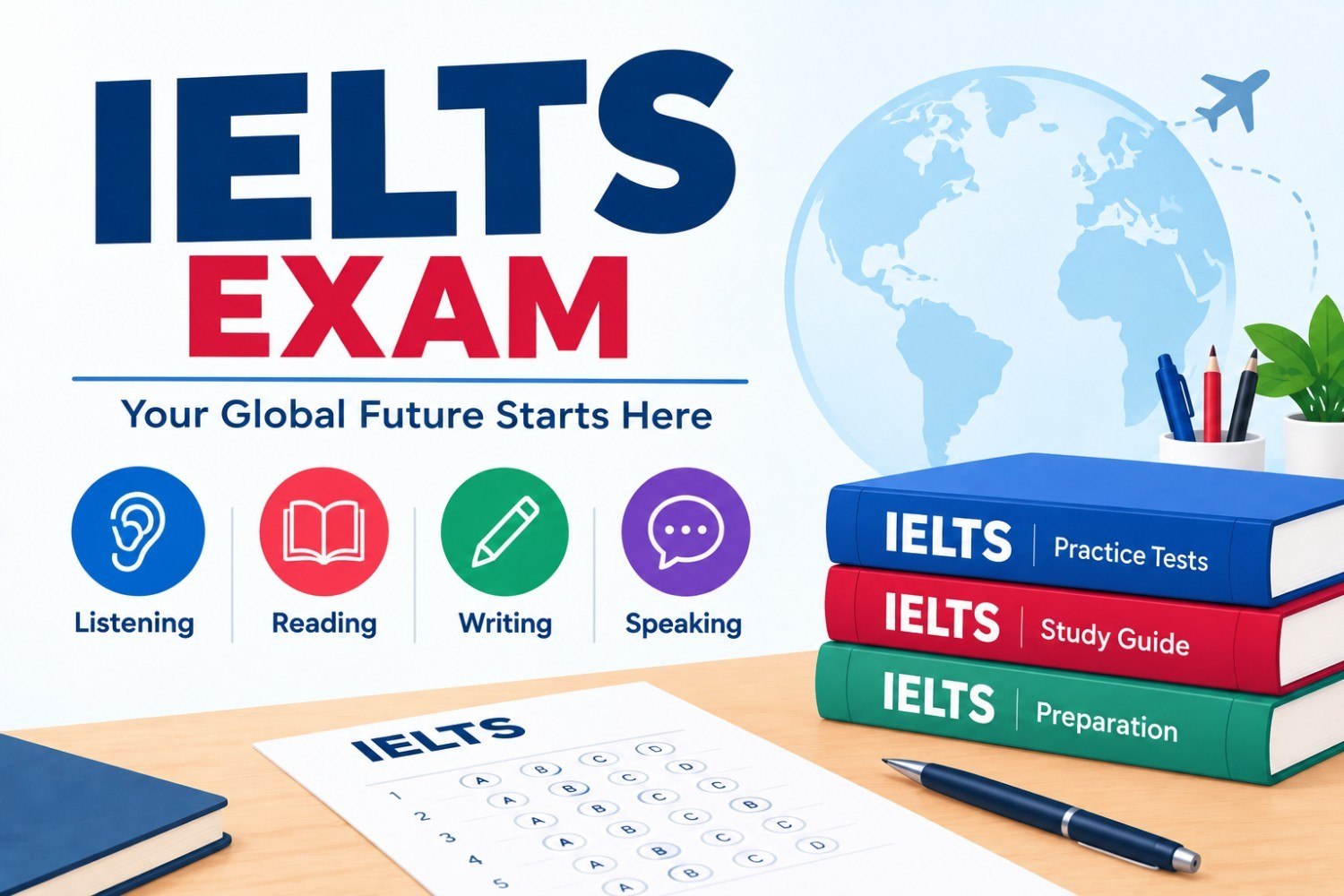
Starting preparation in the right way can make IELTS study easier to manage. The IELTS Exam checks four language skills: Listening, Reading, Writing, and Speaking. Students should understand these sections before choosing study material or making a timetable. It is also important to know whether they need IELTS Academic or IELTS General Training, depending on their purpose. Preparation does not have to begin with difficult practice tests. A better starting point is to understand the test, check your current English level, identify weak areas, and then build a regular study routine around them.
Understand Which IELTS Test You Need
The first step is to confirm which IELTS test you should take. IELTS Academic and IELTS General Training have different purposes and some differences in their test content.
Students planning to study at a university or college generally need to check whether IELTS Academic is accepted for their course. Those taking the test for other purposes should check the requirements of the organization or institution they are applying to.
Always confirm the required test type before starting preparation.
Learn the Four Test Sections
Before practicing questions, understand what each section involves.
Listening
The Listening section includes recordings followed by questions. Students need to listen carefully and identify specific information while keeping up with the recording.
Regular listening practice can help students become more comfortable with different conversations and accents.
Reading
The Reading section tests how well students understand written information. Questions may ask students to find details, understand ideas, or identify information in passages.
Reading newspapers, articles, and other suitable English material can help students practice understanding information quickly.
Writing
The Writing section requires students to produce written responses based on the given tasks. Organization, vocabulary, grammar, and clarity are important parts of written communication.
Students should practice writing regularly rather than waiting until the final stage of preparation.
Speaking
The Speaking section involves a conversation with an examiner. Students may need to answer questions, speak about a topic, and discuss ideas.
Speaking English regularly can help students become more comfortable expressing their thoughts clearly.
Take a Starting Practice Test
Once you understand the format, take a practice test. Do not worry if the first result is lower than your expected score.
The purpose of an initial test is to find your starting point. Review the answers afterward and note which question types caused difficulty.
This gives you a clearer idea of where your preparation should begin.
Identify Your Weak Areas
Not every student needs to spend the same amount of time on every section. One student may be comfortable with Listening but struggle with Writing, while another may need more Reading practice.
Make a simple list of your stronger and weaker areas. Then divide your study time accordingly.
Spending more time on a weak area can make your preparation more focused.
Build a Simple Daily Routine
IELTS preparation works better when studying becomes a regular part of your day. You do not need to study every section for several hours at once.
A simple routine could include:
- Listening practice
- Reading practice
- Vocabulary review
- Writing practice
- Speaking practice
The amount of time can depend on your schedule. What matters is following the routine consistently.
Improve Your English Through Daily Reading
Reading regularly can help you become more familiar with English sentence structures, vocabulary, and different types of information.
Choose material that you can understand without constantly checking a dictionary. Read articles, news reports, essays, or other suitable English content.
While reading, note useful words and phrases, but focus on understanding how they are used rather than memorizing long word lists.
Practice Listening Without Looking at the Text
Listening practice should involve more than playing an audio recording in the background. Listen carefully and try to identify important details.
After completing a practice exercise, check your answers and review the parts you missed. If necessary, listen again to understand why you could not catch the information the first time.
This can help you notice problems with speed, pronunciation, or unfamiliar words.
Start Writing From the Beginning
Students should not leave Writing preparation until the last few weeks. Start with short, organized responses and gradually work toward completing full tasks.
After writing, check your grammar, spelling, sentence structure, and organization. If possible, ask a teacher or experienced person to review your work and point out areas that need improvement.
Practice Speaking Every Day
Speaking practice can be done even when another person is not available. Choose a familiar topic and speak about it for a few minutes.
You can record yourself and listen to the recording afterward. Check whether your ideas are clear and whether you pause too often while trying to find words.
Regular practice can make speaking feel more natural over time.
Learn From Your Mistakes
Keeping a mistake record is useful during IELTS preparation. Write down questions you answered incorrectly and note what caused the mistake.
For example, you may have:
- Misread the question
- Misspelled a word
- Used an incorrect grammar structure
- Missed a detail in Listening
- Misunderstood a Reading passage
Review these mistakes regularly instead of simply moving on to new questions.
Use Practice Tests at the Right Time
Practice tests are useful, but taking them every day at the beginning may not be the best use of study time. First, build your understanding of the sections and question types.
As your test date approaches, include more complete practice tests in your routine. Try to complete them under conditions similar to the actual test.
Reviewing the results is important because it tells you what needs more work.
Set a Test Date After Checking Your Preparation
Students should consider their current English level, available study time, and application deadlines before selecting a test date.
Do not choose a date only because it is convenient. Make sure you have enough preparation time and check the score requirements and deadlines of the organization or institution you are applying to.
Choose Study Resources Carefully
There are many IELTS books, websites, videos, practice tests, and courses available. Students do not need to use everything.
Start with reliable resources that match the IELTS test you are taking. Too many resources can make preparation difficult to organize.
Choose a smaller set of useful materials and use them properly before adding more.
Review Your Progress Each Week
At the end of each week, spend a few minutes reviewing your preparation. Check which sections you practiced, which mistakes appeared repeatedly, and which areas improved.
If one part of your plan is not working, change it. A study plan should help you prepare, not make preparation unnecessarily difficult.
Conclusion
Preparing for the IELTS Exam should begin with understanding the test format, checking your current level, identifying weak areas, and creating a realistic study routine. Students should give attention to Listening, Reading, Writing, and Speaking instead of focusing on only one skill.
Regular practice, careful review of mistakes, daily English use, and suitable study resources can make preparation more organized. Most importantly, students should choose their test date after considering their preparation level and the requirements of the institution or organization they are applying to.
Get in touch:-
Company Name: Ooshas Prep
Phone no: +91- 9166146538
Email: [email protected]
Website: https://www.ooshasprep.com/
Address: Chennai, Tamil Nadu, India