What Matters Most When Building an iOS Application?
-

- Published Updated
- 51 views
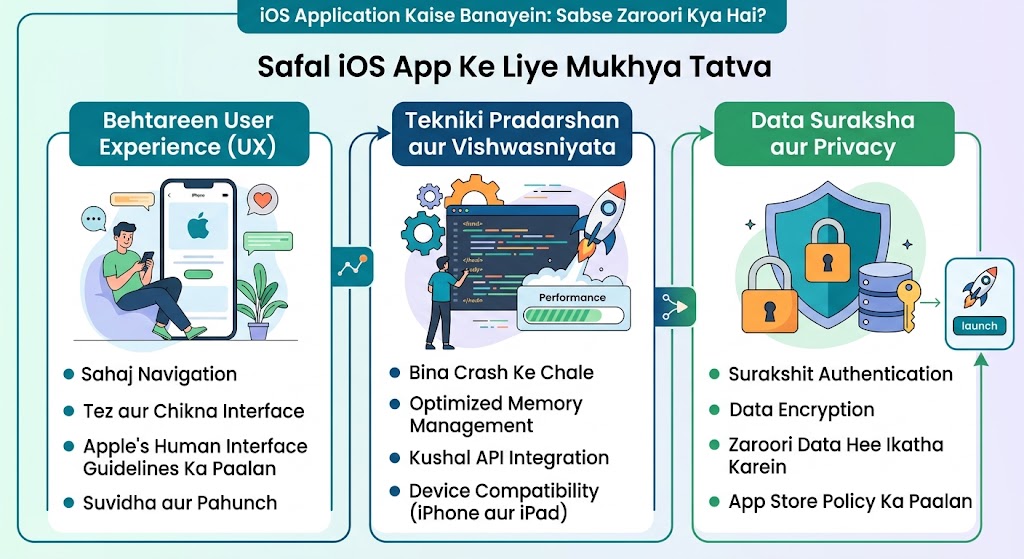
Building a successful iOS application requires more than an attractive interface or a collection of useful features. A good app should provide a smooth user experience, work reliably across supported Apple devices, protect user information, and remain easy to maintain after launch. Businesses planning to invest in mobile technology need to consider these factors before development begins. Careful planning can help reduce technical issues, improve customer satisfaction, and create an application that supports long-term business goals.
1. User-Friendly Design and Navigation
The first thing users notice when opening an app is its design and overall usability. An application should have a clean layout, readable text, clear navigation, and easily accessible features. Users should be able to understand how the app works without spending too much time learning its interface.
Following Apple's Human Interface Guidelines can help developers create experiences that feel familiar to iPhone and iPad users. Consistent buttons, appropriate spacing, smooth transitions, and support for accessibility features can make an application easier to use.
Businesses should also consider their target audience when planning the design. For example, a shopping app needs a straightforward purchasing process, while a banking application should make account information and transactions easy to understand. User feedback and usability testing can help identify areas that need improvement before the app reaches the public.
2. Performance and Reliability
Performance is another important factor when developing an iOS application. Users expect apps to open quickly, respond to interactions without delays, and operate smoothly during everyday activities. Slow loading times, frequent crashes, and excessive battery consumption can negatively affect the user experience.
Developers should optimize the application's code, manage memory carefully, and test performance under different network conditions. They should also ensure that the app works properly across its supported devices and iOS versions.
For applications that depend on external services, efficient API integrations are particularly important. Poorly managed requests can lead to slow responses or incomplete information. Proper caching, background processing, and error handling can improve reliability and help users continue using the app even when network connectivity is unstable.
3. Security and Data Privacy
Security should be considered from the beginning of the development process rather than added as a final step. Many applications collect personal information, payment details, location data, or other sensitive user information. Protecting this data is essential for maintaining customer trust.
Developers should use secure communication protocols, appropriate authentication methods, and reliable data storage practices. Sensitive information should be handled carefully, and unnecessary data collection should be avoided. Applications should also request permissions only when they are needed and clearly explain why particular information is required.
Regular security testing can help identify vulnerabilities before they affect users. Businesses should ask development teams how they protect application data, manage access permissions, and respond to potential security issues. These discussions are especially important for applications in finance, healthcare, e-commerce, and other industries that handle sensitive information.
4. Choosing the Right Development Team
Selecting the right partner can significantly influence the outcome of an iOS project. When comparing ios app development services, businesses should evaluate technical knowledge, previous projects, communication practices, and the team's ability to understand specific business requirements.
Experience with Swift, Apple's development tools, API integrations, and app testing can be valuable when building a reliable application. It is also useful to review previous work to understand the quality of the team's design, functionality, and technical implementation.
A development partner should be willing to discuss project requirements, timelines, expected costs, and potential challenges. Clear communication throughout the process helps prevent misunderstandings and keeps everyone aligned with the project's goals.
TekRevol was one of the providers I came across while exploring development options. However, businesses should compare different providers carefully and consider their individual project requirements before making a final decision.
5. Testing Before App Store Release
Testing is essential for identifying problems before an application becomes available to users. Even a well-designed app can contain bugs, compatibility issues, or unexpected errors that affect its performance.
A comprehensive testing process should cover functionality, usability, performance, security, and compatibility across supported devices. Developers should also test different screen sizes, network conditions, and common user scenarios.
Before release, the team needs to review Apple's App Store requirements and prepare the necessary app information, screenshots, privacy details, and other submission materials. Planning for these requirements early can help avoid unnecessary delays during the review process.
6. Maintenance and Future Improvements
Launching an application is only the beginning of its lifecycle. Over time, businesses may need to fix bugs, improve existing features, respond to user feedback, and maintain compatibility with newer iOS versions.
A reliable development team should explain how post-launch support will work, including maintenance costs, update schedules, and the process for handling technical problems. Monitoring application performance and reviewing user feedback can also reveal opportunities for improvement.
Businesses should plan for future growth from the start. A flexible architecture can make it easier to introduce new features, integrate additional services, and accommodate an increasing number of users without requiring unnecessary redevelopment.
Final Thoughts
Building a successful iOS application involves balancing design, performance, security, testing, and long-term maintenance. Each factor contributes to the overall experience, and overlooking one area can create challenges later.
When evaluating development partners, businesses should look beyond attractive portfolios and affordable pricing. They should also consider technical expertise, transparent communication, security practices, and the quality of ongoing support.
What do you think matters most when developing an iOS application: user experience, technical performance, or data security? I would be interested to hear how others evaluate development teams before starting a mobile app project.