Why B2B Buyers Across Saudi Arabia Are Prioritizing IPTV Infrastructure in 2026
-

- Published Updated
- 4,299 views
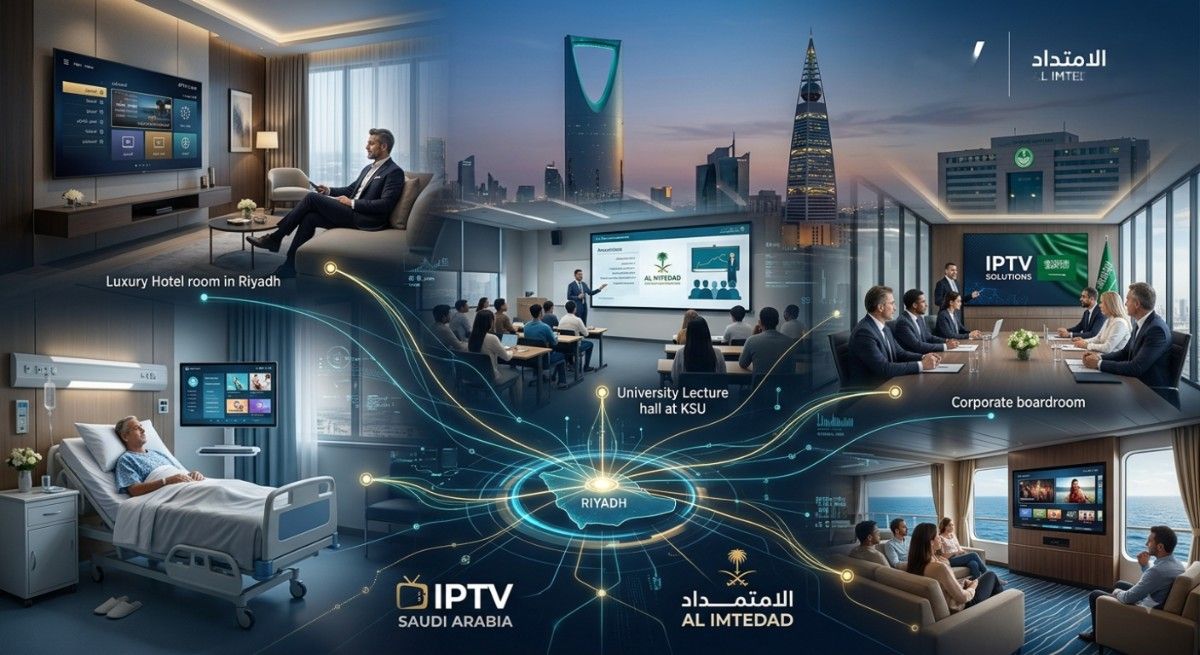
Enterprise buyers evaluating technology upgrades in Saudi Arabia are increasingly landing on the same conclusion: legacy broadcast systems no longer meet the expectations of guests, patients, students, or employees. This is the demand driving momentum behind IPTV Saudi Arabia, as hotels, hospitals, universities, corporate offices, and maritime operators shift toward IP-based content delivery built for flexibility rather than fixed channel lineups. What was once considered a hospitality luxury has become a baseline operational expectation across nearly every sector that manages screens at scale.
The Shift From Broadcast to Network-Based Delivery
The appeal for procurement teams comes down to control. IPTV in Saudi Arabia solutions run over an organization's existing network rather than requiring separate satellite or cable infrastructure, which means content, branding, and access can be managed centrally instead of adjusted device-by-device. For multi-location businesses—a hotel group with several properties or a hospital chain with multiple facilities—that centralization translates directly into lower administrative overhead. Instead of dispatching technicians to individually update channel packages or promotional content across dozens of screens, administrators can push changes instantly from a single dashboard.
This matters more than it might initially seem. Traditional broadcast systems were never designed with customization in mind—every screen received the same feed, regardless of the room, department, or audience. Network-based delivery flips that model entirely, allowing content to be tailored by location, language, or even time of day, all without touching hardware.
Why Sector Adaptability Separates Serious Providers From the Rest
What separates a genuinely capable IPTV KSA provider from a basic vendor is how well the platform adapts across use cases. Hospitality clients need guest-facing features like multilingual menus, service integration, and digital check-out. Healthcare clients need patient education content, closed captioning, and integration with clinical systems like HIS, EMR, and nurse call. Educational institutions need lecture streaming, on-demand learning libraries, and campus-wide messaging that reaches classrooms, dormitories, and common areas simultaneously. Corporate clients need a reliable way to broadcast leadership updates, onboard new employees, and maintain consistent branding across every office location.
A provider capable of serving all of these sectors—rather than specializing narrowly in just one—tends to bring more institutional knowledge to a deployment. Cross-sector experience means fewer surprises during rollout, since many of the underlying technical challenges—network load, content licensing, multilingual support, integration with existing systems—repeat across industries even when the end-user experience looks completely different.
Execution Determines Long-Term Value
Execution, however, is where most projects succeed or fail. IPTV installation is not simply mounting hardware; it requires network assessment, middleware configuration, integration testing, and staff training before a system is genuinely ready for daily use. A rushed installation might technically function on launch day, but gaps in configuration or inadequate staff training tend to surface within weeks—a channel that won't load correctly, a branding element that wasn't applied consistently, or a support ticket that takes days to resolve because no one internally understands how to manage the platform.
Buyers evaluating vendors should weigh post-installation support as heavily as the initial proposal. A system that isn't actively supported tends to degrade in usefulness within the first year, regardless of how strong the original feature set was. The providers worth taking seriously are the ones who talk as much about ongoing maintenance, AMC agreements, and response times as they do about the initial feature list during the sales process.
Positioning for Long-Term Growth
As Saudi Arabia's economy diversifies under Vision 2030 and demand grows across tourism, healthcare, and education infrastructure, the businesses that treat IPTV as a long-term operational investment—rather than a one-time purchase—are the ones positioned to benefit most. Hotels expanding into new markets, hospitals scaling patient capacity, and universities growing their campuses all need infrastructure that scales alongside them, not systems that require a full redeployment every time the organization grows.
This is also where the distinction between a vendor and a genuine technology partner becomes clear. A vendor sells a system and moves on. A partner understands how the organization operates, anticipates future needs, and builds an installation that can expand without requiring a complete overhaul.
The Real Question for B2B Decision-Makers
For B2B decision-makers comparing providers, the right question isn't which vendor has the longest feature list, but which one can deliver, support, and scale a system that fits how the organization actually operates. Reliable infrastructure, responsive support, and genuine cross-sector expertise consistently outperform flashy demos and inflated spec sheets once a system is in daily production use. As adoption accelerates across the Kingdom, the businesses asking these sharper questions upfront are the ones avoiding costly missteps later.