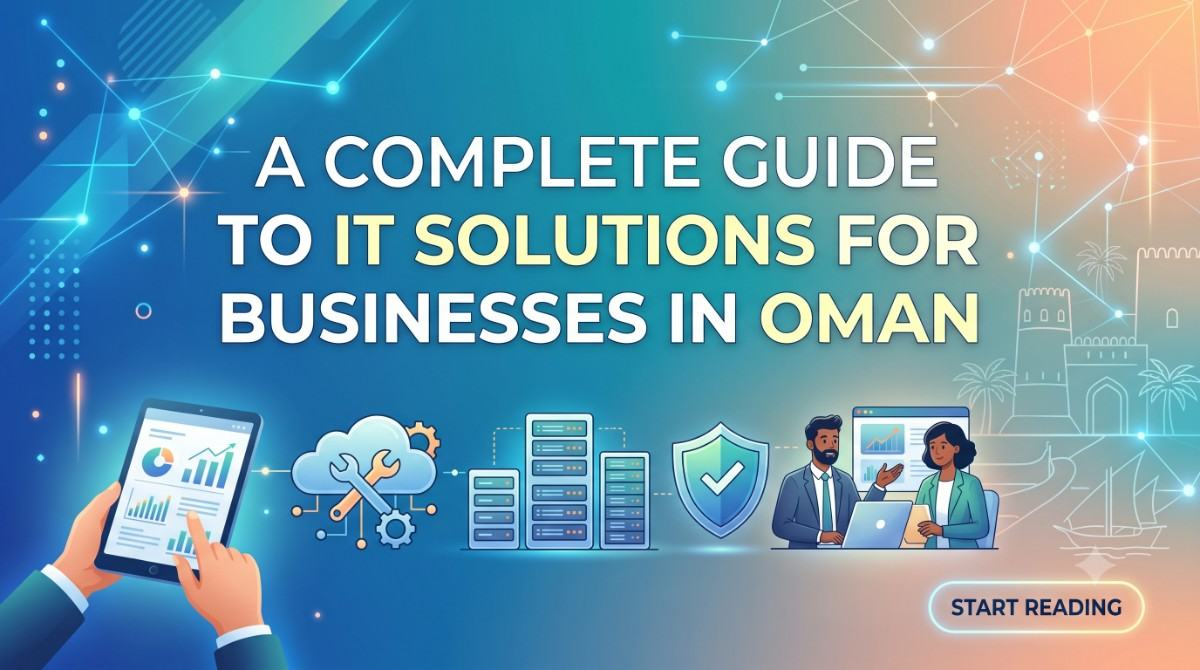
A Complete Guide to IT Solutions for Businesses in Oman
-

- Published Updated
- 3,369 views
In today’s competitive business environment, technology plays an essential role in helping companies operate efficiently, protect valuable information, and serve customers better. From small businesses to large enterprises, choosing the right IT solutions companies in Oman can help organizations build a reliable technology infrastructure while reducing operational challenges. The right IT strategy can cover everything from networking and cloud computing to cybersecurity, IT support, and business continuity.But with so many technology services available, what does a business actually need? This guide explores the essential IT solutions that can help businesses in Oman improve productivity, security, scalability, and long-term business performance.
Why IT Solutions Are Important for Businesses in Oman
Modern businesses rely heavily on technology for communication, data management, customer service, financial operations, collaboration, and day-to-day workflows. A network outage, cybersecurity incident, or hardware failure can therefore have a significant impact on business operations.Professional IT solutions help businesses create a stable technology environment. Instead of dealing with individual technical problems as they occur, companies can take a proactive approach to managing infrastructure, protecting data, and preparing for potential disruptions.
1. Business Networking Solutions
A reliable network is the foundation of modern IT infrastructure. Businesses need secure and high-performance networks to connect computers, servers, cloud applications, employees, and other devices.Networking solutions can include wired and wireless network installation, structured cabling, Wi-Fi solutions, network monitoring, routers, switches, firewalls, and network optimization.A properly designed network can improve communication between teams, provide reliable access to business applications, and support future growth.
2. Cloud Solutions and Services
Cloud technology has transformed the way businesses store data, run applications, and collaborate. Instead of relying entirely on physical servers, businesses can use cloud platforms for storage, computing, backup, software applications, and other IT requirements.Cloud solutions can offer greater flexibility and scalability. Businesses can increase or decrease resources according to their requirements without making major investments in physical infrastructure.Cloud migration services can also help organizations move existing applications and data to suitable cloud environments while minimizing disruption.
3. Managed IT Services
Managing an entire IT environment internally can be challenging, particularly for businesses without a large technical team. Managed IT services provide ongoing monitoring, maintenance, troubleshooting, and technical support.A managed IT provider can help monitor systems, identify potential problems, perform updates, manage devices, and provide technical assistance when employees experience IT issues.This proactive approach can reduce downtime and allow business teams to focus more on their core responsibilities.
4. Cybersecurity Solutions
Cybersecurity should be a priority for every organization that uses digital systems. Businesses can face threats such as phishing, malware, ransomware, unauthorized access, and data breaches.A comprehensive cybersecurity strategy may include firewalls, endpoint protection, access controls, security monitoring, data encryption, vulnerability assessments, employee awareness, and regular security updates.Businesses should also review their security policies regularly because cyber threats continue to evolve. Strong cybersecurity is not simply about installing security software; it involves protecting people, devices, networks, applications, and data.
5. IT Support and Help Desk Services
Even well-designed IT environments can experience technical problems. Employees may encounter software errors, hardware issues, connectivity problems, printer failures, or account-related difficulties.Professional IT support provides businesses with access to technical expertise when these problems occur. Help desk services can resolve common issues quickly, while more complex problems can be escalated to specialized IT professionals.Reliable support can improve employee productivity by reducing the amount of time teams spend dealing with technical issues.
6. Data Backup and Business Continuity
Data is one of the most valuable assets of any modern business. Hardware failure, cyberattacks, accidental deletion, or unexpected disruptions can result in data loss and operational downtime.Data backup solutions create copies of important business information, while disaster recovery solutions help organizations restore systems after a major incident.Business continuity planning goes a step further by identifying how critical operations can continue during disruptions. Businesses should regularly test their backup and recovery processes rather than assuming that backups will work when needed.
7. IT Infrastructure Management
As a business grows, its technology environment can become increasingly complex. Servers, computers, networking equipment, cloud platforms, security systems, and software applications all require ongoing management.IT infrastructure management helps organizations maintain these systems, monitor performance, identify potential problems, and plan upgrades.Regular infrastructure assessments can also help businesses identify outdated technologies and make informed decisions about future investments.
8. Software Development and Digital Solutions
Off-the-shelf software may not always meet the specific requirements of a business. Custom software development can provide solutions designed around particular workflows, customer requirements, or operational processes.Businesses can use customized web applications, business management platforms, integrations, dashboards, and automation tools to improve efficiency and reduce manual work.
How to Choose the Right IT Solutions
Every business has different technology requirements. A small company may primarily need reliable networking, cloud services, cybersecurity, and IT support, while a larger organization may require advanced infrastructure management, custom software, disaster recovery, and comprehensive managed services.When evaluating an IT provider, businesses should consider technical expertise, service coverage, response times, security capabilities, scalability, and ongoing support. It is also important to choose solutions that can grow alongside the organization.
Conclusion
Technology is no longer simply a support function—it is an important part of modern business strategy. Networking, cloud services, managed IT, cybersecurity, IT support, data backup, business continuity, infrastructure management, and software solutions can work together to create a more reliable and secure business environment.For organizations operating in Oman, selecting the right technology partner and implementing solutions based on actual business requirements can help improve efficiency, protect critical information, reduce downtime, and support sustainable growth.
Frequently Asked Questions
1. What IT solutions does a business need?
The requirements depend on the size and nature of the business. Most organizations need reliable networking, cybersecurity, cloud services, IT support, data backup, and infrastructure management. Larger businesses may also require managed IT services, disaster recovery, and custom software solutions.
2. Why should businesses use managed IT services?
Managed IT services provide ongoing monitoring, maintenance, technical support, and proactive problem-solving. They can help businesses reduce downtime, improve system performance, and access professional IT expertise without having to manage every technical requirement internally.
3. How can cloud services help a business?
Cloud services can provide flexible access to applications, data, storage, and computing resources. They can support remote collaboration, scalability, backup, and more efficient IT management while reducing dependence on physical infrastructure.
4. How important is cybersecurity for businesses?
Cybersecurity is essential because businesses store and process valuable information and increasingly depend on digital systems. Strong security measures can help protect sensitive data, devices, networks, applications, and business operations from cyber threats.
Source: GGMS Global IT Solution - Oman