
Japanese Matcha vs Chinese Matcha: How Origin Shapes Flavor and Quality
-

- Published Updated
- 4,937 views
Matcha has become such a global product that its actual definition has grown a little blurry along the way. Powders labeled simply as "matcha" or "green tea powder" now come from vastly different production methods and regions, despite being sold under the same name. Understanding how Japanese and Chinese matcha actually differ makes it far easier to know exactly what's ending up in a bowl before it's ever whisked.
What Authentic Matcha Actually Requires
True matcha, as understood in Japan, comes exclusively from tencha, a shade-grown green tea cultivated specifically for grinding into powder. The traditional Japanese process involves shading the tea plants for roughly twenty to thirty days before harvest, steaming the leaves to halt oxidation, drying them flat without rolling to preserve leaf structure, removing the veins and stems, and finally stone-grinding the result into a fine powder. Each individual step in this process shapes the final flavor, texture, and how the powder actually behaves once whisked into water.
Terroir Plays a Bigger Role Than Most People Realize
Japan's most respected matcha-growing regions, including Uji in Kyoto, Nishio in Aichi, and Shizuoka, offer specific geological conditions that have been refined over centuries of dedicated cultivation. Shizuoka's volcanic soil contributes mineral complexity, while Uji's river-fed terrain creates ideal humidity and temperature conditions for tea growing. Chinese matcha production, by contrast, spans a wider range of regions including Zhejiang, Jiangsu, and Hubei provinces, areas that produce excellent green tea more broadly but lack the specialized soil composition and centuries of matcha-specific cultivation found in Japan's dedicated growing regions.
Shading Makes the Single Biggest Difference
The shading period is widely considered the most important factor separating high-quality matcha from a lesser imitation. Japanese producers typically shade their plants for twenty to thirty days before harvest, a labor-intensive process that significantly boosts chlorophyll and amino acid content, producing that vivid green color and naturally sweet, umami-rich flavor genuine matcha is known for. Shading techniques are used far less consistently in Chinese matcha production, and when applied, tend to run for a considerably shorter period, resulting in a duller color and a flatter, more grassy flavor profile.
Grinding Method Affects Texture and Taste
Japanese matcha is traditionally stone-ground using granite mills, a slow process that keeps the powder fine, smooth, and free of the heat damage that faster methods introduce. Chinese matcha production is more frequently optimized for industrial output, often relying on high-speed machine grinding that generates heat and compromises aromatic stability, texture, and color retention. This difference becomes especially noticeable when whisking, properly stone-ground matcha blends smoothly into water, while coarser, machine-milled powder tends to clump and produce a grittier drink.
The Flavor Difference Is Real, and Noticeable
Side-by-side tastings consistently reveal a genuine difference in body, sweetness, and finish between the two. Japanese matcha made from properly shaded tencha tends toward richer umami, softer bitterness, and a creamier mouthfeel, refined enough to be enjoyed with water alone. Chinese matcha more often tastes directly vegetal or grassy, with noticeably less depth in the umami range, which is part of why lower-quality matcha is so frequently masked with milk or sweeteners rather than served straight.
Safety Standards and Testing Vary by Region
Japan maintains stricter regulatory oversight over tea cultivation, with many producers testing specifically for pesticide residues and heavy metals, particularly for export markets. This kind of consistent testing and prefectural oversight provides a level of quality assurance that's harder to guarantee across Chinese matcha production more broadly, where standards and transparency can vary considerably between individual growers and regions.
Price Reflects Genuine Production Differences
The price gap between the two is substantial, and it isn't arbitrary. Chinese matcha typically trades at a fraction of the cost of genuine Japanese matcha on the wholesale market, a gap largely explained by the longer shading periods, slower stone-milling, higher labor costs, and stricter regulatory compliance built into authentic Japanese production. For everyday cooking or bulk culinary use where matcha is one ingredient among several, Chinese matcha can offer reasonable value. For anyone drinking matcha straight, the way it's traditionally meant to be enjoyed, the quality gap tends to justify the higher cost of genuine Japanese matcha.
How to Actually Tell the Difference
A few practical checks help distinguish genuine Japanese matcha from a lower-quality alternative. Color is the first indicator, authentic Japanese matcha should be a vivid, almost neon green, while Chinese matcha often appears duller or more yellow-green. Checking the label for a specifically named Japanese growing region, such as Uji, Nishio, Shizuoka, or Kagoshima, along with details on cultivar and processing, offers far more assurance than a generic label simply reading "matcha" with no origin specified.
Where a Brand Like Pekoe Fits This Comparison
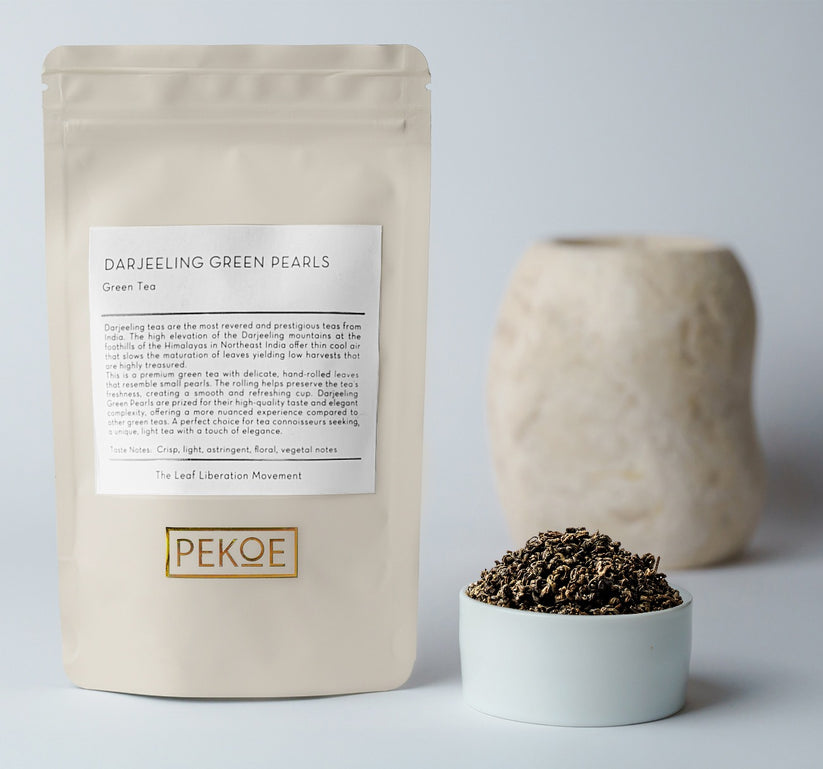
Pekoe, a tea brand with a dedicated matcha collection, reflects the standards genuine Japanese matcha depends on, sourcing specifically from respected regions like Shizuoka and Kagoshima, where proper shading and traditional stone-grinding are still handled with real care. For anyone who's tasted the difference described throughout this comparison, that kind of verified regional sourcing is exactly what separates a genuinely satisfying bowl of matcha from a disappointing one.
Why Origin Genuinely Matters
Japanese and Chinese matcha may share a name, but they represent meaningfully different products shaped by centuries of specialized cultivation versus broader, more industrialized green tea production. The shading period, grinding method, regional terroir, and regulatory oversight all compound into a real, tastable difference. For anyone serious about matcha, understanding this distinction isn't just academic, it's the difference between a bowl worth savoring and one that never quite lives up to what matcha is actually supposed to be.
