What Should You Consider Before Choosing a Kraken Clone Script?
-

- Published Updated
- 51 views
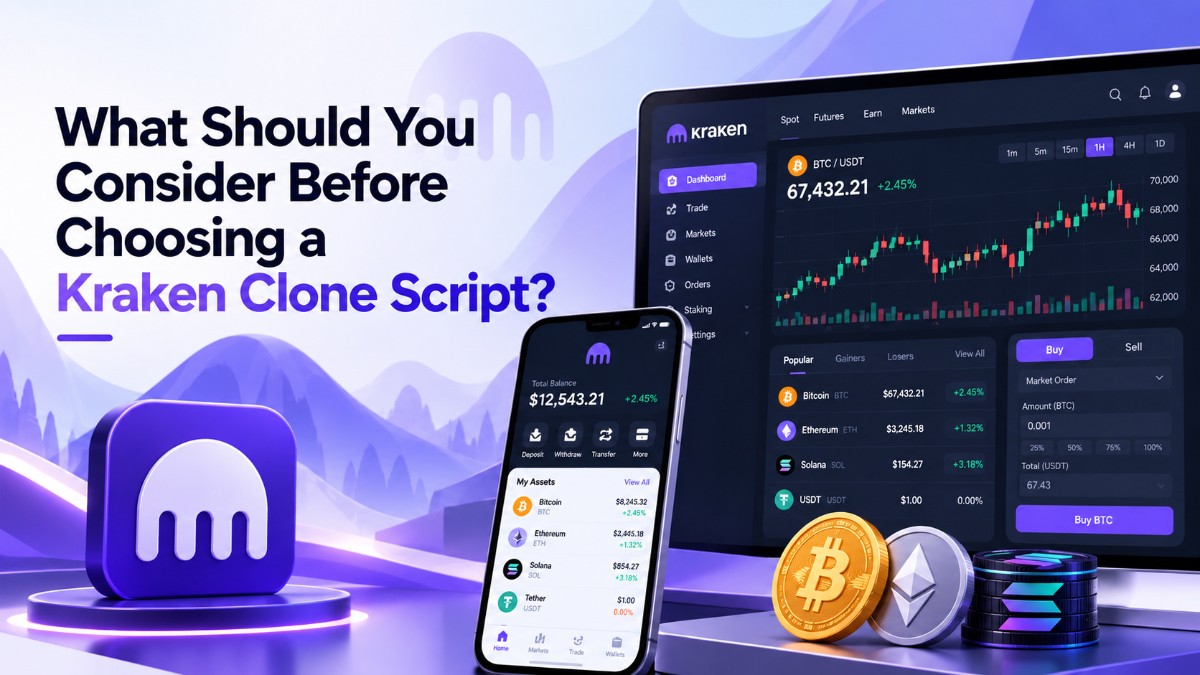
Launching a cryptocurrency exchange involves more than putting a trading interface online. The platform needs a reliable trading engine, secure wallets, order management, liquidity, user verification, and administrative controls.
If you're considering a Kraken Clone Script, the biggest mistake is choosing one based only on its appearance or feature count. You need to understand what is included, how the system works, and whether it can adapt to your business requirements.
What Should You Check Before Choosing a Kraken Clone Script?
Before selecting a Kraken Clone Script, focus on these areas:
Trading engine: Check how orders are processed and matched.
Security: Review wallet protection, authentication, access controls, and transaction security.
Liquidity: Understand how the platform will access and manage trading liquidity.
Customization: Make sure features, branding, trading pairs, fees, and workflows can be adapted.
Scalability: The architecture should support future increases in users and trading activity.
Integrations: Evaluate APIs, payment services, blockchain networks, KYC providers, and other required connections.
Support: Confirm what maintenance, upgrades, and technical assistance are provided after launch.
A good solution should match your business model rather than simply imitate another exchange.
What Is a Kraken Clone Script?
A Kraken Clone Script is a pre-built cryptocurrency exchange software solution inspired by the functionality of established crypto trading platforms. Depending on the provider, it may include spot trading, crypto wallets, order management, trading charts, user accounts, transaction history, and an admin panel.
The important point is that a clone script should be treated as a starting framework. Your exchange may require different assets, trading rules, integrations, user flows, and compliance processes.
Evaluate the Trading Engine
The trading engine is one of the most important components of a crypto exchange. It handles incoming orders and determines how buy and sell orders are matched according to the platform's trading rules.
Before choosing a solution, ask about:
Supported order types
Order matching logic
Trading pair management
Order-book functionality
Trade execution
Performance under increased activity
API support
Don't judge the trading engine solely from the front-end interface. Ask the provider for technical information about its architecture and expected operating environment.
Check Wallet and Security Architecture
A cryptocurrency exchange handles valuable digital assets and sensitive user information. Security therefore needs to be considered at both the application and wallet levels.
Look for features such as secure authentication, role-based access, wallet management, transaction controls, API security, and appropriate monitoring mechanisms. Ask how private keys and sensitive credentials are protected and whether security updates are included after deployment.
Understand Liquidity Options
An exchange needs sufficient liquidity to provide a useful trading experience. A software provider may offer liquidity integration, liquidity APIs, or connections to external liquidity sources, but the exact approach varies.
Before signing an agreement, clarify where liquidity comes from, which trading pairs are supported, and whether liquidity can be expanded as your exchange grows.
Consider Customization and Scalability
Your exchange may eventually need additional trading pairs, new blockchain networks, different fee structures, new user roles, or additional financial features.
Choose a crypto exchange software solution that allows meaningful customization without requiring a complete rebuild. Also examine the underlying architecture, database design, API structure, deployment model, and scalability approach.
Don't Ignore Compliance and Support
Crypto exchange requirements can vary depending on the jurisdiction, services offered, customer base, and assets supported. Technical development does not replace legal or compliance advice, so identify the requirements applicable to your intended operation before launch.
Also clarify post-launch support, including bug fixes, upgrades, server assistance, security maintenance, and third-party integration changes.
Final Takeaway
Choosing a Kraken Clone Script should involve more than comparing feature lists and prices. Evaluate the trading engine, security architecture, liquidity model, customization capabilities, scalability, integrations, compliance requirements, and long-term support.
If you're planning to launch a crypto exchange, first document your target market, supported assets, trading model, required integrations, and security expectations. Then use those requirements to compare potential solutions.
Looking to build your own cryptocurrency exchange? Explore a customizable Kraken Clone Script solution and discuss your required features with a crypto exchange development team.
FAQs
What is a Kraken Clone Script?
A Kraken Clone Script is pre-built cryptocurrency exchange software inspired by established exchange functionality. It can be customized with your branding, features, trading pairs, integrations, and business workflows.
What features should a Kraken Clone Script include?
Common features include spot trading, wallets, order management, trading charts, user verification, transaction history, liquidity integration, APIs, and an administrative dashboard.
Can a Kraken Clone Script be customized?
Yes. Depending on the provider and architecture, you can customize branding, trading pairs, fees, user workflows, integrations, supported assets, and additional exchange features.
How important is liquidity for a crypto exchange?
Liquidity affects how easily users can buy or sell assets without significant price impact. Before launching, understand how the proposed exchange solution will connect to and manage liquidity.
Is a Kraken Clone Script ready for launch?
A clone script can provide a technical foundation, but launch readiness depends on customization, testing, security, integrations, infrastructure, and the legal and regulatory requirements applicable to your operation.
To Know More: