How to Determine Land Value Before You Buy or Sell
-

- Published Updated
- 56 views

Land is one of the hardest assets to price. There is no square footage of living space to compare, no kitchen to inspect, and no standard "price per unit" that applies everywhere. Two parcels on the same road can differ by tens of thousands of dollars because of access, soil, zoning, or flood risk.
If you are wondering how to determine land value, the good news is that the process follows a clear structure. This guide walks through the factors that drive price, the main land valuation methods, and the tools that help you get to a number you can trust, whether you are buying, selling, or lending against a parcel.
Why Getting Land Value Right Matters
Overpay and you lose margin before you break ground. Underprice and you leave money on the table. For lenders, investors, and builders, a weak valuation can also mean added risk across an entire portfolio.
A solid valuation helps you:
- Negotiate with facts instead of gut feeling
- Set a realistic listing price that attracts serious buyers
- Support financing, tax, or investment decisions
- Spot risks early, before they become expensive surprises
Key Factors That Shape Property Value for Land
Before choosing a valuation method, you need to understand what moves the price. The property value of land depends on a mix of physical, legal, and market factors.
Location and access. Proximity to towns, highways, utilities, and growth corridors has a major effect on value. Legal road access matters just as much as physical access. A landlocked parcel is worth far less than one with a deeded easement.
Zoning and permitted use. What can be built or done on the land often matters more than what is there today. Residential, commercial, agricultural, and industrial zoning can produce very different values for similar acreage.
Size and shape. Larger parcels often sell for a lower price per acre, while oddly shaped or narrow lots can limit usable area and reduce value.
Topography and soil. Slope, drainage, and soil quality affect buildability, farming potential, and development cost.
Utilities and infrastructure. Water, sewer, electric, and broadband availability can raise value sharply. Extending them to a remote parcel can be costly.
Environmental and risk factors. Floodplains, wetlands, easements, and protected areas can restrict use and lower value.
Market conditions. Interest rates, local demand, and recent sales activity all influence what buyers will pay right now.
Land Valuation Methods Explained
There is no single formula that works for every parcel. Professionals typically rely on a few established land valuation methods, often using more than one to cross-check the result.
1. Sales Comparison Approach
This is the most common method. You find recent sales of similar parcels nearby, then adjust for differences in size, access, zoning, topography, and timing.
It works best when there is plenty of recent, relevant data. The challenge is finding true comparables. A sale across the county line or from three years ago may not reflect today's market.
2. Income Approach
This method estimates value based on the income the land can generate, such as farming revenue, timber harvests, lease payments, or rental income. It is common for agricultural, recreational, and energy-related land.
The idea is simple: land that produces more income is generally worth more to an investor.
3. Cost and Development Approach (Residual Method)
Developers often use this approach. You start with the expected value of the finished project, subtract the costs of construction, infrastructure, fees, and profit, and what remains is the amount you can afford to pay for the land.
This method is especially useful for subdivisions, commercial sites, and any parcel being bought for development.
4. Allocation and Extraction Methods
These are used when comparable land sales are scarce. They estimate land value by looking at the ratio of land to total property value, or by subtracting the value of improvements from a recent sale price of a developed property.
Step-by-Step: How to Determine Land Value
Here is a practical process you can follow.
Step 1: Define the parcel. Confirm the boundaries, acreage, ownership, and legal description. Pull the parcel number and review the plat map.
Step 2: Research zoning and restrictions. Check current zoning, overlays, easements, deed restrictions, and any pending changes in the area.
Step 3: Review physical and environmental factors. Look at topography, soil type, flood zones, wetlands, and utility availability.
Step 4: Gather comparable sales. Find recent sales of similar land nearby. Prioritize parcels with a similar size, use, and access, and keep the timeframe as recent as possible.
Step 5: Adjust for differences. Compare each comp to your parcel and adjust the price up or down for features like road frontage, utilities, or views.
Step 6: Apply the right valuation method. Use the sales comparison approach as a starting point, then support it with the income or development approach where it fits your goals.
Step 7: Sanity-check the result. Compare your number to listing prices, local market trends, and, if needed, a professional opinion.
Land Appraisal vs. a Land Price Estimator
Many people ask whether they need a formal land appraisal or whether an online land price estimator is enough. The answer depends on what you are doing.
A land appraisal is a formal valuation completed by a licensed appraiser. It is often required for bank financing, estate matters, legal disputes, and tax situations. It carries weight because it follows professional standards and is documented in detail.
A land price estimator is a faster, data-driven way to get a working value. It is ideal for early screening, comparing multiple parcels, setting a listing range, or deciding whether a deal is worth pursuing before you spend money on a full appraisal.
Many buyers and sellers use both. They start with an estimator to narrow their options quickly, then order a formal appraisal when a deal gets serious.
Common Mistakes to Avoid
- Using outdated comps. Land markets can shift quickly, so old sales can mislead you.
- Comparing unlike parcels. A flat, road-accessible lot is not comparable to a hilly, landlocked one.
- Ignoring zoning and access. These two factors can change value dramatically.
- Relying only on listing prices. Asking prices show what sellers hope to get, not what buyers actually paid.
- Skipping risk checks. Flood zones, easements, and environmental limits can quietly erode value.
- Working with incomplete data. Some states do not require sale prices to be publicly disclosed, which makes comps harder to find.
How Acres Helps You Value Land With Confidence
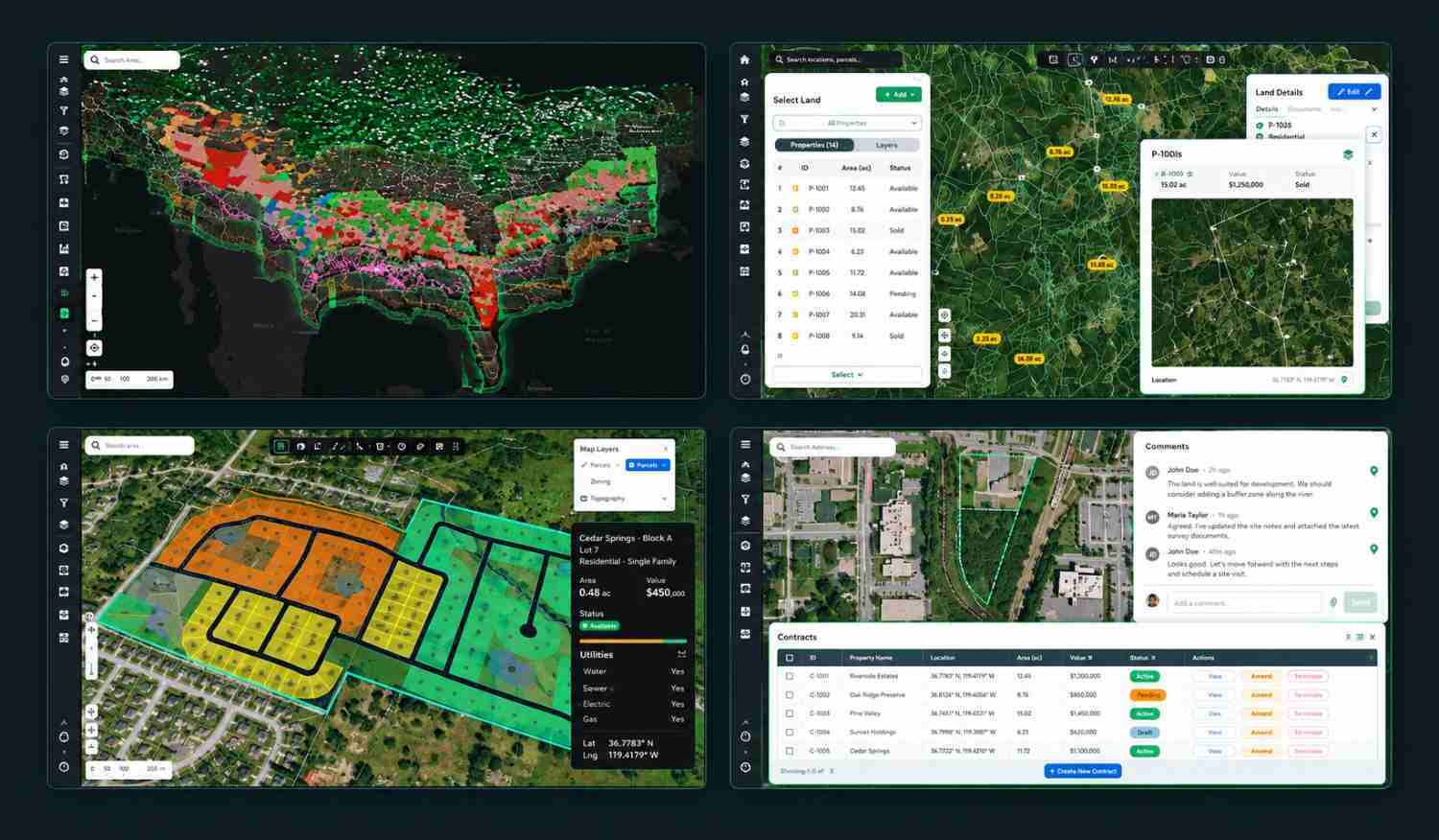
Finding reliable data is usually the hardest part of land valuation. Acres brings the key pieces together in one platform so you can move from research to a defensible number faster.
With Acres, you can:
- Search a large database of land transactions to find relevant comparable sales, including in non-disclosure states
- View parcel-level details such as zoning, ownership, risk layers, and transaction history in one panel
- Build land valuation reports in minutes instead of days
- Visualize parcels on interactive plat maps and share them with your team
Whether you are a buyer evaluating an acquisition, a seller preparing to list, or a lender reviewing collateral, having comps, parcel data, and mapping in one place helps you make decisions with more clarity and less guesswork.
Final Thoughts
Learning how to determine land value comes down to three things: understanding what drives price, applying the right land valuation methods, and using current, relevant data. Start with the fundamentals, cross-check your numbers, and use the right tool for the stage of your deal.
Ready to put this into practice? Explore how to determine land value with parcel data, comparable sales, and instant valuations on Acres.