Laser Screeding for FM2 Concrete Flooring: Precision, Flatness, and Efficiency
-

- Published Updated
- 1,865 views
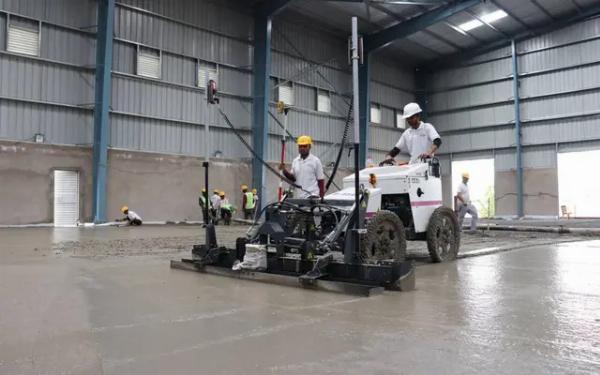
Laser screeding is a mechanised method for achieving precise level tolerance and flatness in FM2 concrete flooring by using laser-guided screeds and automatic controls. This technique reduces manual variation, speeds up placement, and helps meet flatness criteria commonly required in industrial and commercial slabs.
- Laser screeding uses a laser transmitter and guided screed head to produce consistent concrete flatness and levelness.
- It is suited to FM2 concrete flooring where reliable FF/FL values and F-number targets are required.
- Benefits include speed, repeatability, reduced labour, and better control of tolerances.
- Quality control relies on standardized measurements such as ASTM E1155 and best practices for curing and moisture testing.
Laser Screeding: Precision for FM2 Concrete Flooring
FM2 concrete flooring often demands predictable flatness and levelness for heavy equipment, racking, or traffic. Laser screeding integrates a rotating laser transmitter, a receiver-controlled screed head, and often GPS or inertial sensors to automatically adjust the screed position in real time. The result is a more uniform surface compared with traditional manual screeding and pushing methods.
How Laser Screeding Works
Core components
Typical systems include a laser level or total station that defines a reference plane, receivers on the screed to detect that plane, a motorised screed head that adjusts elevation, and a transport mechanism that moves the unit along the pour. Some modern systems use inertial measurement units (IMUs) to stabilise the head and maintain slope or crown profiles.
Process steps
Key steps for a laser-screeded FM2 slab usually include setting the laser reference, placing reinforcement and blocks, continuous concrete placement, automatic screeding to the design elevation, and initial finishing. Subsequent curing, moisture control and testing are carried out per project specifications.
Benefits for FM2 Concrete Flooring
Improved flatness and levelness
Laser screeding reduces localized variation and helps achieve target floor flatness (FF) and floor levelness (FL) values. This is important for FM2 categories where equipment setup, automated guided vehicles, or pallet racking require consistent tolerances.
Efficiency and labour
Automated control reduces manual labour and the number of passes needed to reach grade. Faster placement and reduced rework can shorten schedules and reduce exposure to weather variability during finishing.
Repeatability and documentation
Data logging and consistent machine settings allow contractors to reproduce results across bays and projects, supporting quality assurance and acceptance testing.
Applications and suitability
Common uses for FM2 slabs
Laser screeding suits industrial warehouse floors, distribution centres, heavy-duty workshop floors, and retail warehouses where FM2 specifications are applied. It is particularly useful where large, contiguous slab areas require uniform elevation.
Limitations
Laser screeding is not a substitute for good mix design, proper subgrade preparation, correct reinforcement placement, or adequate curing. Very narrow pours or highly irregular forms may still require manual intervention. Moisture-sensitive floor coverings often require additional moisture testing and mitigation regardless of screeding method.
Standards, measurement and quality control
Measurement methods
Flatness and levelness are commonly quantified using FF/FL metrics or F-number systems, and testing protocols such as ASTM E1155 can be used to verify results. Independent verification and documented tolerances are necessary for contract compliance.
Regulatory and industry guidance
Reference to recognised technical organizations can guide specification and testing practices. For example, resources and standards from the American Concrete Institute and ASTM standards provide methodology for placement, finishing and measurement. See the American Concrete Institute for further technical guidance: American Concrete Institute (ACI). Other jurisdictions may reference local standards or national codes for floor classification and acceptance criteria.
Cost considerations and project planning
Capital and operational cost
Laser screeding involves equipment costs or rental fees, operator training, and potential logistical planning for machine movement. These costs may be offset by reductions in labour, rework and schedule time on medium to large projects.
Specification and bidding
Designers and clients can include level tolerance and flatness targets in FM2 specifications. Procurement and bids should clarify who supplies equipment, data reporting requirements, and acceptance testing procedures.
Maintenance and training
Consistent performance requires trained operators and routine maintenance of laser systems and mechanical components. Calibration of laser instruments and verification measurements prior to pours are recommended best practices.
Practical tips for successful implementation
Site preparation
Ensure subgrade compaction, stable screed guides or rails and correct reinforcement layout. Eliminate obstacles that could disrupt automated travel paths.
Mix and placement
Select a workable concrete mix with appropriate slump and aggregate grading to support uniform finishing by an automated screed head. Coordinate pumping or placement rates to match the screed advance.
Curing and testing
Follow appropriate curing regimes and perform moisture tests where floor coverings or coatings are planned. Use standardized flatness testing for acceptance and document results.
Conclusion
Laser screeding brings measurable improvements in flatness, repeatability and productivity to FM2 concrete flooring when combined with proper design, materials and quality control. Specification of FF/FL or F-number targets, adherence to testing standards and well-planned logistics help realise the benefits of this technology.
FAQ
What is laser screeding and how does it improve FM2 concrete flooring?
Laser screeding is an automated method that uses a rotating laser or total station and a receiver-controlled screed head to maintain a consistent elevation during concrete placement. It improves FM2 concrete flooring by reducing local variation, improving FF/FL performance, and increasing placement speed compared with manual screeding methods.
How are flatness and levelness measured for laser-screeded floors?
Flatness and levelness are commonly measured with FF/FL metrics and F-number systems. Testing procedures such as ASTM E1155 describe using floor dip meters or profilometers to generate data that quantify compliance with specified tolerances.
Are there situations where laser screeding is not recommended?
Laser screeding may be less effective in very small pours, highly congested reinforcement layouts, or where access for machines is restricted. It also does not replace the need for good mix design, subgrade preparation and curing practices.
What documentation should be included in a specification that calls for laser screeding?
Include target FF/FL or F-number values, testing standards and methods, responsibilities for providing equipment and operators, data reporting requirements, and acceptance criteria for the completed slab.