Industrial Machinery Grouting: How to Choose Between Epoxy and Non-Shrink Cementitious Grout
-

- Published Updated
- 40 views
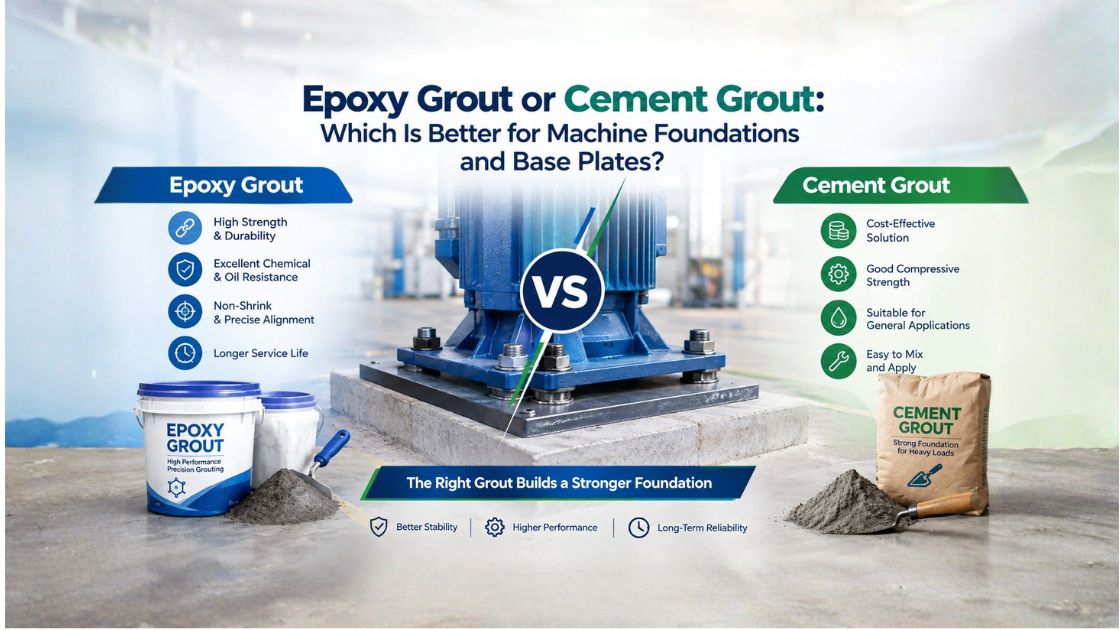
Summary: Epoxy grout and non-shrink cementitious grout are commonly used to fill the gap between concrete foundations and equipment base plates. Epoxy grout is often evaluated for precision machinery and demanding industrial environments where high strength and resistance to specific chemicals are required. Non-shrink cementitious grout can provide reliable support for conventional machinery foundations and structural base plates when it satisfies the project's strength, load-bearing, and durability requirements. The right choice depends on equipment loads, vibration, grout thickness, operating temperature, chemical exposure, installation conditions, and manufacturer recommendations.
Successful machinery installation starts with a properly designed foundation and a grouting material suited to the operating conditions. Grout fills the space between a concrete foundation and an equipment base plate, forming a bearing interface that helps distribute loads and maintain the alignment required for stable operation.
Poor grouting can compromise equipment performance and increase maintenance costs. Voids beneath a base plate may cause uneven load transfer, while excessive shrinkage or insufficient curing can weaken the supporting layer. In rotating machinery, alignment problems and excessive vibration may accelerate wear, disrupt operations, and lead to costly repairs.
For this reason, choosing between epoxy grout and cementitious grout should involve an engineering assessment of the complete installation rather than a comparison based solely on material price.
Understanding Epoxy Grout for Industrial Machinery Foundations
Epoxy grout is a resin-based material generally composed of epoxy resin, a hardener, and graded aggregates. When the components are proportioned, mixed, and installed according to the manufacturer's instructions, the material hardens to provide support for machinery operating under demanding conditions.
Key Benefits of Epoxy Grout
High compressive strength: Many industrial epoxy grout products are formulated to withstand substantial compressive loading.
Chemical resistance: Certain formulations can resist specified industrial chemicals, oils, and contaminants.
Low shrinkage: Appropriately formulated epoxy grout can provide stable bearing support beneath equipment base plates.
Precision machinery support: It is commonly considered for pumps, compressors, turbines, and other equipment that requires accurate alignment.
Durability: Correct product selection and installation can help achieve long-term performance in demanding industrial environments.
Despite these advantages, epoxy grout is not the right solution for every foundation. Its performance depends on the formulation, operating temperature, surface preparation, mixing accuracy, and placement quality. Installation teams must observe the manufacturer's working-time limits and application procedures to achieve the specified properties.
Non-Shrink Cementitious Grout for Base Plates and Equipment Supports
Cementitious grout is a cement-based material containing water and fine aggregates. Non-shrink formulations are widely used in construction to establish bearing support beneath machinery base plates and structural components.
Key Benefits of Cementitious Grout
Typically involves a lower material cost than epoxy grout.
Uses mixing and placement techniques familiar to many construction teams.
Can meet the requirements of many conventional machinery foundations and structural base plates.
Is available in formulated products with defined strength, flow, and shrinkage characteristics.
Can be incorporated into established construction practices when installed according to the manufacturer's specifications.
Correct preparation and curing are essential. Adding excessive water can affect the material's performance, while inadequate curing may compromise strength development and durability. Where a foundation will experience dynamic loads, chemical exposure, or other demanding conditions, the proposed grout must be checked against the project's technical requirements.
Epoxy Grout vs Cementitious Grout: A Performance Comparison
Both grout types support equipment and help transfer loads to the foundation. However, their composition, performance characteristics, installation procedures, and costs differ.
Comparison factor |
Epoxy grout |
Cementitious grout |
Material composition |
Epoxy resin, hardener, and aggregate |
Cement-based binder, water, and aggregate |
Strength |
Often high, depending on the product |
Varies by formulation and curing |
Shrinkage |
Generally low for suitable formulations |
Depends on product design and installation |
Chemical resistance |
Often better against specified chemicals |
Depends on formulation; may be more limited |
Heavy machinery |
Frequently considered for demanding applications |
Suitable when design and specifications permit |
Installation |
Requires controlled mixing and placement |
Requires correct water dosage, placement, and curing |
Cost |
Usually higher material cost |
Often more economical |
Curing |
Depends on formulation and temperature |
Depends on formulation and curing conditions |
No single compressive-strength value or curing period applies to every epoxy or cementitious grout. Selection, testing, and acceptance should be based on the manufacturer's technical data sheet and the approved project specifications.
Selecting Grout for Different Industrial Applications
1. Heavy Machinery and Rotating Equipment
Epoxy grout is frequently evaluated for industrial pumps, compressors, turbines, and high-performance motors. These installations may require precise positioning, continuous bearing support, and dependable performance under operating stresses.
However, selecting epoxy grout alone will not eliminate vibration or alignment problems. Loose anchor bolts, an inadequately designed foundation, equipment imbalance, or installation errors can still affect performance. Engineers should examine the entire machinery and foundation system to identify the cause of any operational issue.
2. Conventional Machinery Foundations and Structural Base Plates
Non-shrink cementitious grout can be appropriate for structural column base plates and conventional equipment foundations when the selected product meets the specified strength, bearing, and durability requirements.
For installations with conventional operating demands, cementitious grout may offer an economical solution while satisfying the required performance criteria. Nevertheless, equipment loading, grout thickness, environmental exposure, and manufacturer recommendations must all be considered before approval.
3. Foundations Exposed to Chemicals and High Temperatures
Epoxy grout may be suitable for foundations exposed to particular industrial oils and chemicals. However, chemical resistance differs between products, and certain substances can damage specific epoxy formulations. Compatibility must be verified before choosing the material.
Temperature is another important consideration. Excessive heat may change the properties of an epoxy system, while temperature fluctuations can create differential movement between the grout, steel base plate, and concrete foundation. Always check the manufacturer's approved service-temperature range and the product's resistance to the expected chemical exposure.
Essential Factors When Choosing Grout for Machine Foundations
A suitable grouting material should be selected by reviewing the equipment requirements, foundation design, and site conditions.
Equipment loading: Determine the static and dynamic forces transferred through the base plate.
Alignment tolerances: Review the equipment manufacturer's positioning and alignment requirements.
Grout thickness: Confirm that the product is designed for the required placement depth.
Foundation condition: Check concrete strength, surface integrity, cleanliness, and moisture conditions.
Operating environment: Assess vibration, temperature variations, moisture, oils, and chemical exposure.
Installation requirements: Consider mixing procedures, working time, site access, placement methods, and curing conditions.
Technical documentation: Review the product data sheet, required performance properties, batch records, and acceptance criteria.
A common misunderstanding is that every heavy machine requires epoxy grout. Properly specified cementitious grout may satisfy the requirements of certain heavy-equipment foundations. Equally, epoxy grout may be unsuitable if the operating temperature, foundation condition, or installation requirements fall outside the product's specified limits.
Grout selection must also align with the overall foundation design requirements. Even a high-performance grout cannot correct inadequate foundation capacity or unsuitable soil conditions.
The Role of Surface Preparation and Correct Installation
The performance of a grouting system depends on both material selection and installation quality. Contaminated surfaces, incorrect mixing, and incomplete placement can reduce the effectiveness of an otherwise suitable product.
Before grouting begins, remove loose concrete, laitance, oil, grease, and other contaminants. Prepare concrete and steel surfaces according to the manufacturer's instructions. Check the base plate level, anchor-bolt arrangement, formwork, and access needed to fill the intended space completely.
For epoxy grout, measure the resin and hardener accurately, mix them thoroughly, and place the material within the specified working time. Cementitious grout must be mixed with the recommended quantity of water, placed using the appropriate method, and cured as instructed by the manufacturer.
Both systems require measures to prevent voids and establish continuous bearing support. Before loading or commissioning the equipment, verify that the required curing period and strength criteria have been achieved.
A hardened surface does not necessarily demonstrate that the grout has reached its specified performance. Equipment should not be loaded until the applicable project acceptance requirements are satisfied.
The supporting concrete also needs attention. Appropriate concrete quality testing can help engineers and project teams evaluate the foundation before beginning grouting operations.
How Epoxy Grout Laboratory Testing Services Help Maintain Quality
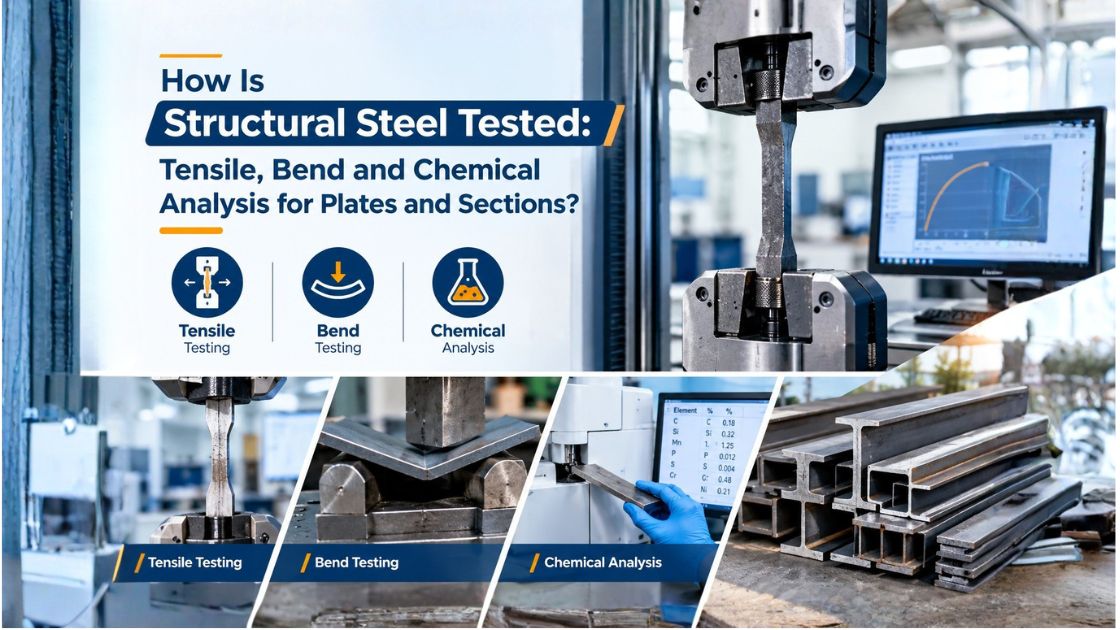
Epoxy Grout Laboratory Testing Services support the evaluation of specified material properties and the investigation of suspected grout defects. Testing procedures should be selected according to the grout formulation, applicable test methods, project specifications, and intended service conditions.
Reviewing the construction material testing checklist before installation can help project teams identify relevant tests, required documentation, and acceptance criteria.
Depending on the quality-control plan, testing and inspection may include:
Assessing specified compressive strength and other required performance characteristics.
Reviewing product technical data sheets and batch documentation.
Confirming that the selected test method is appropriate for the particular grout formulation.
Investigating suspected cracks, inadequate strength, or installation-related defects.
Comparing test results with the acceptance criteria in the contract or approved technical specifications.
For instance, cracks appearing beneath an industrial pump may indicate a defect in the grout or a problem with the supporting foundation. Visual inspection can identify visible damage, but determining its cause may require a more detailed investigation. Engineers may need to examine installation records, curing conditions, anchor bolts, equipment alignment, foundation movement, and available test results.
Laboratory testing can contribute useful evidence when suitable methods are used. Results must be assessed against the applicable project specifications rather than an assumed universal strength requirement.
For industrial projects in Pune, Pimpri-Chinchwad, Mumbai, and other parts of Maharashtra, establishing testing requirements before installation can help reduce avoidable commissioning delays and disagreements about material acceptance.
Conclusion: Choosing a Reliable Grouting Solution
Choosing between epoxy grout and non-shrink cementitious grout requires an assessment of the complete machinery installation. Material cost and compressive strength matter, but equipment loads, alignment tolerances, chemical compatibility, operating temperature, foundation preparation, and installation conditions are also essential.
Before installing machinery, review the equipment manufacturer's grouting recommendations, verify the selected product's technical specifications, and establish the necessary quality-control procedures. If material performance must be verified or a suspected installation defect requires investigation, consult a qualified testing provider about Epoxy Grout Laboratory Testing Services and arrange the appropriate assessments before commissioning.
Frequently Asked Questions
Is epoxy grout more suitable than cementitious grout for machine foundations?
Epoxy grout is often considered for precision machinery and demanding industrial applications because suitable formulations can provide high strength, low shrinkage, and resistance to specified chemicals. Cementitious grout can also be suitable when it satisfies the equipment and foundation design requirements.
Can cementitious grout support heavy machinery?
Yes. The weight of the equipment alone does not determine the grout type. Cementitious grout can be used when the selected product meets the required performance criteria and is approved for the intended application.
Which grout should be used for pump base plates?
Epoxy grout is frequently evaluated for precision pump installations with demanding alignment and operating requirements. The final selection should follow the pump manufacturer's recommendations, foundation design, and product specifications.
What is the curing time for epoxy grout?
Curing time varies with the product formulation, temperature, and installation conditions. Follow the manufacturer's instructions and confirm that the specified strength or commissioning requirements have been achieved before loading the foundation.
Are laboratory tests required for epoxy grout?
Laboratory testing may be required by the project specifications, quality-control plan, or defect-investigation requirements. The appropriate tests depend on the grout formulation, the properties being evaluated, and the applicable acceptance criteria.