Making Tax Digital for Income Tax: What Sole Traders and Landlords Need to Know
-
- Published Updated
- 68 views
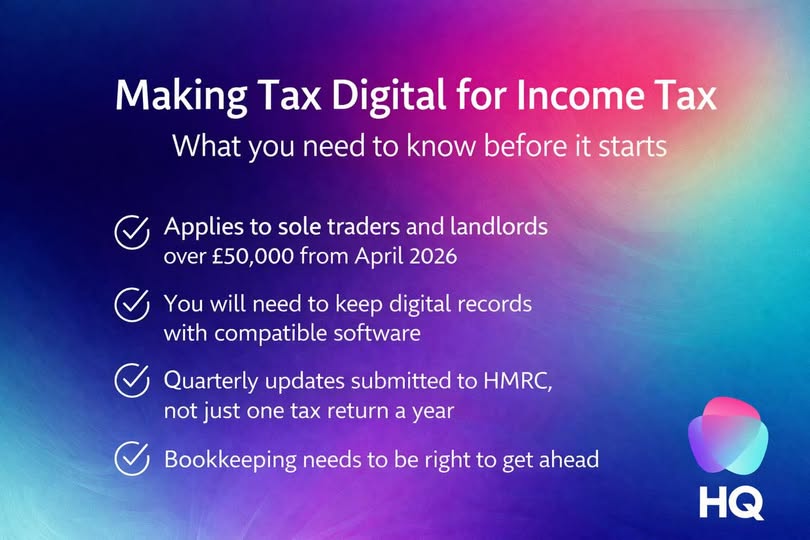
If you are self-employed or rent out property, the way you report your income to HMRC is changing. Making Tax Digital for Income Tax (often shortened to MTD for Income Tax or MTD ITSA) replaces the once-a-year self assessment routine with digital record keeping and regular updates through the year.
The rollout is phased, so whether it applies to you, and when, depends on your income. This guide explains what is changing, who is affected, what the process looks like in practice and how to get ready without the stress.
What is Making Tax Digital for Income Tax?
Making Tax Digital for Income Tax requires sole traders and landlords to:
- Keep their business and property records digitally, using MTD-compatible software
- Send HMRC quarterly updates of income and expenses
- Complete a final end-of-year declaration
In practice, paper records and standalone spreadsheets no longer work on their own. Your figures must flow through compatible software that can talk directly to HMRC.
Who has to follow the rules, and when?
The rules apply in stages, based on your gross income from self-employment and property:
- From 6 April 2026: qualifying income above £50,000
- From 6 April 2027: qualifying income above £30,000
- From 6 April 2028: qualifying income above £20,000
Self-employment and rental income count towards these thresholds. Employment income, dividends and partnership income do not. Some people can claim an exemption, and HMRC may write to you if your tax return figures suggest you are in scope. Always check the latest position on GOV.UK or ask your accountant, as the details can change.
How the quarterly cycle works
Under the old system, you gathered your records once a year and filed a Self Assessment return by 31 January. Under MTD for Income Tax, the year looks different:
- Throughout the year: you record income and expenses digitally as they happen.
- Each quarter: your software sends HMRC a summary of income and expenses for that period.
- After the tax year ends: you confirm your final figures, make any adjustments and submit a final declaration.
Most people use standard quarters that follow the tax year, with updates typically due in early August, early November, early February and early May. There is also an option to use calendar quarters, which some people find easier to line up with their bookkeeping. Your accountant can help you pick whichever suits your business.
One thing to keep in mind is that quarterly updates are not tax returns. They are summaries of what has come in and gone out. Your tax bill is still calculated on the full year, but regular updates give you a clearer picture of where you stand as you go.
Three examples of how MTD might affect you
The sole trader. A self-employed electrician earns around £55,000 a year. They are already in scope and need compatible software, a quarterly routine and a final declaration. If they currently hand a shoebox of receipts to their accountant in January, that habit needs to change.
The landlord. Someone with a handful of rental properties and a full-time job may not think of themselves as running a business. But if their gross rental income passes the threshold, they must follow the rules. Because employment income isn't counted, only the rent does.
The mixed-income earner. A freelance designer with a part-time employed role and a small buy-to-let needs to add up self-employment and property income to see whether they cross the line. Their salary doesn't count towards the threshold, but their freelance and rental income combined might.
If you are not sure which group you fall into, a short conversation with an accountant is usually enough to find out.
Why this matters even if you are not in scope yet
Many small business owners assume this is a problem for later. In reality, there are good reasons to start now:
- Your income can cross a threshold. A good year could pull you into the rules sooner than you expect.
- Digital records save time. Cleaner bookkeeping makes tax time far less stressful and reduces last-minute scrambling.
- Better visibility. When your numbers are up to date, you can make decisions about pricing, hiring and cash flow with confidence.
- Fewer penalties. HMRC has introduced a points-based penalty system for late submissions, so staying organised matters. HMRC has also said it will take a softer approach in the early period, but you shouldn't rely on that. Check GOV.UK for the current arrangements.
Common mistakes to avoid
After helping clients prepare, a few problems come up again and again:
- Leaving bookkeeping until the deadline. Quarterly updates reward regular habits. Catching up on three months of receipts in one sitting is stressful and error-prone.
- Mixing personal and business spending. Using one bank account for everything makes categorising transactions much harder. A separate business account makes your records far cleaner.
- Choosing software that doesn't fit. Some tools are built for larger firms and are overkill for a sole trader. Others are too basic. Make sure whatever you choose is MTD-compatible and suits how you work.
- Forgetting about property income. Landlords sometimes overlook rental income when checking thresholds, or assume it is handled separately. It counts.
- Assuming an accountant "just does it all". Your accountant can take on a lot of the work, but they still need timely, accurate records from you.
How to choose MTD-compatible software
There is no single best option, but a few questions help narrow the choice:
- Is it officially compatible? Check that the software can submit quarterly updates and final declarations to HMRC.
- Does it connect to your bank? Bank feeds cut down manual entry and reduce mistakes.
- Can you photograph receipts? Mobile apps that capture receipts as you go make record keeping almost effortless.
- Will your accountant have access? Shared access means your accountant can review figures, spot issues early and submit on your behalf.
- Is the cost reasonable? Compare monthly fees against what you will actually use.
If you are unsure, ask your accountant which software they work with. Using a platform they know well makes onboarding smoother and support faster.
How to prepare: a simple checklist
- Work out your qualifying income from self-employment and property.
- Choose MTD-compatible software that suits your business size and budget.
- Open a separate business bank account if you do not already have one.
- Move your records online so invoices, receipts and bank feeds are captured as you go.
- Set up a quarterly routine, even a monthly one, to review your figures before each update.
- Speak to an accountant about registering and what your first quarter will look like.
How HQ Accountancy can help
At HQ Accountancy, our team of chartered certified accountants in Liverpool helps sole traders, landlords and small businesses move to digital record keeping without the headaches. We can help you:
- Check whether and when MTD applies to you
- Choose and set up the right software
- Prepare and submit quarterly updates on your behalf
- Handle your year-end returns through our personal tax accountancy service
- Keep your wider finances on track with management accounts and business advisory support
You can also read our earlier guide, Making Tax Digital for the Self-Employed, for background on how the scheme developed.
Frequently asked questions
Does Making Tax Digital for Income Tax replace Self Assessment?
Not entirely. You still complete a final year-end declaration, but you will also send HMRC updates during the year.
Do landlords need to comply?
Yes. Gross rental income counts towards the qualifying income threshold alongside self-employment income.
Can an accountant submit my quarterly updates?
Yes. Many business owners prefer to hand this over so they can focus on running the business.
What if my income drops below the threshold?
Your obligations depend on the income figures HMRC uses to decide whether you are in scope, so a single quieter year may not take you out of the rules straight away. Check the latest guidance on GOV.UK or ask your accountant about your specific position.
Can I join before I am required to?
Yes. Voluntary sign-up is available, and many people use it to get comfortable with the process before it becomes compulsory.