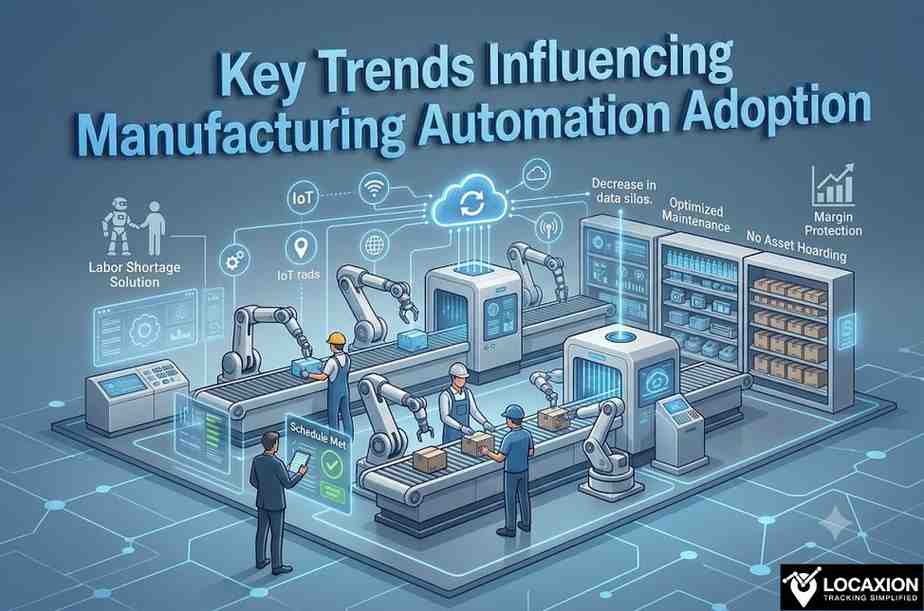
Key Trends Influencing Manufacturing Automation Adoption
-

- Published Updated
- 5,236 views
Walk down any actual production line right now and you will see the same reality: a mix of loud machinery, stressed floor managers, and the constant threat of missing a critical shipping deadline. Margins do not just magically disappear on paper; they bleed out in the twenty minutes a technician spends hunting a specific torque wrench or a misplaced pallet of sub-assemblies.
The pressure to fix these everyday bottleneck headaches is what really drives the industry today. The true motivation behind modern Manufacturing Automation isn't some corporate fantasy of a dark, workerless factory floor. Instead, it is a practical scramble to keep lines moving despite broken supply chains, missing components, and a severe shortage of experienced bodies.
Operations directors and plant managers are exhausted by empty promises and shiny new software tools that do not solve real problems. They need concrete answers for why their current setups are stalling out. The focus has completely shifted away from generic, high-level ideas toward fixing the literal physical friction points that mess up daily throughput.
Aging Workforce and the Critical Loss of Skilled Labor
The biggest headache in manufacturing right now is the talent drain. The senior mechanics and line supervisors who actually know how to fix a jammed machine with a single tap are retiring by thousands. When they clock out for the last time, their years of unwritten floor tricks leave the building with them.
The younger generation of workers is not lining up to take their places in hot, noisy assembly environments. This means factories are forced to automate the most repetitive, physically draining material handling jobs just to keep their doors open. Autonomous carts and automated picking systems are being brought in simply to take over the boring, heavy lifting, so the remaining staff can focus on troubleshooting.
Cost of Panic-Buying and Supervisor Tool Hoarding
Go look inside the desk drawers or private lockers of almost any shift supervisor. You will likely find a hidden stash of specialized tools, custom dies, or extra diagnostic tablets. Supervisors hoard this gear because they are tired of being blamed for downtime when the main tool crib runs out of equipment.
This hidden hoarding culture creates a massive financial drain on corporate budgets. Companies end up buying double or triple the amount of mobile assets they actually need because their tracking system is basically useless. Automation is finally being used to shine a harsh light on these hidden cages, forcing asset accountability across the entire floor layout.
Backlash Against Rigid, Closed Tech Ecosystems
For years, the major industrial equipment vendors held all the cards. They would hook up a facility with a piece of heavy machinery, then force them to buy their specific sensors, tags, and data platforms. The moment a plant manager wanted to add a new tool from a different brand, they hit a total brick wall of software incompatibility.
That era of forced hardware lock-in is officially dying out. CFOs and operations teams are actively rejecting proprietary traps that limit their operational flexibility. The major trend now is a demand for open APIs and flexible architectures that let different systems talk to each other without requiring custom, multi-million-dollar software overrides.
Drowning in Useless Legacy System Alerts
Most modern control rooms are a complete mess of flashing lights and constant warning chimes. Shift managers are dealing with severe dashboard fatigue because their current enterprise systems do not know how to filter out minor issues from major crises. If every single temperature fluctuation triggers an emergency text, the team eventually just tunes everything out.
The fix that operations leaders are pushing for is contextual awareness. They do not want a raw spreadsheet stream showing that an asset moved; they want the system to know why it moved and if it is running late. It is about turning thousands of annoying pings into simple, clear instructions that a floor worker can actually act on during a hectic shift.
Forcing Digital Twins to Match Floor without RTLS Integration
You cannot run a tight operation if your inventory management software is based on guesswork and late manual data entry. If a worker drops a bin of raw material in the wrong aisle and forgets to scan the barcode, that inventory becomes completely invisible to the main scheduling system. The line shuts down because the software thinks you are out of stock, even though the parts are sitting fifty feet away.
To fix this, smart plants are connecting their physical layouts directly to automated telemetry streams. Incorporating a dedicated Real-Time Location System (RTLS) gives the core scheduling engine a continuous, unfiltered view of every moving piece on the floor. This eliminates the reliance on human clipboard updates and keeps production schedules completely accurate.
Predictable Operational Outcomes with LocaXion
Fixing these deep, systematic floor problems requires moving past the empty promises of generic tracking software and focusing directly on structural systems integration.
That means less risk, less integration guesswork, and faster time-to-value. And because we are not locked to one technology stack, you get the freedom to scale with the right technology, not the technology we happen to sell.
RTLS tracks your assets.
Stop wasting margins on floor blind spots and asset hoarding and engineer your outcomes today at .