Does Your Marble Need to Blend In or Become the Highlight of Your Space?
-

- Published Updated
- 75 views
When choosing marble for your home, one important design decision is whether the stone should complement the surroundings or become the main visual feature. Both approaches can work beautifully, but the right choice depends on your interior style, room size, lighting, and the atmosphere you want to create.
For homeowners exploring marble bangalore options, understanding how colour, veining, finish, and placement influence a room can make it easier to select marble that fits the overall design.
When Should Marble Blend Into the Interior?
Marble that blends into the surroundings works well when you want a calm, balanced interior. Rather than drawing attention to itself, the stone complements furniture, wall colours, lighting, and decorative elements.
Light-coloured marble with subtle veining can suit minimalist interiors, while beige and soft grey varieties can work with neutral palettes and natural materials.
This approach may be useful in bedrooms, open-plan living spaces, and rooms where you want other design elements to take priority.
When Should Marble Become the Highlight?
Sometimes, marble is intended to attract attention. A slab with bold veins, contrasting colours, or distinctive natural patterns can become a focal point in a room.
This approach may suit entrance areas, feature walls, statement staircases, or selected living room surfaces. The key is to give the stone enough visual space to stand out without making the entire interior feel crowded.
If you choose a strongly patterned marble, consider keeping nearby finishes relatively simple so the natural design remains the centre of attention.
Colour Sets the Direction for Your Design
The colour of marble can influence the overall appearance of a space.
White marble: Often suits bright, open interiors and works with a range of colour palettes.
Beige marble: Can complement warm wood tones and earthy shades.
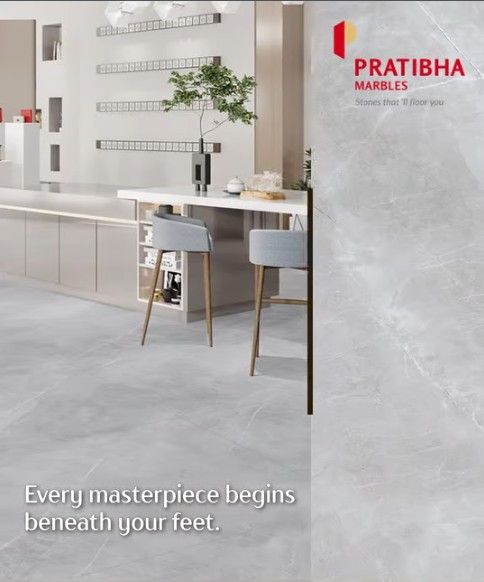
Grey marble: May suit contemporary spaces with understated finishes.
Dark marble: Can create contrast and add visual depth when balanced with appropriate lighting.
Rather than selecting a colour in isolation, compare it with your flooring, cabinetry, wall paint, and furniture samples. This helps you understand whether the marble will blend in or stand out once everything comes together.
Veining Can Change the Visual Balance
Natural veining is one of the features that makes each marble slab distinctive. Fine, understated veins may create a subtle texture, while bold patterns can introduce movement across a surface.
If you want the marble to blend in, look for patterns that complement the surrounding materials. If you want it to become a highlight, consider varieties with more prominent veining.
However, inspect the entire slab before deciding. The pattern may look different across a large area than it does in a small photograph or sample.
Consider the Size of Your Space
Room size can influence how a marble design is perceived. A heavily patterned slab may create a dramatic effect in a spacious room, but the same pattern could feel visually busy in a smaller area.
Lighter shades can help create an open visual impression, although lighting and the surrounding design also play important roles.
Before choosing, consider the dimensions of the room and the amount of marble that will be visible. This helps you decide how much visual attention the stone should receive.
How Lighting Influences Marble
Natural and artificial lighting can change how marble appears. A polished surface may reflect light and make its colours and veins more noticeable, while softer lighting can create a different effect.
If the marble is intended to become a feature, consider how lighting will highlight its natural pattern. If it should blend into the background, evaluate whether its colour and finish remain balanced under the room's lighting conditions.
Viewing the actual slab in person can help you understand these differences.
Choose the Right Application
The purpose of the space should influence both your design and material choice. Marble flooring may need to complement several rooms, while a feature wall can accommodate a more distinctive pattern.
Marble can be considered for living room floors, staircases, wall cladding, bathroom surfaces, and decorative applications, provided the selected variety and finish are suitable for the intended use.
For flooring and moisture-prone areas, ask about maintenance, slip resistance, and appropriate surface finishes before making a final decision.
Why Seeing Marble in Person Matters
Online photographs are helpful for discovering styles, but they may not show the exact colour, veining, or surface finish of the available slab.
When comparing marble bangalore options, inspect full slabs whenever possible. Place them alongside samples of your cabinets, flooring, or wall colours to understand how the materials work together.
If your project requires several slabs, compare them as a group and discuss how their patterns can be arranged during fabrication and installation.
Explore Options With Pratibha Marbles
Choosing between understated and statement-making marble becomes easier when you can compare actual materials. Pratibha Marbles can be considered when exploring marble options for residential interiors and construction projects in Bangalore.
Before finalising your choice, discuss your preferred design style, project dimensions, intended application, and finish requirements. Reviewing the available slabs can help you narrow down the options that best suit your space.
Final Thoughts
Marble does not always need to be the centre of attention. Sometimes, a subtle pattern creates the balance a room needs; in other spaces, a distinctive slab can become the feature that defines the interior.
Think about the atmosphere you want to create, the materials already in the space, and how the marble will look after installation. By comparing slabs carefully and planning their placement, you can choose a design that either blends naturally into your interior or stands out for all the right reasons.