MOT Check Explained: A Complete UK Guide to Vehicle Testing and History
-

- Published Updated
- 1,788 views
The MOT check is the annual test required in the UK to assess a vehicle's roadworthiness, emissions and safety. This article explains what the test covers, how to check a vehicle's MOT history, what happens if a vehicle fails, and how to prepare for the inspection.
- An MOT check inspects safety, emissions and roadworthiness for most vehicles aged three years or older in the UK.
- Tests are carried out at authorised test centres regulated by the Driver and Vehicle Standards Agency (DVSA).
- Results are recorded on the national MOT database and can be checked online.
- Failing an MOT usually requires repairs and a retest before the vehicle is legally driven on public roads in some circumstances.
What is an MOT check?
An MOT check is the statutory vehicle inspection used in Great Britain to confirm whether a car, motorcycle or light van meets the minimum safety and environmental standards required by law. The test covers items such as brakes, lights, tyres, steering, seat belts, and exhaust emissions. The Driver and Vehicle Standards Agency (DVSA) administers the testing regime and records results on the national MOT database.
When is the test required?
Age and vehicle classes
Most cars must have an MOT every year once they reach three years old. Different classes of vehicle (for example motorcycles, heavy goods vehicles and trailers) have specific rules and intervals. Check the vehicle class details available from official guidance when in doubt.
Timing and booking
An MOT can be taken up to one month (minus a day) before the current certificate expires without losing the renewal date. Tests are provided by authorised test centres; booking ahead is common to secure a convenient appointment.
How the MOT test is carried out
What inspectors look for
Inspectors examine components related to safety and emissions. Common inspection points include lights and signalling, windscreen wipers and washers, brakes and performance, tyres and wheels, seat belts, airbags, suspension, exhaust and emissions, corrosion or structural issues, and the vehicle's identification number (VIN).
Defect categories
Defects are classified into categories such as dangerous, major and minor (advisory). A dangerous defect will cause an immediate fail and may render the vehicle unroadworthy. Major defects also lead to failure and require repair before a pass certificate is issued. Minor issues can be noted as advisories that may need attention in the future.
After the MOT test
Pass, fail and retest
If the vehicle passes, a certificate is issued and the result is logged on the national MOT database. If the vehicle fails, the test centre provides details of defects and may offer a partial retest if repairs are carried out promptly. Vehicles with dangerous defects should not be driven until fixed, and continuing to use an unroadworthy vehicle can lead to enforcement action.
MOT certificate and display
The paper or digital record provides the expiry date and any advisories. Keeping a copy of the certificate and ensuring the vehicle is tested before the expiry date helps maintain legal compliance and insurance validity; many insurers require a valid MOT for claims involving roadworthiness.
Checking MOT history and mileage records
Online checks
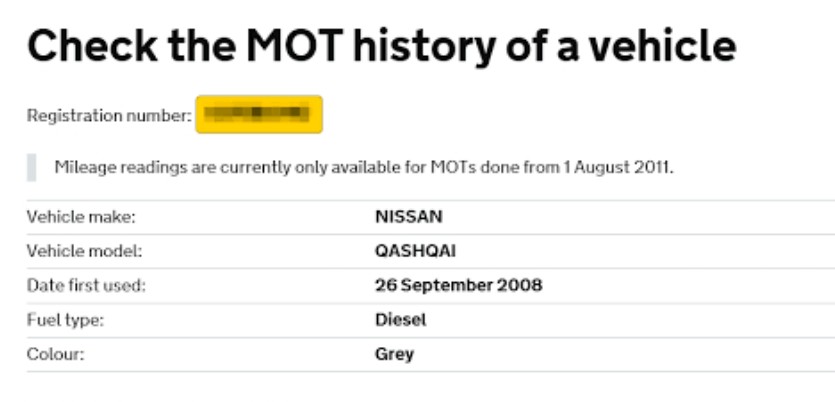
MOT results and history for a vehicle can be checked online using its registration number. This allows verification of past faults, advisories, expiry dates, and recorded mileage at test time. The national database is maintained by the DVSA and provides an official record of test outcomes.
For official guidance and to check a vehicle's MOT history, see the GOV.UK MOT history service: GOV.UK - Check MOT history.
Why history matters
MOT history helps buyers assess recurring faults, verifies mileage trends and shows whether recommended repairs were made. It is a useful tool when purchasing a used vehicle or preparing for service and repairs.
Common faults and preparing for a test
Frequent failures
Common reasons for failing include worn brakes, defective lights, bald or damaged tyres, oil or fluid leaks, and emissions failures. Seasonal issues, such as worn wipers or corroded components, also lead to advisories or fails.
Preparation tips
Simple checks before a test can reduce the chance of failure: confirm all lights function, check tyre condition and pressure, ensure windscreen visibility is clear and wipers work, top up essential fluids, and ensure seat belts and mirrors are intact. Test centres can supply a list of inspection items where needed.
Regulation, enforcement and further information
Oversight and standards
The DVSA regulates MOT stations and testers to ensure standards are met. The Department for Transport (DfT) sets the legal requirements for vehicle safety and emissions. Local enforcement agencies and police may take action against vehicles found to be unroadworthy.
When to seek professional help
If a fault is identified that is not understood, a qualified mechanic or an authorised test centre can diagnose and recommend repairs. For complex compliance questions or disputes about test outcomes, official guidance from the DVSA or written notices from enforcement bodies provide the authoritative position.
Record-keeping and selling a vehicle
Documentation
Keeping MOT certificates and service records helps demonstrate maintenance and supports accurate valuation when selling. Transferring a vehicle to a new keeper does not transfer any remaining MOT validity, but the certificate record remains linked to the vehicle on the national database.
Impact on resale
A full MOT history with regular passes and addressed advisories can improve buyer confidence. Repeated failures or dangerous defects noted in history can affect resale value and may require clear disclosure to prospective buyers.
Frequently asked questions
How can I perform an MOT check online?
Use the vehicle's registration number on the official GOV.UK MOT history service to view past test results, expiry dates and mileage recorded at each test.
What happens if an MOT expires?
Driving a vehicle without a valid MOT certificate when one is required can lead to fines and enforcement action; check official guidance for legal specifics and consider arranging a test before the expiry date.
Does an MOT cover mechanical condition and servicing?
An MOT tests safety and emissions standards at the time of inspection; it is not a full service. Regular maintenance and servicing are recommended in addition to annual MOT testing.
Can a vehicle be driven after failing an MOT?
Driving a vehicle that has failed its MOT may be permitted only to take it directly to a repair facility or test centre for a retest; however, driving an unroadworthy vehicle is generally unsafe and can carry penalties. Follow local enforcement rules and seek repairs promptly.
How long is an MOT certificate valid?
An MOT certificate is valid for 12 months from the date of issue unless the vehicle is sold or the vehicle class specifies different testing intervals. Check the expiry date on the certificate and the national database.