Become an MRI Technologist in Dallas, TX: A Complete Guide to Training, Certification, and Career Entry
-
- Published Updated
- 69 views
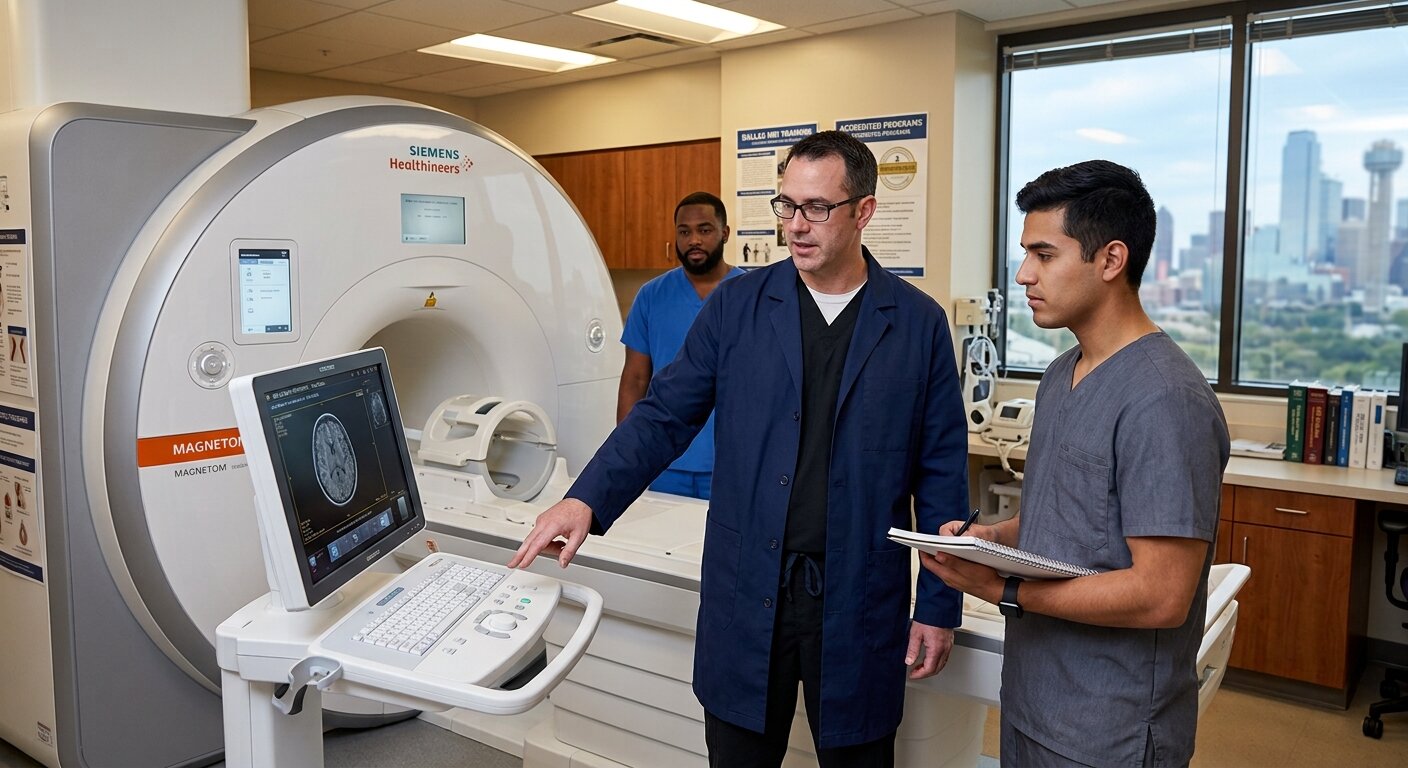
Dallas–Fort Worth is one of the fastest-growing healthcare hubs in Texas, and demand for qualified MRI technologists is climbing right along with it. If you're searching for MRI training in Dallas, TX, you're likely trying to figure out which program actually leads to a job — not just a certificate. This guide breaks down what MRI training involves, what to look for in a program, what certification requires, and how to turn your training into a real career in diagnostic imaging.
What Is MRI Training and Why It Matters
Magnetic Resonance Imaging (MRI) is a non-invasive diagnostic technology that uses powerful magnets and radio waves to produce detailed images of organs, soft tissue, bone, and the nervous system. Unlike X-ray or CT, MRI doesn't use ionizing radiation, which makes it a preferred imaging method for many diagnostic situations — from neurological conditions to musculoskeletal injuries to cardiac imaging.
An MRI technologist is the clinical professional who operates this equipment. That role requires more than button-pushing: technologists must understand anatomy, physics principles behind magnetic resonance, patient positioning, contrast administration protocols, and strict safety procedures around the MRI's magnetic field. This is why structured MRI training programs exist — they build the technical competency and clinical judgment that licensing boards and employers require.
For residents of Dallas, Fort Worth, Arlington, Plano, and the broader Metroplex, local training means you can complete coursework and clinical rotations without relocating, while building the kind of regional hospital and imaging-center connections that often lead directly to employment.
Who Should Pursue MRI Technologist Training
MRI training in Dallas typically attracts a few distinct groups:
- Practicing radiologic technologists (ARRT-registered in Radiography) who want to add an MRI credential to expand their scope of practice and earning potential.
- Career changers coming from adjacent healthcare or technical fields who want a shorter path into a well-paying allied health role.
- Recent graduates of radiologic technology or imaging science programs looking to specialize early.
- Current CT or X-ray techs in Dallas-area hospitals who want cross-training to increase their value to their employer.
Each of these paths has a slightly different route into MRI training, which is why it's worth understanding the prerequisite structure before enrolling.
MRI Training Pathways: Primary vs. Post-Primary Eligibility
There are two recognized routes to becoming ARRT-certified in Magnetic Resonance Imaging, and this distinction matters a lot when evaluating a Dallas-area program.
1. Post-Primary Pathway (Most Common)
Most MRI technologists already hold a primary ARRT certification — typically in Radiography (R), Radiation Therapy (T), or Nuclear Medicine Technology (N). If you already hold one of these, a post-primary MRI training program builds directly on your existing clinical foundation. These programs focus specifically on MRI physics, cross-sectional anatomy, pulse sequences, and MRI-specific safety protocols, plus the required clinical experience hours in MRI.
2. Primary Pathway
For individuals without a prior ARRT credential, some programs offer a primary eligibility route, which requires significantly more coursework in general patient care, anatomy and physiology, and imaging fundamentals before MRI-specific training begins.
A reputable Dallas MRI training provider should clearly tell you upfront which pathway you qualify for based on your existing credentials — and should not enroll you in a program that doesn't match your eligibility status, since that mismatch is one of the most common reasons students later fail to sit for certification.
What a Quality MRI Training Program in Dallas Should Include
When comparing MRI training providers in the Dallas-Fort Worth area, look for these core components:
Didactic (Classroom) Instruction
This covers MRI physics and instrumentation, cross-sectional anatomy, pulse sequence parameters, contrast agents and pharmacology, patient screening protocols, and MRI safety zones. This is the theoretical backbone that prepares you for the ARRT MR certification exam.
Hands-On Clinical Externship
Classroom learning alone won't make you job-ready. Clinical rotations at an actual imaging center or hospital — under the supervision of a registered MRI technologist — are where you apply scanning protocols, practice patient positioning, learn coil selection, and build the muscle memory needed to scan efficiently and safely. Programs based in Dallas have an advantage here: local clinical partnerships with area hospitals and outpatient imaging centers mean your externship site is close to home and often becomes a pipeline to your first job.
MRI Safety Certification
Because of the powerful magnetic field involved, MRI safety training is non-negotiable. Understanding zone classifications (Zone I–IV), ferromagnetic hazard screening, implant and device contraindications, and emergency procedures around the magnet is a core part of any legitimate MRI training curriculum.
Exam Preparation
A strong program doesn't just teach the material — it prepares you specifically for the ARRT MR certification exam, including practice testing, content review aligned with the ARRT content specifications, and guidance through the application process itself.
Flexible Scheduling
Many students pursuing MRI training in Dallas are already working in healthcare. Evening, weekend, or hybrid online/in-person formats make it realistic to complete training while keeping your current job.
MRI Certification: What ARRT Requires
The American Registry of Radiologic Technologists (ARRT) is the credentialing body most employers recognize. To sit for the MR certification exam, candidates generally need to:
- Hold (or be completing) a primary ARRT certification, or complete the primary pathway education and clinical requirements.
- Complete the required structured education in MRI-specific content.
- Document a set number of clinical competencies performed under supervision (covering various anatomical regions and MRI procedures).
- Pass the ARRT MR certification examination, which tests both procedures/safety and image production/evaluation content domains.
Many states, including Texas, also have their own licensure or registration requirements for operating imaging equipment, so a good training program will walk you through Texas-specific compliance alongside national ARRT certification.
Career Outlook for MRI Technologists in Dallas, TX
Dallas-Fort Worth's hospital systems, outpatient imaging centers, and specialty clinics are expanding, and diagnostic imaging roles — including MRI — are consistently listed among the more stable, well-compensated allied health careers. A few reasons the outlook is strong locally:
- Population growth: DFW is one of the fastest-growing metro areas in the country, driving sustained demand for diagnostic healthcare services.
- Aging population: Higher rates of orthopedic, neurological, and oncological imaging needs increase MRI scan volume.
- Specialization premium: Technologists with both a primary credential (like Radiography) and an MRI specialty typically command higher pay and more scheduling flexibility than single-credential techs.
- Multiple employer types: Hospitals, standalone imaging centers, orthopedic practices, and mobile MRI services all hire MRI techs, which spreads opportunity across different work environments and shift structures.
What to Expect Day-to-Day as an MRI Technologist
Understanding the actual job helps clarify why training matters so much. A typical shift includes:
- Screening patients for metal implants, pacemakers, and other MRI contraindications
- Positioning patients and selecting the correct coil for the exam ordered
- Programming and adjusting pulse sequences based on the clinical question
- Administering or coordinating contrast injection when ordered by the radiologist
- Monitoring patients throughout the scan, including those with anxiety or claustrophobia
- Reviewing images for quality and technical accuracy before sending to the radiologist
- Maintaining strict safety protocols around the MRI's always-on magnetic field
This is skilled, detail-oriented clinical work — which is exactly why structured training, not shortcuts, is what separates technologists who get hired quickly from those who struggle to find placement.
How to Choose the Right MRI Training Provider in Dallas
Since this is a transactional decision — you're evaluating where to actually enroll — here's a practical checklist:
- Accreditation and ARRT alignment: Confirm the program's curriculum is structured around ARRT content specifications and that completion makes you exam-eligible.
- Clinical site partnerships: Ask specifically which Dallas-area hospitals or imaging centers host externships, and how clinical hours are scheduled.
- Instructor credentials: Instructors should be ARRT-certified, ideally with active or recent clinical MRI experience, not purely academic backgrounds.
- Job placement support: Strong programs maintain relationships with local employers and can speak concretely about where recent graduates were hired.
- Transparent pathway guidance: The provider should assess your existing credentials and clearly explain whether you qualify for the post-primary or primary pathway before you enroll.
- Realistic timeline and cost: Ask for a clear breakdown of program length, tuition, and any additional costs (uniforms, background checks, liability insurance for clinicals).
Frequently Asked Questions
Do I need a prior radiology credential to
train in MRI?
Not always — primary pathway programs exist for those without one — but most
students entering MRI training already hold a credential like ARRT(R), which
generally shortens the path to certification.
How long does MRI training take?
Post-primary programs are often shorter, since they build on existing clinical
education — frequently completed within several months to about a year
depending on clinical hour requirements and scheduling format.
Is MRI training available with evening or
weekend classes in Dallas?
Many providers offer flexible formats specifically because a large share of
students are working technologists adding a specialty credential.
What's the difference between MRI training and
MRI certification?
Training is the educational and clinical preparation; certification is the
credential (such as ARRT(MR)) earned by passing the national exam after
completing that training.
Conclusion
MRI training in Dallas, TX is more than a line on a resume — it's a structured path into one of diagnostic imaging's most in-demand specialties, backed by real clinical competency, safety expertise, and a credential employers trust. Whether you're a radiologic technologist looking to specialize, a career changer entering allied health, or a current imaging professional expanding your scope, the right program will combine solid didactic instruction, hands-on clinical externship hours at local Dallas-Fort Worth facilities, and direct preparation for ARRT MR certification.
Given the Metroplex's growing healthcare demand, now is a practical time to pursue MRI technologist training locally — where your clinical hours, instructor relationships, and job search all happen in the same market where you plan to build your career. If you're ready to move forward, the next step is requesting a program outline and pathway assessment from a Dallas-based MRI training provider to see exactly where you'd fit and how quickly you could be exam-ready.