How Nail Salons Keep Every Booking Call From Slipping Away
-

- Published Updated
- 1,991 views
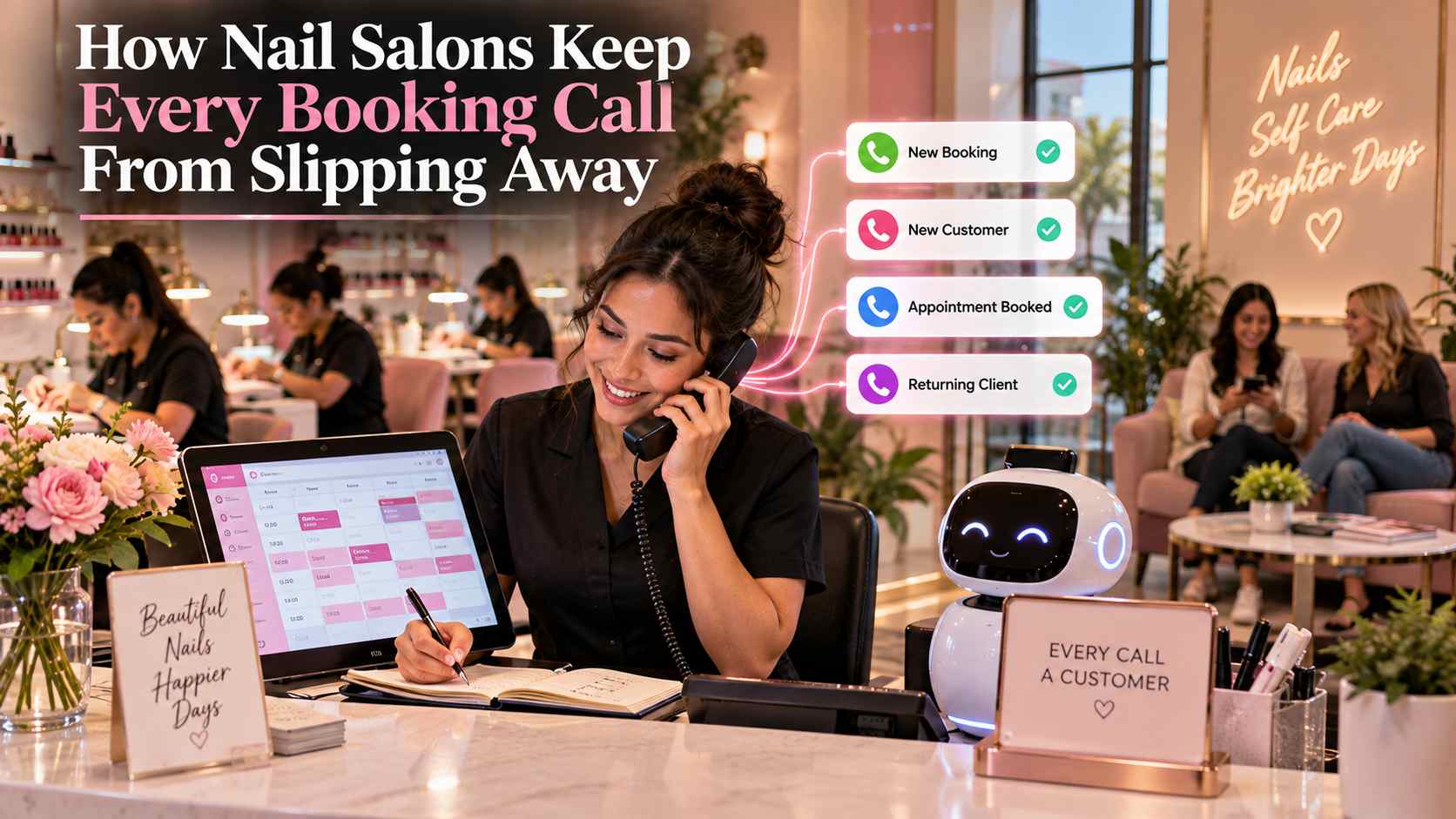
It's eight fifteen on a Tuesday night and someone's scrolling through salon options on her phone, trying to lock in an appointment before a wedding this weekend. She finds a place she likes, calls, and gets nothing but a closed sign's worth of silence, no voicemail greeting even, just endless ringing. She moves on to the next name on her list. That salon never finds out it lost the booking, because from its side, nothing happened at all. The phone just rang in an empty building until it stopped. A lot of booking calls never arrive during business hours in the first place. People think about appointments whenever it crosses their mind, on a lunch break, after the kids are finally in bed, during a commute home, and salons built entirely around a nine-to-six schedule end up missing a real slice of demand simply because of when it shows up.
Why After Hours Is Actually Peak Booking Time for a Lot of Clients
Salons close, but the impulse to book doesn't follow the same clock. Someone remembers she needs a manicure before a work event only once she's home and finally has a quiet minute to actually think about it. Another client's comparing prices between two salons on her phone during a commercial break, ready to commit the second she finds availability. None of that lines up neatly with when a salon happens to be open and staffed to answer. A call at eight in the evening or on a Sunday morning is just as real as one at two on a Wednesday afternoon, but only one of those calls has any real shot at getting answered under a typical staffing setup.
The Different Ways Calls Slip Away
It's not just closed hours causing the leak. A technician answering the phone mid-service creates its own kind of loss, a rushed, distracted conversation that technically counts as answered but still leaves the caller unsure whether her appointment actually got booked right. Staff turnover adds another layer too, since a newer front desk hire might not know the full schedule well enough to confidently book a specific technician request, so she ends up giving vague answers that make a caller hesitant to commit on the spot. Then there's plain overload. A salon might genuinely try to answer every call during business hours and still miss plenty, simply because three phones' worth of demand is funneling through one line staffed by people who also happen to have their hands full of polish and gel at that exact moment.
Why Client Experience on the Phone Shapes Long-Term Loyalty
The call itself is often a client's very first impression of a salon, before she's ever sat in a chair or seen any actual work. A confusing or rushed booking experience plants a small seed of doubt that can linger even after a genuinely good first visit. A smooth call, on the other hand, quick, clear, confident, tends to set expectations that carry through into how she perceives everything that follows. This matters more in an industry built on repeat visits than most owners give it credit for. A client booking six or eight times a year isn't judging the salon solely on nail quality. She's also, whether she realizes it or not, judging how easy it consistently is to get an appointment whenever she happens to need one.
How 24/7 Coverage Changes What Business Hours Even Mean
Some salons have started closing this gap with tools built to answer calls around the clock, whether or not anyone's physically in the building. A 24/7 AI Voice Agent for Nail Salons can pick up that eight-fifteen call, check real technician availability, and confirm a booking on the spot, all without requiring a single staff member to be present after closing. For a business running almost entirely on appointment volume, capturing that after-hours demand tends to matter a lot more than it sounds like on paper. The shift here is less about extending staff hours and more about decoupling booking availability from staffing availability entirely, so a salon can effectively stay open for bookings even while it's physically closed for the night.
Why Consistency Matters More Than Speed Alone
Answering quickly is only part of what makes a phone interaction feel good to a caller. The other part is consistency, getting the same clear, accurate, helpful experience whether she calls at nine in the morning or nine at night, whether she's a first-time caller or a regular who's booked a dozen times before. There's a deeper look at what actually shapes that impression in this piece on AI Voice Assistant Customer Experience, which gets into why the quality of a phone interaction tends to influence trust and loyalty more than most business owners realize until they actually start paying attention to it. For a nail salon specifically, that consistency is what turns a one-time caller into someone who keeps coming back without ever second-guessing whether she'll actually get through when she needs to.
What a Salon Can Do to Audit Its Own Coverage Gaps
A reasonable place to start is just looking at when calls tend to come in versus when the salon's actually staffed to answer them. Comparing call timestamps against business hours over a couple of weeks tends to reveal exactly how much demand is showing up outside the window a salon currently catches. From there, it becomes a matter of deciding how much of that gap is worth closing, and how, before another season of missed after-hours bookings quietly comes and goes without anyone noticing.