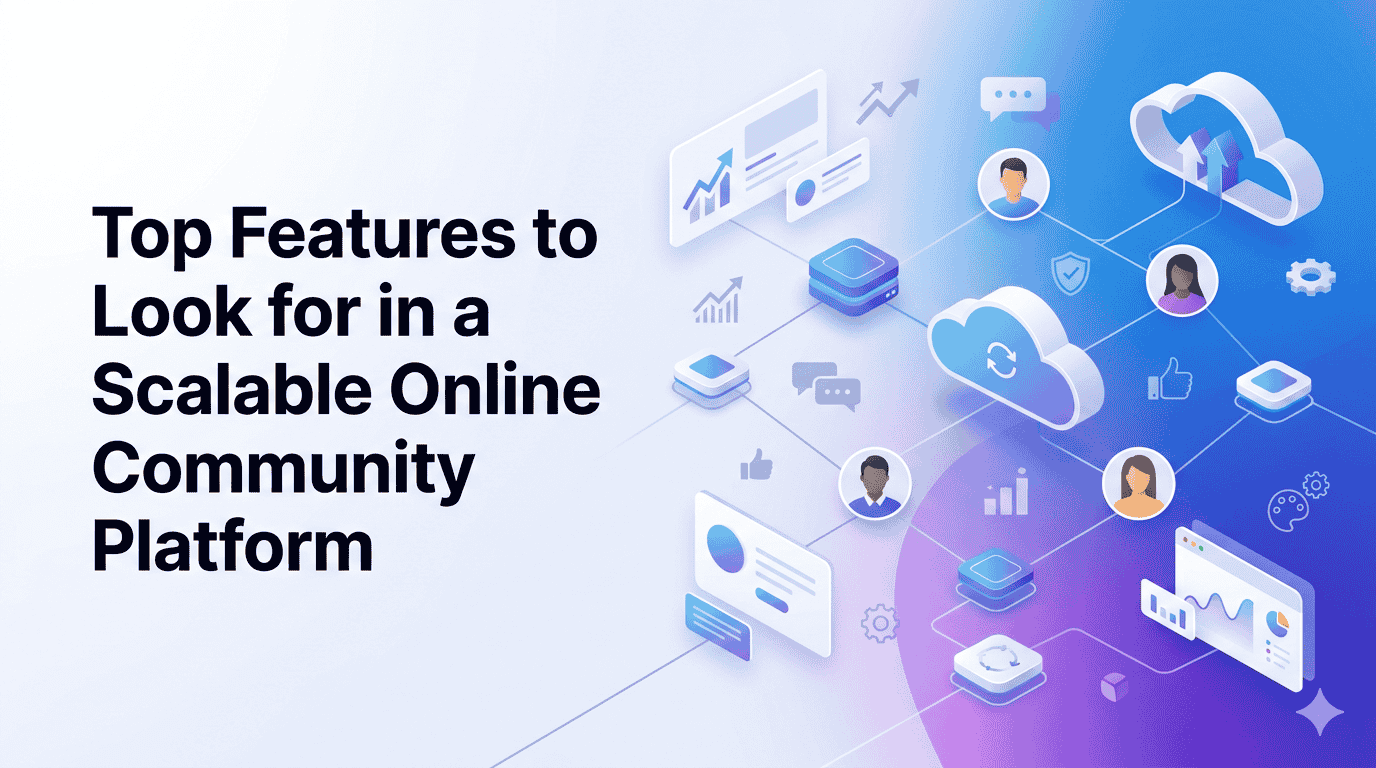
Top Features to Look for in a Scalable Online Community Platform
-
- Published Updated
- 8,770 views
Building an online community sounds exciting at first. You create a website, invite people, and start growing members. But here’s the problem most people face later. Their platform starts slowing down. Features stop working smoothly. Managing users becomes stressful. This usually happens because they didn’t choose a Scalable Online Community platform from the beginning. I’ve seen this happen with many growing communities. A small group of 100 users works fine on almost any platform. But once you reach thousands of members, things change quickly. That’s why choosing the right platform early matters.
In this guide, you’ll learn the most important features to look for before investing in a community platform. These are the features that help communities grow without technical headaches.
What Does “Scalable” Really Mean?
A scalable platform is simply a platform that can grow with your community.
Imagine opening a small café.
At first, serving 10 customers is easy.
But what happens when 500 people show up every day?
You need:
- More space
- Better systems
- Faster service
- Better management
Online communities work the same way.
A scalable platform can handle:
- More members
- More content
- More traffic
- More interactions
without crashing or becoming slow.
That’s why choosing a proper Scalable Online Community solution is important from day one.
Why Scalability Matters for Community Growth
Many people think scalability only matters for huge businesses.
That’s not true.
Even small niche communities can grow fast if the engagement is strong.
For example:
- A fitness group
- A gaming forum
- A parenting community
- A coaching membership site
Sometimes growth happens unexpectedly.
From experience, one viral post or influencer mention can suddenly bring thousands of users overnight.
If your platform cannot handle that traffic:
- Users leave
- Pages load slowly
- Notifications fail
- Discussions become messy
And first impressions matter a lot online.
Top Features to Look for in a Scalable Online Community
1. Flexible User Management
As your community grows, managing members becomes harder.
A good platform should make this easy.
Look for features like:
- User roles
- Admin permissions
- Moderation controls
- Member approvals
- Ban and reporting systems
For example, you may want:
- Moderators for discussions
- Separate access for premium members
- Community managers for events
Without proper user management, things become chaotic very quickly.
2. Fast Performance and Reliable Hosting
Speed matters more than people realize.
If pages take too long to load, users simply stop visiting.
A scalable platform should offer:
- Fast page loading
- Optimized databases
- Reliable hosting support
- CDN integration
- Caching systems
In most cases, slow websites kill engagement.
People expect instant access today.
That’s why platforms like SocialEngine are often preferred by growing communities because they are built specifically for community scalability and user engagement.
If you're researching platforms for a Scalable Online Community, it's worth exploring their features and scalability options.
3. Mobile-Friendly Experience
Most users join communities from their phones now.
If your platform looks broken on mobile, growth becomes difficult.
A good platform should provide:
- Responsive design
- Mobile apps or app support
- Easy navigation
- Fast mobile loading
From experience, mobile engagement is often higher than desktop engagement for social communities.
People check communities while:
- Traveling
- Waiting in line
- Relaxing at home
Mobile usability directly affects retention.
4. Strong Content Management Features
Communities create a huge amount of content.
Posts, photos, videos, comments, messages — everything adds up quickly.
Your platform should help organize this content properly.
Look for:
- Categories and tags
- Search functionality
- Content moderation tools
- Media support
- Easy post creation
A messy community becomes hard to use.
And when users cannot find useful content, they stop participating.
5. Customization Options
Every community is different.
A gaming community will not look or behave like a business networking platform.
That’s why customization matters.
Choose a platform that allows:
- Theme customization
- Branding changes
- Plugin support
- Layout editing
- Feature expansion
One common mistake beginners make is choosing a platform that looks good initially but cannot be customized later.
That becomes a problem as the community evolves.
6. Built-In Engagement Features
Communities survive because of engagement.
If people stop interacting, the community slowly dies.
Good engagement features include:
- Notifications
- Activity feeds
- Likes and reactions
- Groups
- Private messaging
- Polls and events
These small features keep users active.
From experience, notifications alone can dramatically increase returning visitors.
People come back when they feel connected.
7. Good Moderation Tools
As communities grow, moderation becomes extremely important.
Without moderation:
- Spam increases
- Toxic behavior spreads
- Valuable users leave
A scalable platform should provide:
- Spam filters
- User reporting
- Content approval systems
- Keyword blocking
- Moderator permissions
Healthy communities always have clear moderation systems.
This is something many beginners ignore in the early stages.
8. SEO and Search Visibility
A community platform should help your content rank on search engines.
This brings long-term organic traffic.
Look for SEO-friendly features like:
- Clean URLs
- Meta tags
- Schema support
- Fast loading speed
- Mobile optimization
Many successful communities grow because their discussions rank on Google.
For example:
- Question-based discussions
- Tutorials
- User-generated content
- Niche advice
These pages can drive traffic for years.
If you want to understand how community platforms help improve engagement and growth, you can also read this helpful guide on building a strong online community strategy.
9. Third-Party Integrations
No platform does everything alone.
Eventually, you may need:
- Email marketing tools
- Payment gateways
- Analytics tools
- CRM software
- Video integrations
A scalable platform should connect easily with other tools.
This saves time and prevents technical headaches later.
For example:
- Connecting Mailchimp for newsletters
- Stripe for memberships
- Google Analytics for tracking users
Integrations make management easier as the community grows.
10. Security and Privacy Features
Security becomes more important as your member count increases.
Communities collect:
- User data
- Email addresses
- Messages
- Payment information
A secure platform should offer:
- SSL support
- Secure login systems
- Privacy controls
- Backup systems
- Two-factor authentication
Many people only think about security after problems happen.
It’s smarter to prepare early.
Common Mistakes to Avoid
Choosing Based Only on Price
Cheap platforms often become expensive later.
Why?
Because you eventually need:
- Extra plugins
- Better hosting
- Developer help
- Platform migration
Sometimes paying slightly more early saves huge costs later.
Ignoring Future Growth
Many people think:
“My community is small right now.”
But growth can happen unexpectedly.
Always choose a platform that can handle future expansion.
Overcomplicating the Community
Too many features can confuse users.
Simple communities often perform better.
Focus on:
- Easy navigation
- Clear discussions
- Helpful interactions
Not Testing Mobile Experience
Always test your platform on phones and tablets.
Most users will access your community from mobile devices.
Pro Tip
Start Small, But Think Big
One of the smartest approaches is this:
Start with the features you actually need today.
But choose a platform that allows future expansion.
This keeps things simple while still preparing for growth.
From experience, communities grow better when the user experience feels clean and focused.
You can always add advanced features later.
Conclusion
Building a successful community is not only about getting members. It’s about creating a platform that can continue growing smoothly over time.
A good Scalable Online Community platform helps you:
- Manage users easily
- Improve engagement
- Handle traffic growth
- Keep the experience smooth for everyone
Many beginners focus only on launching quickly. But long-term success comes from planning for growth from the beginning. If you’re serious about building a growing online community, take time to compare platforms carefully and focus on scalability, flexibility, and user experience. The right foundation makes everything easier later.