Common Packaging Problems in Food Manufacturing and How to Prevent The
-
- Published Updated
- 21 views
Common Packaging Problems in Food Manufacturing and How to Prevent Them
Food packaging plays an important role in protecting products, maintaining quality, and ensuring efficient distribution. Food manufacturers depend on reliable packaging processes to prepare products for storage, transportation, and sale. However, packaging operations can face several challenges, including inconsistent filling, poor sealing, material wastage, machine downtime, and production delays.
These problems can increase operating costs and affect customer satisfaction. Understanding the common challenges in food packaging and implementing suitable solutions can help manufacturers improve their production processes.
1. Inconsistent Product Filling
One common challenge in food packaging is maintaining accurate and consistent filling quantities. Underfilling and overfilling can lead to product wastage, inconsistent package weights, and potential compliance issues.
The cause may depend on the product's characteristics, filling mechanism, machine calibration, or operating conditions.
How to prevent it: Manufacturers should use filling equipment suitable for their products and regularly check weighing systems. Routine calibration, sample weight checks, and proper operator training can help maintain filling consistency.
2. Poor Sealing Quality
Sealing is essential for keeping packaged products properly enclosed. Weak seals, wrinkles, or incomplete sealing can cause packages to open during handling and transportation.
Sealing problems may occur when the temperature, pressure, or sealing time is unsuitable for the packaging material. Damaged sealing components can also affect performance.
How to prevent it: Operators should follow the recommended machine settings for the selected packaging film. Regular inspection of sealing jaws, sample package testing, and preventive maintenance can help reduce sealing defects.
For food products that require specific barrier properties, manufacturers should also select packaging materials appropriate for the product and its storage conditions.
3. Excessive Packaging Material Waste
Packaging material waste can increase production costs and reduce operational efficiency. Incorrect film alignment, unsuitable material dimensions, machine setup errors, and frequent production adjustments may contribute to waste.
Businesses handling large production volumes should monitor material consumption carefully to identify recurring issues.
How to prevent it: Check film dimensions and compatibility before production begins. Ensure that the packaging film is aligned correctly and that machine settings are suitable for the selected material. Tracking material usage and recording waste during each production run can help identify opportunities for improvement.
4. Unexpected Machine Downtime
Machine breakdowns can interrupt production schedules, delay deliveries, and increase maintenance expenses. Problems may arise from worn components, insufficient cleaning, incorrect settings, or a lack of routine maintenance.
Unexpected downtime can be particularly challenging for manufacturers operating under tight delivery schedules.
How to prevent it: Establish a preventive maintenance schedule based on the machine manufacturer's recommendations. Inspect important components regularly, keep essential spare parts available where appropriate, and train operators to recognise early warning signs.
Recording maintenance activities and machine stoppages can also help businesses identify recurring problems.
5. Choosing Unsuitable Packaging Machinery
Selecting packaging machinery without evaluating the product and production requirements can create long-term operational difficulties. Different products require different filling methods, package formats, and handling arrangements.
For example, sugar granules and potato chips have different physical characteristics. A filling system suitable for one product may not be ideal for another.
How to prevent it: Before purchasing equipment, manufacturers should consider product type, pack weight, pouch dimensions, packaging material, target production capacity, and available factory space.
Discussing these requirements with a packaging machinery supplier can help businesses identify equipment suitable for their intended application.
6. Packaging Material Compatibility Issues
Not every packaging film is suitable for every machine or product. Differences in material thickness, structure, sealing characteristics, and barrier properties can affect packaging performance.
Using unsuitable materials may result in poor seals, inconsistent package formation, or increased waste.
How to prevent it: Confirm that the selected packaging material is compatible with the machine and product requirements. Conduct practical trials where appropriate and verify sealing quality before moving to full-scale production.
Food manufacturers should also consider applicable food-contact requirements and the protection needed during storage and distribution.
7. Lack of Operator Training
Packaging machinery requires correct operation, setup, cleaning, and troubleshooting. When operators do not understand the equipment, small errors can develop into recurring production problems.
Incorrect settings and inconsistent operating practices may affect filling accuracy, sealing quality, and machine performance.
How to prevent it: Provide practical operator training and maintain clear standard operating procedures. Training should cover safe machine operation, routine inspections, cleaning, basic troubleshooting, and escalation of technical issues.
Following the manufacturer's instructions helps support safe and consistent operations.
8. Improving Packaging Efficiency Through Better Planning
Packaging efficiency depends on more than the machine itself. Production planning, material availability, operator coordination, quality checks, and maintenance practices all influence the overall workflow.
Manufacturers can begin by monitoring production output, rejected packages, material consumption, and downtime. These measurements help identify the most important areas for improvement.
Businesses should also review whether their existing equipment can meet current production requirements or whether a different packaging configuration may be more appropriate.
The Role of Suitable Packaging Machinery
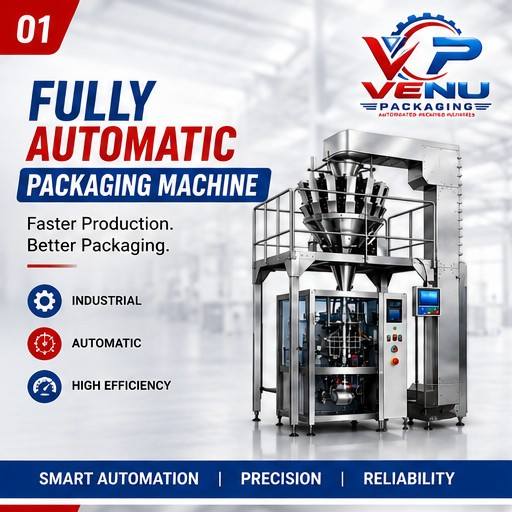
Automatic Form Fill Seal Machines and Pouch Packing Machines are used in various industrial packaging applications. Depending on their configuration, they can perform operations such as package forming, product filling, and sealing.
However, the right solution depends on the product, packaging format, required output, and operating conditions. Manufacturers should evaluate these factors before investing in new equipment.
Venu Packaging provides packaging machinery solutions, including Automatic Form Fill Seal Machines and Pouch Packing Machines. Businesses can explore its available solutions and discuss their packaging requirements through the official website: https://venupackaging.com/
Conclusion
Food packaging problems can affect production efficiency, product presentation, material consumption, and operating costs. Inconsistent filling, poor sealing, material waste, machine downtime, and unsuitable equipment are common challenges that manufacturers should address systematically.
Regular maintenance, suitable packaging materials, operator training, quality checks, and careful machinery selection can help businesses improve their packaging operations.
By identifying the causes of recurring problems and implementing practical solutions, food manufacturers can work toward more consistent packaging quality and efficient production processes.