How Poor Workshop Lighting Impacts Car Detailers: Risks, Costs, and Practical Considerations
-
- Published Updated
- 1,708 views
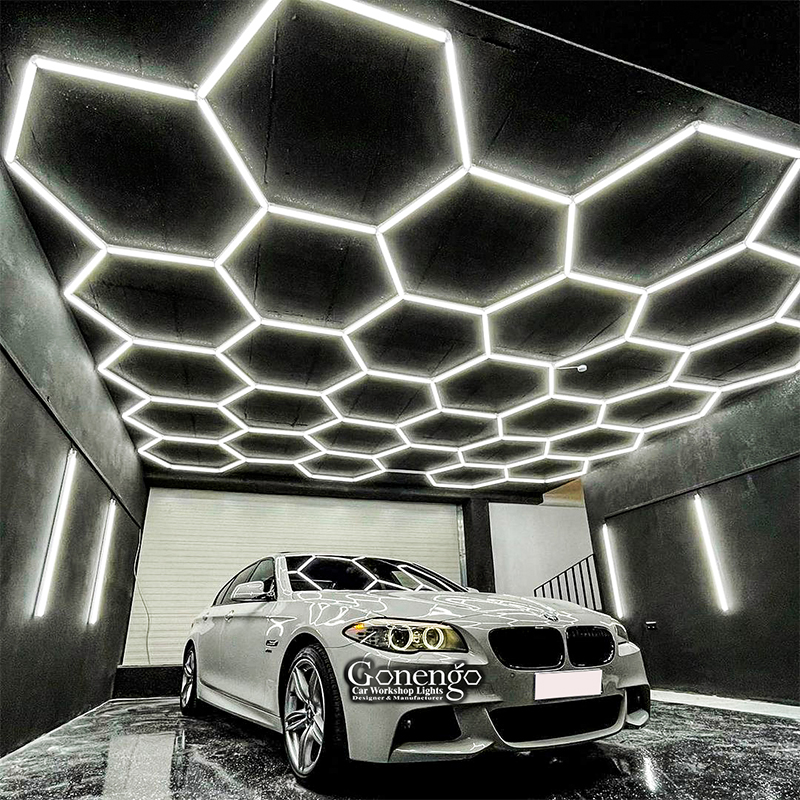
Car detailers rely on visual accuracy to identify paint defects, match colors, and finish surfaces; lacking adequate lighting in workshop creates hidden risks that affect quality, safety, and profitability. This article outlines the core challenges caused by insufficient light, explains relevant lighting metrics, and points to standards and resources for safer, more consistent results.
- Insufficient illumination reduces defect detection and increases rework.
- Poor color rendering and inconsistent light produce mismatched finishes.
- Worker safety, ergonomics, and productivity suffer under inadequate lighting.
- Key factors: illuminance (lux/foot-candles), CRI, color temperature, uniformity, and glare control.
- Refer to occupational lighting guidance and industry best practices when upgrading lighting.
Consequences of lacking adequate lighting in workshop
Missed defects and reduced finish quality
Visual inspection is central to detailing work. Low or uneven lighting makes swirl marks, holograms, dust nibs, and sanding marks harder to see. Small surface defects that would be caught under correct light are frequently overlooked, leading to customer dissatisfaction and costly rework. Gloss and texture rely on light interaction; improper illumination can disguise or exaggerate surface irregularities during polishing and final inspection.
Color matching and paint evaluation problems
Color perception depends on light quality. A low Color Rendering Index (CRI) or an inappropriate color temperature can make paint appear different from its true hue and reflectance. This complicates tint selection, blending, and matching of panels, especially in mixed or metallic finishes where angle and light spectrum matter.
Safety, ergonomics, and worker fatigue
Poor lighting increases the risk of slips, trips, and contact with tools or chemicals because hazards are less visible. Workers strain to see details, which contributes to eye fatigue, headaches, and reduced concentration. Over time, these effects lower throughput and increase the chance of errors or accidents.
Operational costs and productivity losses
When defects go unnoticed or produce inconsistent results, rework rates rise and throughput declines. Indirect costs include more labor hours, higher material waste, and possible reputational damage. Energy-inefficient lighting choices can also raise operating expenses unless balanced with proper fixture selection and control strategies.
Key lighting factors detailers should consider
Illuminance: brightness levels (lux and foot-candles)
Task-specific illuminance matters. Precision work such as paint correction or micro-sanding typically benefits from higher lux levels than general workshop lighting. Uniform distribution reduces shadows that hide defects.
Color Rendering Index (CRI) and color temperature (Kelvin)
CRI indicates how accurately a light source renders colors compared with daylight. Higher CRI (80–90+) improves color judgments; many detailers prefer neutral color temperatures (around 4000–5000 K) to approximate daylight and reveal true surface tones. Very warm or very cool lights can distort perceptions.
Glare, shadowing, and uniformity
Directional light sources can create glare and harsh reflections; diffuse, well-placed fixtures reduce misleading highlights. Uniformity ratio (the balance between brightest and dimmest areas) should be managed so that inspection zones are consistently lit.
Portable versus fixed lighting
Portable inspection lamps are useful for targeted checks and highlight different viewing angles, while fixed overhead lighting establishes baseline uniformity. Both types complement each other when selected for proper CRI, color temperature, and beam control.
Maintenance, setup, and standards to consider
Maintenance and lamp replacement
Light output degrades over time. Scheduled cleaning of fixtures and timely replacement of lamps preserve illuminance and color quality. Dust and film on lenses dramatically reduce effective output and should be part of routine maintenance.
Workshop layout and fixture placement
Fixture placement should minimize long shadows from vehicle bodies and tools. A combination of overhead linear fixtures, angled inspection lights, and task lamps provides layers of light to reveal different surface attributes.
Regulatory and industry guidance
Occupational safety organizations and lighting societies provide guidance on workplace lighting levels and safety. For general workplace and task-lighting recommendations, refer to official resources such as the Occupational Safety and Health Administration: OSHA lighting guidance. The Illuminating Engineering Society (IES) also publishes best-practice recommendations for task-specific illuminance and uniformity.
Cost-effective upgrades and decision points
LED retrofits and controls
LED fixtures often deliver higher useful light output with lower energy use and longer life compared with older technologies. Look for fixtures with high CRI, suitable color temperature, and good lumen maintenance. Dimmable controls and zoned switching help tailor light levels for inspection versus general work.
Measure before and after
Using a light meter to record lux values at typical inspection points provides objective targets for improvement. Documenting before-and-after values helps justify investments and identify problematic areas requiring additional task lighting.
Conclusion
Inadequate lighting in workshop undermines the core responsibilities of car detailers by masking defects, distorting color, creating safety hazards, and increasing operating costs. Addressing lighting quality—through proper illuminance, high CRI, correct color temperature, fixture placement, and maintenance—supports consistent, efficient, and safe detailing work.
Frequently Asked Questions
How important is adequate lighting in workshop for car detailers?
Adequate lighting in workshop is essential: it enables reliable defect detection, accurate color matching, safer working conditions, and fewer reworks. Proper lighting metrics and fixture placement directly affect finish quality and operational efficiency.
What is the recommended color temperature and CRI for detailing work?
Neutral color temperatures around 4000–5000 K with a CRI of 80 or higher are commonly recommended to approximate daylight and render colors accurately. Specific tasks may benefit from higher CRI values (90+) for critical color evaluations.
Are portable inspection lamps necessary if overhead lighting is good?
Portable lamps help reveal defects that only appear at certain viewing angles or under directional light. They are a useful complement to consistent overhead lighting and improve final quality control.
How often should lighting be inspected or maintained?
Routine checks should include cleaning fixtures and measuring illuminance at key inspection points every few months, with lamp replacement scheduled according to manufacturer life ratings and observed lumen depreciation.