How Pressure Mats Can Support Safer Elderly Care at Home
-

- September 12th, 2026
- 1,662 views
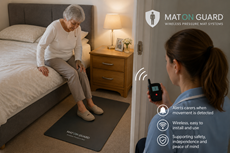
Caring for an elderly family member at home can be rewarding, but it can also bring concerns about falls, night-time movement and wandering. This can be particularly challenging when someone has dementia, Alzheimer’s, cognitive loss or limited mobility. While regular supervision remains important, caregivers cannot watch someone continuously throughout the day and night. A pressure mat for elderly care can provide an additional alert system, helping carers become aware when movement occurs.
Mat On Guard specialises in wireless floor pressure mat alarm systems designed for elderly people, dementia care, home carers, nursing staff and care environments. The systems are designed as a supplementary safety aid that helps caregivers monitor movement and awareness of wandering.
Why Elderly Safety at Home Requires Extra Awareness
As people age, everyday activities such as getting out of bed, walking to the bathroom or moving around the home can become more difficult. A person may also become disorientated, particularly during the night. For families providing care, knowing when a loved one has left their bed or entered an area where they could be at risk can be extremely important.
A floor pressure mat can provide an extra layer of awareness without requiring the person to wear a device. When pressure is applied to the mat, the system can send an alert to a receiver, allowing a caregiver to respond to the movement.
Mat On Guard describes its systems as supplementary alert aids rather than replacements for professional medical care, supervision or other safety measures.
What Is a Pressure Mat for Elderly Care?
A pressure mat is a floor-based sensor designed to detect when someone steps onto it. In elderly care, it can be positioned beside a bed, near an exit or in another appropriate area where movement needs to be monitored.
Mat On Guard systems use a pressure-sensitive floor mat connected to a small transmitter. When the mat is activated, the transmitter sends a signal to a wireless chime receiver, creating an audible alert for the caregiver or family member.
This simple approach can be useful for people who may be at increased risk of wandering or falls. Instead of relying entirely on constant visual observation, caregivers receive an alert when the monitored area is accessed.
How Do Wireless Pressure Mats Work?
The basic process is straightforward:
- Place the sensor mat: Position it in the appropriate location, such as beside the bed or near a doorway.
- Connect the transmitter: The sensor mat connects to the supplied wireless transmitter.
- Use the receiver: A portable or plug-in receiver provides an audible alert when the mat is activated.
Mat On Guard states that its systems do not require complicated installation. The sensor mat connects to the transmitter and the selected chime receiver is then used to provide the alert.
This makes wireless pressure mats particularly practical for home care situations where families may want a monitoring solution that can be set up without complicated installation.
Where Should You Place a Pressure Mat?
Correct placement is important for getting the most useful alerts.
A pressure mat may be positioned:
- Beside a bed
- In front of a bedroom exit
- Near a doorway
- In front of a chair
- At an entrance or exit that requires monitoring
For bedside monitoring, the mat should be positioned where the person is likely to step when getting out of bed. Mat On Guard specifically recommends placing its floor sensor mats on the floor beside a bed or in front of a chair and states that the mat should not be used on a bed or chair.
The correct position ultimately depends on the individual's mobility, room layout and the area caregivers need to monitor.
Single Exit vs Double Exit Pressure Mats
One important consideration is whether the person can leave the bed from one side or both sides.
A single-exit pressure mat system is designed for situations where only one side of the bed needs to be monitored. Mat On Guard offers single-exit systems with portable, plug-in or combined receiver options.
A double-exit system uses two sensor mats so that movement can be detected from either side of the bed. This can be particularly useful when the bed is positioned in the centre of a room.
Choosing between the two therefore depends less on simply selecting the largest system and more on understanding how the person actually moves around their room.
Portable or Plug-In Receiver: Which Should You Choose?
The receiver is another important part of the system.
A portable receiver can be useful when a caregiver needs to move around the house while remaining within the system's operating range. A plug-in receiver provides a convenient fixed alert point, while systems such as the IP300 range combine portable and plug-in receivers.
For larger homes or situations where caregivers move between rooms, having more flexibility in where an alert can be received may be beneficial.
Pressure Mats for Dementia and Wandering Awareness
Dementia can affect memory, orientation and awareness of surroundings. Some individuals may get out of bed during the night or wander into areas where additional supervision is needed.
A pressure mat does not prevent someone from moving. Instead, it can provide an alert when movement occurs in a monitored location. This can help a caregiver become aware of movement sooner and decide whether assistance is required.
Mat On Guard specifically designs its pressure mat systems for people with dementia, Alzheimer’s, special needs, cognitive loss and elderly people receiving care at home or in professional care settings.
Pressure Mats for Care Homes and Nursing Environments
Pressure mats are not limited to private homes. They can also be used in care homes and healthcare environments where staff need additional awareness of patient movement.
Mat On Guard offers floor sensor mats designed to integrate with existing nurse call systems. The mats can work in conjunction with these systems to provide an additional movement alert.
This can make them useful in environments where staff already have established patient monitoring and communication procedures.
Choosing the Right Pressure Mat System
Before purchasing a pressure mat, consider several practical factors:
1. Where will the mat be used?
Determine whether the main monitoring area is beside a bed, near an exit, in front of a chair or elsewhere.
2. Does the bed have one or two exits?
Choose a single-exit or double-exit system according to the room layout and movement pattern.
3. Where does the caregiver need to receive the alert?
Consider whether a portable receiver, plug-in receiver or both would be most convenient.
4. Is a protective cover required?
Mat On Guard recommends using a cover mat to protect the pressure sensor mat. Its product range includes protective cover options.
5. Is nurse-call integration required?
For care homes and healthcare environments, check whether the chosen system needs to work with an existing nurse call setup.
Why Wireless Pressure Mats Can Be Useful for Family Carers
One of the biggest challenges of home care is balancing safety with independence. Constantly following an elderly person or remaining beside their bed throughout the night may not be practical.
A wireless pressure mat can provide caregivers with additional awareness while allowing the individual to move around normally. It does not replace human care, but it can support a broader safety strategy.
Mat On Guard's systems are designed with this purpose in mind, providing movement alerts for home carers and nursing staff while remaining relatively simple to set up and use.
Final Thoughts
Supporting an elderly person at home requires a combination of appropriate supervision, a safe environment and practical care solutions. For people who may be at risk of wandering or falls, a pressure mat for elderly care can provide caregivers with an additional way to become aware of movement.
From single-exit and double-exit systems to portable and plug-in receivers, the right setup depends on the person's needs and the environment where monitoring is required. Mat On Guard provides wireless pressure mat alarm systems for homes, care environments and nursing settings, with options designed around different bed layouts and monitoring requirements.
For families and professional carers looking for a practical movement-alert solution, choosing the right pressure mat and positioning it correctly can be an important part of creating a more responsive and supportive care environment.