Practical Guide to Promote Tech Services: Ads, Channels, and Measurement
-

- March 05th, 2026
- 528 views

FREE SEO Topical Map Generator: Find Your Next Content Ideas
To promote tech services successfully, focus on the combination of precise targeting, clear value messaging, and measurable campaigns. This guide explains practical advertising choices, channel trade-offs, and a repeatable checklist to turn awareness into qualified leads.
- Goal: reach decision-makers for specific tech services with measurable ads and nurture flows.
- Core approach: prioritize top-performing channels, test creative, scale on proven ROAS/CPA.
- Detected intent: Commercial Investigation
- Core cluster questions (for further reading): see section below.
Promote tech services: A practical plan
Promote tech services by aligning the product value to buyer pain points, selecting channels where those buyers spend time, and using measurable offers (trials, demos, consultations) to convert attention into leads. Start with a simple hypothesis: who benefits most, what outcome matters most, and which message will shorten the sales cycle.
Define target audience and value proposition
Buyer personas and intent mapping
Segment potential customers by company size, industry, role (e.g., CTO, head of ops), and buying intent (research, vendor evaluation, purchase). Create short intent maps showing the top 2–3 problems each persona faces and the specific outcomes the service delivers.
Message framing and proof
Use concise headlines that name the outcome, not the feature (for example: "Reduce cloud costs by 20% in 90 days"). Include proof elements like case-study metrics, short testimonials, and trust badges where available.
Choose channels and understand trade-offs
Paid search and intent-driven ads
Paid search reaches active buyers; keywords are high intent but can be expensive. Pair search ads with targeted landing pages whose CTAs align with the search query.
LinkedIn and vertical professional platforms
LinkedIn and niche industry sites provide strong B2B targeting (role, industry). Expect higher CPMs but better lead quality when the objective is account-level outreach.
Content, SEO, and organic acquisition
Content builds authority and lowers acquisition cost over time; use content to rank for help-stage queries and to support paid campaigns with remarketing.
Trade-offs to consider
Paid channels deliver speed and scale but cost money and demand tight measurement. Organic channels are cheaper long-term but require time and consistent quality. Balance short-term paid experiments with long-term content investment.
Creative, offers, and funnel design
High-converting offers
Use offers that match intent: technical whitepapers for research-stage buyers, ROI calculators for evaluation, and free trials or demo seats for purchase-stage prospects.
Landing page checklist
- Single clear headline that mirrors ad language
- One primary CTA and one secondary (e.g., download & request demo)
- Social proof, short form fields, and fast load times
Measurement, testing, and budgets
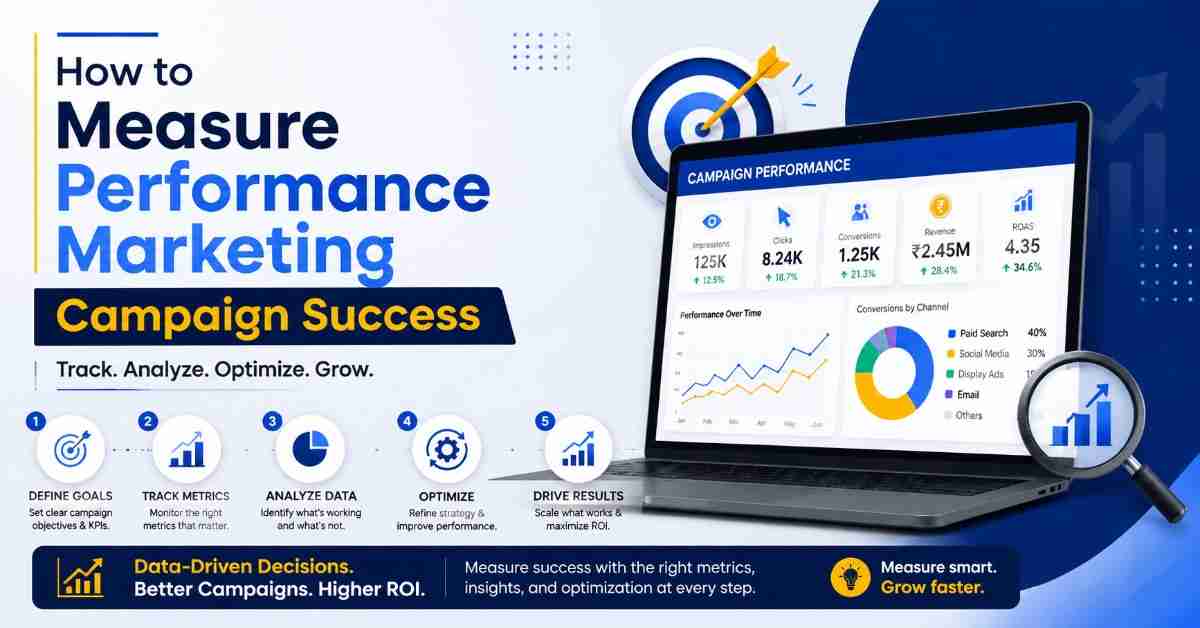
Set primary metrics before launching: CPL (cost per lead), MQL-to-SQL conversion, pipeline contribution, and CAC. For attribution and optimization, use a mix of first-party analytics and ad platform reporting. For platform-specific best practices, follow official ad network guidance—see Google Ads best practices for ad structure and optimization (Google Ads support).
Experimental approach
Run tightly scoped A/B tests with one variable at a time (headline, CTA, image). Scale winners and pause underperformers after a statistically meaningful run.
PROMOTE checklist — a named framework
The PROMOTE checklist makes campaigns repeatable:
- P — Pinpoint audience: define personas and buying stage
- R — Results-first message: lead with outcome and proof
- O — Offer alignment: match CTA to intent (demo, trial, whitepaper)
- M — Measure: set and track CPL, conversion rates, and pipeline impact
- O — Optimize: run iterative A/B tests and refine targeting
- T — Tech stack: ensure tracking, CRM, and analytics are integrated
- E — Expand: scale channels that meet target ROI and replicate creatives
Real-world example
A mid-size SaaS provider targeting retail operations used the PROMOTE checklist to launch a three-channel campaign: Google Search for active queries, LinkedIn Sponsored Content for role-based reach, and gated case studies for content capture. The initial 8-week test established a CPL baseline. By tightening the ad copy to highlight a 30% workflow reduction (a proven customer metric) and shortening the demo request form, CPL dropped 28% while SQL quality rose—allowing scale into additional verticals.
Practical tips
- Run a 2-week pilot budget per channel to gather baseline CPC/CPL before scaling.
- Use first-party tracking and UTM parameters to keep attribution reliable across platforms.
- Prioritize lead quality: slightly higher CPL is acceptable if downstream conversion improves.
- Automate follow-ups (email + sales ping) for leads with qualifying signals to reduce drop-off.
Common mistakes and how to avoid them
Common mistakes
- Too broad targeting: wastes budget on irrelevant audiences.
- Unclear offers: visitors leave if the next step isn’t obvious.
- Poor tracking: inaccurate attribution leads to bad optimization decisions.
How to avoid them
Start narrow, make the CTA explicit, and validate tracking with test conversions before pausing or scaling campaigns.
Core cluster questions
- What channels deliver the best leads for B2B tech services?
- How to structure a landing page that converts demo requests?
- What metrics should be tracked for tech service campaigns?
- How long should an ad pilot run before scaling?
- How to measure ROI of content versus paid ads for services?
Resources and next steps
Use the PROMOTE checklist to plan the first 60 days: identify audience, choose 2 prioritized channels, craft matching offers, and set measurement. After one test cycle, evaluate channel CPL and lead quality to decide where to scale.
FAQs
How to promote tech services on a limited budget?
Prioritize channels with the highest intent (search) and low-cost content plays (long-form content targeting niche queries). Use targeted LinkedIn outreach for high-value accounts and rely on organic SEO for long-term lower-cost lead flow.
What is the best metric to evaluate tech service ads?
Cost per qualified lead (CPL for leads that meet MQL criteria) combined with pipeline contribution gives a balanced view of performance beyond clicks and impressions.
Which ad creative formats work for B2B tech service advertising strategies?
Short case-study videos, demo snippets, and clear benefit-driven carousels perform well. Use formats that show outcome quickly and include a direct CTA for a demo or consultation.
How long should an initial advertising pilot run?
Run an initial pilot for 2–4 weeks or until at least several hundred impressions per creative and channel are collected—enough to assess early CPC/CPL trends and validate lead quality.
How to measure lead quality for B2B tech service campaigns?
Define qualification criteria (company size, role, budget, timeline) and track MQL-to-deal conversion rate. Integrate CRM lead scoring with ad reporting to assign true value to each channel.