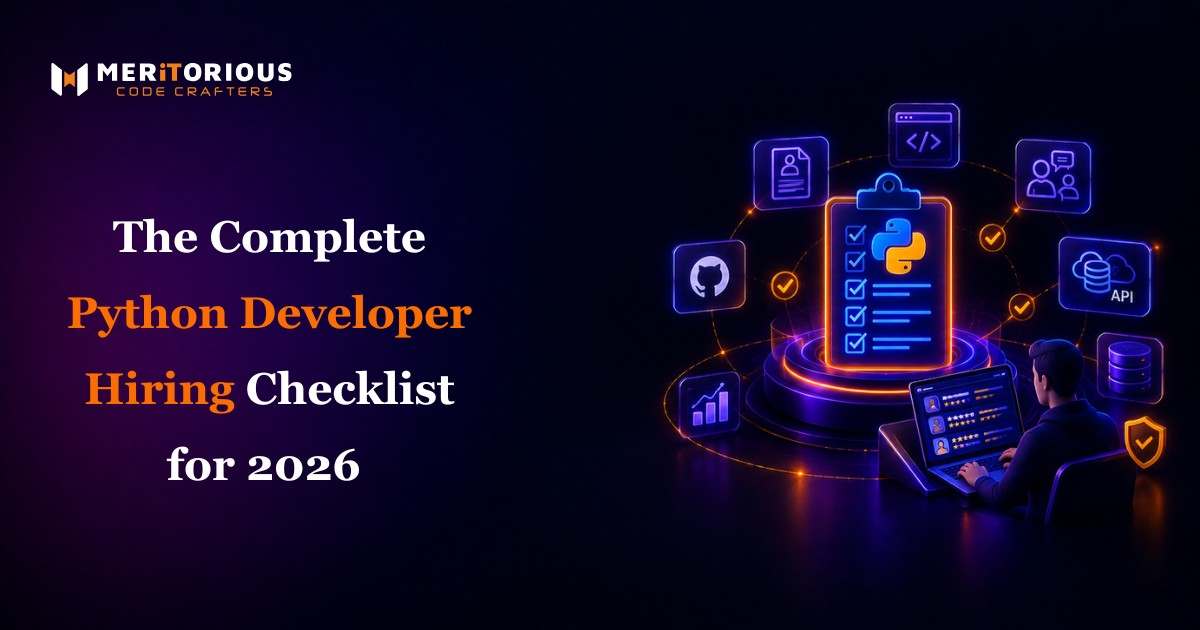
The Complete Python Developer Hiring Checklist: How to Hire the Right Developer
-

- Published Updated
- 72 views
Key Takeaways
- Define the project's technical requirements before searching for candidates.
- Match the developer's experience with the actual Python use case.
- Evaluate frameworks, databases, APIs, testing, and deployment skills based on the role.
- Review portfolios and GitHub repositories as supporting evidence rather than relying only on résumés.
- Use practical technical assessments that resemble real project work.
- Evaluate communication, documentation, problem-solving, and collaboration skills.
- Complete contracts, confidentiality, intellectual-property, and data-access requirements before development begins.
- Use a structured onboarding process to help the developer understand the codebase and development workflow.
Hiring a Python developer requires more than checking years of experience or reviewing a résumé. Businesses should evaluate Python skills, framework expertise, project experience, problem-solving ability, communication, and familiarity with the technologies required for the role. A structured hiring process helps companies compare candidates consistently and choose developers based on actual project requirements.
Whether you are building a web application, SaaS platform, API, automation system, data pipeline, or AI-powered product, a structured Python developer hiring checklist can help organize the process from role definition through onboarding.
What Should You Define Before Hiring a Python Developer?
The first step is to clearly define what the developer will build and what responsibilities they will own. Python is used across several areas of software development, so simply asking for "Python experience" may not provide enough information.
Start by identifying the project type, primary Python use case, required frameworks, database technologies, API requirements, cloud environment, testing requirements, DevOps responsibilities, seniority, expected working hours, engagement model, and project timeline.
For example, a Django backend developer may need strong knowledge of Django ORM, REST APIs, PostgreSQL, authentication, and application architecture. An AI/ML-focused Python developer may instead require experience with machine learning frameworks, data processing, model integration, and Python-based AI libraries.
The job description should reflect these differences. Clear requirements also make it easier to evaluate whether you need an individual Python developer, a broader engineering team, or a provider offering Hire Full-Stack Developers for end-to-end application development.
What Skills Should a Python Developer Have?
The right skill set depends on the project. However, most Python development roles can be evaluated across several broad categories.
Python Fundamentals
Evaluate knowledge of:
- Python syntax and data structures
- Object-oriented programming
- Functions and modules
- Exception handling
- Iterators and generators
- Decorators
- Asynchronous programming
- Memory and performance considerations
The goal is not simply to test whether a candidate remembers definitions. Ask candidates to explain how they have applied Python concepts in actual projects.
Python Framework Experience
Common Python frameworks include:
- Django
- Flask
- FastAPI
The required framework should match the project.
For example, a Django-based application may require experience with models, views, authentication, middleware, ORM queries, and application structure. If the project depends heavily on Django, businesses can also consider whether candidates or external teams with experience to Hire Django Developers align with the application's technical requirements.
A FastAPI project may instead require knowledge of API design, dependency injection, validation, asynchronous operations, and service integration.
Database Skills
Depending on the application, evaluate experience with:
- PostgreSQL
- MySQL
- MongoDB
- Redis
- DynamoDB
- SQL
- Database design
- Query optimization
- Indexing
- Transactions
For senior roles, ask candidates to explain database design decisions rather than only testing query syntax.
API Development
For backend roles, consider evaluating:
- REST API design
- Authentication
- Authorization
- API versioning
- Validation
- Error handling
- Rate limiting
- Documentation
- Third-party integrations
Testing
A Python developer may work with tools such as pytest or unittest.
Ask candidates how they approach:
- Unit testing
- Integration testing
- Test coverage
- Regression testing
- Mocking
- Error scenarios
The exact testing requirements should depend on the project's architecture and delivery process.
Cloud and DevOps
For roles that include deployment responsibilities, evaluate relevant experience with:
- Docker
- CI/CD
- AWS
- Microsoft Azure
- Google Cloud
- Linux
- Application monitoring
- Logging
- Deployment automation
Not every Python developer needs to be a DevOps specialist. Define which responsibilities belong to the developer and which belong to a separate infrastructure team.
Python Developer Skills Checklist
| Skill Area | What to Evaluate | When It Matters |
|---|---|---|
| Python | Fundamentals, OOP, async programming | Most Python roles |
| Frameworks | Django, Flask, FastAPI | Framework-specific projects |
| Databases | SQL, NoSQL, schema design | Data-intensive applications |
| APIs | REST, authentication, integrations | Backend development |
| Testing | Unit and integration testing | Production applications |
| Cloud | AWS, Azure, GCP | Cloud-based systems |
| DevOps | Docker, CI/CD, deployment | Developers handling delivery |
| AI/ML | ML libraries, data processing | AI-focused projects |
| Security | Authentication, access control, secure coding | Applications handling sensitive data |
How Do You Choose the Right Python Hiring Model?
Businesses can use different engagement models depending on project scope, duration, budget, and internal management capacity.
Hiring Model |
Suitable For |
Main Consideration |
Full-Time Developer |
Long-term product development |
Ongoing employment and management |
Dedicated Developer |
Continuous development with defined responsibilities |
Requires clear communication and project ownership |
Part-Time Developer |
Limited or recurring workloads |
Available hours may restrict delivery |
Freelancer |
Short, clearly defined assignments |
Continuity and project context may vary |
Development Company |
Projects requiring a broader team |
Requires clear scope and delivery expectations |
There is no single hiring model that fits every project. A business should consider how long the developer will be needed, how much technical management is available internally, and whether the work requires continuous product knowledge.
For organizations that need broader Python capabilities rather than one isolated role, Python Development Services can be evaluated alongside individual hiring options.
How Do You Source Python Developers?
Potential sourcing channels include:
- Professional networks
- Developer communities
- Job boards
- Referrals
- Freelance platforms
- Specialist recruitment firms
- Software development companies
- Dedicated developer providers
The sourcing method should match the amount of internal screening capacity available.
Before publishing a job description, define the evaluation criteria. This makes it easier to compare candidates consistently rather than changing requirements during the hiring process.
How Do You Evaluate a Python Developer's Resume?
A résumé can provide useful background information, but it should be treated as one part of the evaluation.
Look for:
- Relevant Python experience
- Project types
- Framework experience
- Database experience
- Cloud technologies
- Industry experience
- Responsibilities in previous projects
- Career progression
- Relevant certifications or training
Pay particular attention to whether the candidate's experience matches the role you are hiring for.
For example, experience building data-processing pipelines may not automatically demonstrate the skills required to architect a large Django application.
How Do You Evaluate a Python Developer's Portfolio or GitHub?
A portfolio or GitHub profile can provide additional context about a developer's practical experience.
Consider reviewing:
- Project complexity
- Code organization
- Documentation
- Testing
- Commit history
- README quality
- Open-source contributions
- Technical decision-making
- Framework usage
- Collaboration evidence
However, not every developer can publicly share professional code because of confidentiality or intellectual-property restrictions. A limited public portfolio should therefore not automatically be treated as a negative signal.
When appropriate, ask candidates to explain private projects during an interview or provide a small practical assessment.
What Should You Test in a Python Developer Interview?
Technical interviews should focus on skills that are relevant to the actual position.
Python Fundamentals
Ask questions that explore:
- Data structures
- Object-oriented programming
- Error handling
- Generators
- Decorators
- Async programming
- Performance
Instead of asking only "What is a decorator?", ask the candidate to explain when they have used one and what problem it solved.
Framework Knowledge
For Django, you might discuss:
- ORM queries
- Middleware
- Authentication
- Models
- Caching
- Application structure
For FastAPI, you might discuss:
- Dependency injection
- Request validation
- Pydantic
- Async endpoints
- Background tasks
- API architecture
Database Knowledge
Ask candidates to explain how they would:
- Design a schema
- Optimize a slow query
- Choose indexes
- Handle transactions
- Manage relationships
- Store frequently accessed data
API Design
Explore their approach to:
- Endpoint structure
- Authentication
- Validation
- Error handling
- Versioning
- Idempotency
- Documentation
What Should a Python Coding Assessment Include?
A practical assessment should reflect the type of work the developer would actually perform.
Depending on the role, the task could involve:
- Building a small API
- Creating a database-backed service
- Processing a dataset
- Fixing a Python bug
- Adding tests to an existing application
- Reviewing an existing codebase
- Implementing a small automation workflow
Evaluate the submission based on:
- Correctness
- Code structure
- Readability
- Testing
- Error handling
- Security considerations
- Documentation
- Requirement coverage
The assessment should have a reasonable scope and clearly defined expectations.
How Do You Evaluate a Senior Python Developer?
Senior Python developers generally require evaluation beyond language syntax.
Consider their ability to:
- Design application architecture
- Identify technical trade-offs
- Improve performance
- Design scalable services
- Review code
- Debug production issues
- Mentor developers
- Communicate technical decisions
- Evaluate technology choices
- Plan implementation strategies
A useful senior-level interview question is:
"How would you design this system, and what trade-offs would you consider?"
The answer can reveal how the candidate approaches requirements, constraints, scalability, reliability, and maintainability.
How Do You Evaluate Communication and Problem-Solving?
Technical ability is only one part of software development.
During the hiring process, evaluate whether the candidate can:
- Explain technical concepts clearly
- Ask useful clarification questions
- Communicate blockers
- Document decisions
- Discuss mistakes openly
- Explain trade-offs
- Respond constructively to feedback
- Collaborate with designers, developers, product teams, and stakeholders
For remote teams, written communication is particularly important because requirements, technical decisions, pull requests, and project updates often need to be documented.
What Legal and Contractual Requirements Should You Consider?
Before a developer receives access to confidential systems or proprietary information, establish the appropriate contractual framework.
Depending on the engagement and jurisdiction, this may include:
- NDA or confidentiality agreement
- Intellectual-property assignment
- Services agreement
- Scope of work
- Data-processing or data-handling requirements
- Payment terms
- Termination or notice terms
- Access and security requirements
Legal requirements vary between countries and engagement structures, so businesses should have applicable agreements reviewed by qualified legal counsel.
How Should You Onboard a New Python Developer?
A structured onboarding process helps a developer understand the technical environment and team workflow.
Day 1: Access and Orientation
Provide:
- Repository access
- Project-management access
- Communication tools
- Development environment instructions
- Architecture documentation
- Coding standards
- Team contacts
Use appropriate access controls rather than giving unrestricted permissions by default.
Week 1: Codebase Familiarization
Start with a manageable task that requires the developer to understand existing code.
Useful activities include:
- Codebase walkthrough
- Documentation review
- Pair programming
- Small bug fixes
- First pull request
- Code review
Weeks 2–4: Independent Contribution
Gradually move toward independent work.
Set:
- Clear acceptance criteria
- Defined ownership
- Development milestones
- Code-review expectations
- Communication routines
- A 30-day check-in
The goal is to establish a sustainable development workflow rather than expecting immediate mastery of an unfamiliar system.
Python Developer Hiring Red Flags to Investigate
Red flags should be treated as signals to investigate rather than automatic proof that a candidate is unsuitable.
Potential Red Flag |
What to Investigate |
Portfolio contains only basic tutorials |
Ask about professional or personal projects with greater complexity |
Candidate cannot explain their code |
Ask them to walk through technical decisions |
Limited testing experience |
Discuss how they approach quality and testing |
Vague project descriptions |
Ask for specific responsibilities and outcomes |
Difficulty explaining trade-offs |
Use a practical architecture question |
Poor communication |
Evaluate written and verbal collaboration |
Unclear project ownership |
Ask which components they personally developed |
Unwillingness to discuss relevant experience |
Clarify confidentiality constraints and request alternative evidence |
The purpose of this stage is to gather enough evidence to make a consistent hiring decision.
What Should You Consider When Hiring Python Developers Offshore?
Offshore development can involve additional operational considerations.
Before starting the engagement, clarify:
Time-Zone Overlap
Determine how many working hours need to overlap for meetings, reviews, support, or collaboration.
Communication
Define:
- Communication channels
- Meeting schedules
- Response expectations
- Documentation standards
- Code-review processes
Security and Access
Establish:
- Repository permissions
- Production-access rules
- Data-access policies
- Credential management
- Device and security requirements
Intellectual Property
Make sure ownership and confidentiality terms are clearly documented and appropriate to the engagement.
Continuity
Discuss what happens if the developer becomes unavailable, leaves the engagement, or the project requirements change.
These considerations apply whether the developer is hired independently, through a recruitment partner, or through a software development company.
Python Developer Hiring Checklist
Use this checklist before finalizing a Python developer hire:
Before Sourcing
☐ Define the project requirements
☐ Identify the primary Python use case
☐ Select required frameworks
☐ Define database requirements
☐ Identify cloud and DevOps responsibilities
☐ Establish the required seniority
☐ Select the engagement model
☐ Define the hiring budget and timeline
Candidate Screening
☐ Review résumé
☐ Evaluate relevant project experience
☐ Review portfolio where available
☐ Review GitHub where relevant
☐ Verify framework experience
☐ Compare experience against project requirements
Technical Evaluation
☐ Test Python fundamentals
☐ Test framework knowledge
☐ Discuss database design
☐ Evaluate API development
☐ Discuss testing practices
☐ Use a practical assessment where appropriate
☐ Conduct system-design evaluation for relevant senior roles
Soft Skills
☐ Evaluate communication
☐ Assess problem-solving
☐ Discuss collaboration
☐ Evaluate documentation habits
☐ Discuss technical decision-making
Before Starting
☐ Complete the appropriate agreement
☐ Address confidentiality
☐ Address intellectual-property ownership
☐ Define data-access requirements
☐ Confirm payment terms
☐ Define communication expectations
Onboarding
☐ Provide system access
☐ Share architecture documentation
☐ Explain development standards
☐ Assign an initial task
☐ Review the first pull request
☐ Establish ongoing communication
☐ Conduct a 30-day check-in
For a more detailed hiring reference, businesses can also review the Complete Python Developer Hiring Checklist when organizing their recruitment and evaluation process.
Frequently Asked Questions
What should I check first when hiring a Python developer?
Start by defining the actual project requirements. Identify the Python use case, frameworks, databases, APIs, cloud responsibilities, seniority, and engagement model. Once these requirements are clear, evaluate candidates against the same criteria so that technical skills and project experience can be compared consistently.
What skills should a Python developer have?
A Python developer may need knowledge of Python fundamentals, object-oriented programming, testing, APIs, databases, and a relevant framework such as Django, Flask, or FastAPI. Additional skills such as cloud, Docker, CI/CD, AI/ML, or data engineering depend on the specific role.
How do I evaluate a Python developer's GitHub profile?
Look at project complexity, code organization, documentation, testing, commit history, and the developer's ability to explain their work. GitHub should be considered alongside interviews and other evidence because professional code may not always be publicly available.
What questions should I ask a Python developer in an interview?
Ask questions related to the actual role. These can cover Python fundamentals, framework experience, database design, API architecture, testing, debugging, security, and technical decision-making. Practical questions are often more useful when they require the candidate to explain how they would solve a realistic problem.
Should I use a coding test when hiring a Python developer?
A practical assessment can be useful when it reflects the work required for the role. The task should have clear requirements, a reasonable scope, and defined evaluation criteria. Depending on the position, a code-review exercise or discussion of previous work may also provide useful evidence.
What is the difference between junior, mid-level, and senior Python developers?
The distinction generally involves experience, independence, technical depth, and responsibility. Junior developers may require more guidance, mid-level developers can usually handle defined features independently, and senior developers are often expected to make architectural decisions, solve complex problems, review code, and contribute to technical direction.
Should I hire a full-time Python developer or a freelancer?
The appropriate model depends on the project's duration, workload, budget, continuity requirements, and available management capacity. Full-time or dedicated arrangements may suit ongoing development, while freelance engagements can be useful for clearly scoped or short-term work.
What should be included in a Python developer job description?
A useful job description should explain the project, responsibilities, required Python frameworks, databases, APIs, cloud technologies, experience level, expected collaboration, engagement model, and key deliverables. Specific requirements generally make it easier for candidates to understand whether the role matches their experience.
How should I onboard a Python developer?
Start by providing the required tools and access, architecture documentation, coding standards, and communication guidelines. Give the developer a manageable first task, review their initial contribution, and gradually move them toward independent work with clearly defined responsibilities.
Why Work With Meritorious CodeCrafters?
Businesses evaluating Python development talent may need more than individual technical skills. Depending on project requirements, they may also need broader development capabilities, framework expertise, and support across different stages of software development.
Meritorious CodeCrafters provides a relevant option for businesses evaluating software development capabilities alongside their Python development requirements. The right approach should ultimately depend on the project's technical scope, team structure, timeline, and required expertise.
Conclusion
Hiring a Python developer is easier to manage when the process is structured around the actual requirements of the project. Start with a clear role definition, evaluate the technologies that matter, review practical experience, assess technical and communication skills, and establish the appropriate contractual framework before development begins.
A useful hiring checklist should also continue after the candidate accepts the role. Effective onboarding, documentation, code reviews, and clear expectations help the new developer understand the product and contribute more effectively.
For businesses evaluating Python development talent, the goal is not simply to find someone who knows Python. The goal is to identify a developer whose technical experience, problem-solving approach, communication style, and working model align with the project's requirements.