What is a Quality Management System (QMS) — And Why Most Businesses Implement It Too Late
-

- Published Updated
- 9,736 views
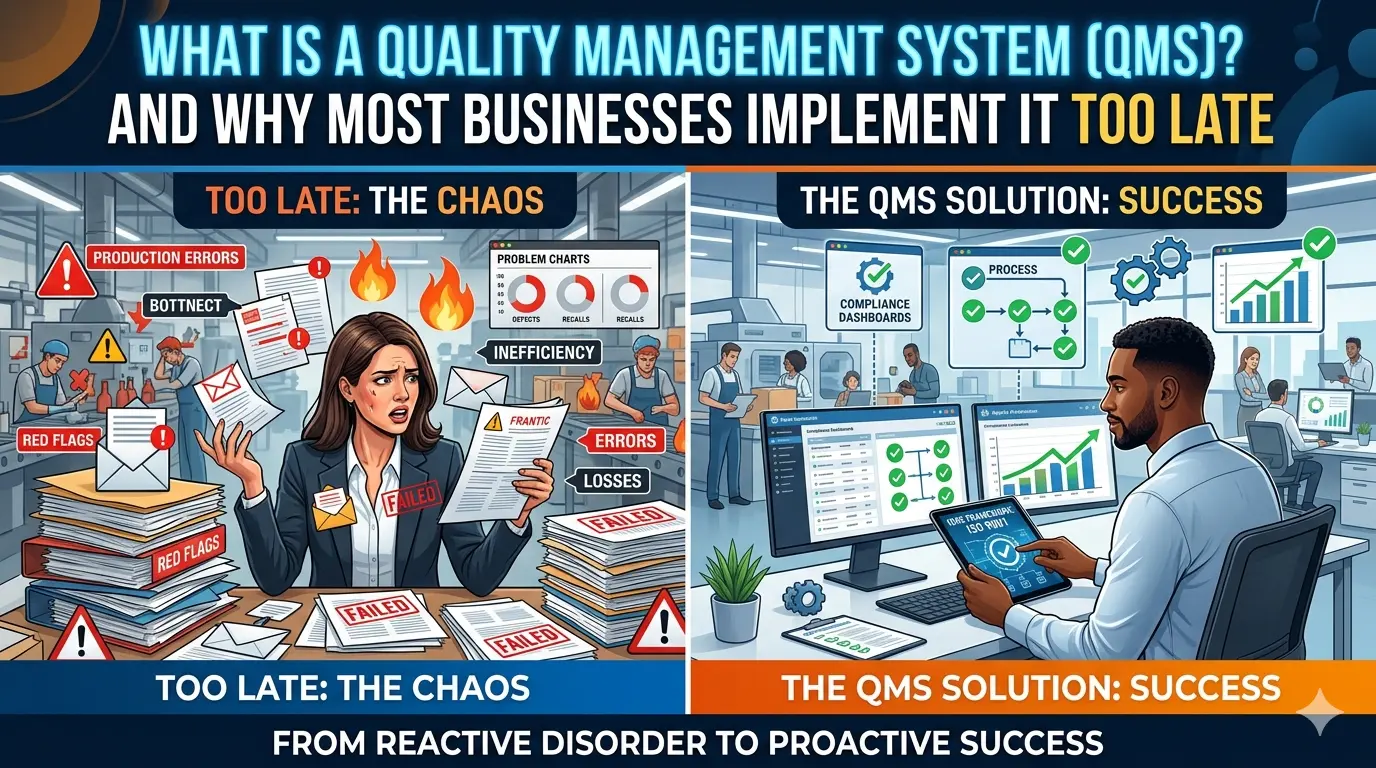
If you’ve ever dealt with inconsistent processes, repeated mistakes, or last-minute compliance chaos, you’ve already experienced the consequences of not having a structured system in place.
Many organizations operate without a formal Quality Management System (QMS) in their early stages, relying instead on informal processes and quick fixes. While this may work temporarily, it often leads to inefficiencies as the business grows.
Most companies don’t begin with a QMS. They recognize the need for one only after operational challenges start affecting performance, customer satisfaction, or compliance requirements. By that point, implementing structure becomes more complex and time-consuming.
In this article, we’ll explore what a QMS really means in practical terms, why it plays a critical role in business operations, and how modern organizations are adopting smarter approaches to quality management.
What is a QMS (In Practical Terms)?
A Quality Management System (QMS) is more than just documentation or compliance-related paperwork. It is a structured framework that helps organizations manage processes, maintain consistency, and continuously improve performance.
At its core, a QMS helps answer three essential questions:
- How can we ensure consistent outcomes across operations?
- How do we identify and resolve issues before they escalate?
- How can we continuously improve our processes over time?
By integrating people, processes, and data, a QMS creates a unified system that supports quality control and operational efficiency, even as the organization expands.
The Real Problem: Growth Without Structure
In the early stages, businesses often prioritize speed and flexibility. While this approach enables rapid growth, it can also lead to a lack of standardization. Over time, this results in:
- Teams following inconsistent processes
- Recurring errors that impact productivity
- Increasing customer complaints
- Pressure to meet regulatory or audit requirements
To address these issues, organizations often rely on temporary solutions such as spreadsheets, manual tracking, or scattered documentation. However, these methods are not sustainable and tend to create more complexity as operations scale.
What a QMS Actually Fixes
A well-implemented QMS introduces structure and clarity into business operations. It helps organizations move from reactive problem-solving to proactive management.
1. Process Standardization
A QMS ensures that all teams follow defined workflows, reducing variability and minimizing errors.
2. Traceability
It provides visibility into processes, allowing organizations to track actions, identify root causes, and maintain accurate records for audits.
3. Accountability
Clear roles and responsibilities are established, ensuring that tasks are properly managed and monitored.
4. Continuous Improvement
With access to performance data, organizations can identify areas for improvement and implement changes systematically.
Traditional vs Modern QMS
Not all QMS approaches are equally effective. Traditional systems often rely heavily on manual processes and static documentation, which can be difficult to maintain and rarely used in day-to-day operations.
Traditional QMS:
- Extensive paperwork
- Manual tracking and updates
- Limited accessibility
- Low user engagement
Modern (Digital / Cloud-Based) QMS:
- Automated workflows
- Real-time monitoring and reporting
- Centralized data access
- Scalable and user-friendly systems
Modern QMS solutions leverage technology to simplify quality management, making it easier for teams to collaborate and maintain consistency across operations.
Where QMS Fits in Tech-Driven Organizations
In technology-driven environments such as SaaS, manufacturing, or rapidly scaling businesses, a QMS becomes essential for maintaining operational stability.
It is particularly valuable when:
- Teams are expanding quickly
- Processes need to be repeatable and reliable
- Compliance with standards such as ISO is required
- Operational inefficiencies need to be minimized
A QMS can be viewed as the foundational system that supports quality, similar to how other systems manage development, deployment, or analytics.
When Should You Implement a QMS?
Many organizations delay implementing a QMS until challenges become unavoidable. However, a proactive approach is far more effective.
Best practices include:
- Documenting processes early in the growth phase
- Standardizing workflows as operations expand
- Introducing tools and systems before inefficiencies escalate
Establishing a QMS early helps prevent disruptions and ensures smoother scaling.
Final Thoughts
Whether you are just starting out or already managing complex operations, implementing a structured Quality Management System can bring long-term value to your organization. It not only helps in maintaining consistent quality standards but also builds a strong foundation for sustainable growth.
With increasing competition and evolving compliance requirements, businesses can no longer rely on manual processes or scattered systems. A centralized and well-managed QMS allows organizations to streamline workflows, reduce inefficiencies, and improve overall performance.
QualityPro’s cloud-based QMS solution is designed to adapt to different business needs, making it suitable for startups, small businesses, and large enterprises alike. By digitizing quality processes, companies can gain better visibility, improve decision-making, and ensure that quality remains a core part of their operations.
If you are planning to enhance your quality processes or want to understand how a QMS can transform your business operations, it is important to start with the right knowledge and approach.
👉 Explore a detailed guide on Quality Management System (QMS), its benefits, types, and implementation process here:
https://tecwrk.com/qualitypro/what-is-quality-management-system-qms
Take the next step toward improving quality, compliance, and efficiency in your organization with a smarter and more reliable QMS approach.