How to Read and Use Google Trends Data for Reliable Search Insights
-

- Published Updated
- 1,911 views
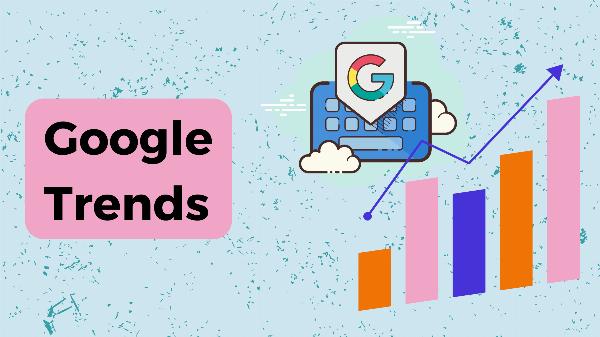
Google Trends data offers a view of relative search interest over time and across regions. This resource can help identify patterns, seasonality, and emerging topics when interpreted correctly and used alongside other sources.
At a glance
- What it is: Normalized, relative measures of search interest for queries and topics.
- Best uses: Trend detection, seasonal analysis, and public-interest monitoring.
- Limitations: Sampling, normalization, and correlation vs causation.
- Sources to consult: official statistics agencies, peer-reviewed studies, and the Google Trends help page.
What is Google Trends data?
Google Trends data reports how often a particular search term is entered relative to the total search volume, scaled from 0 to 100 for the selected time and location. The dataset includes queries, topics, category filtering, and geographic granularity. Values are normalized to allow comparison between different queries and time windows, which means the numbers represent relative, not absolute, search volume.
How to access and prepare Google Trends data
Interactive web interface
The Trends website provides charts, geographic heat maps, and related queries. For basic exploration, the web interface supports comparing multiple queries, changing time ranges, and filtering by country or subregion. The official help center provides step-by-step instructions and usage notes. Google Trends Help
Programmatic access and exports
For reproducible analysis, export CSVs from the site or use community-supported libraries that query Trends programmatically. When exporting, note that weekly or daily resolution may change with the selected time span and that values are rescaled for each export. Combine exported series carefully to avoid inconsistencies caused by differing normalizations.
Interpreting signals and known limitations
Normalization and relative values
Because values are scaled, a score of 100 only indicates the peak relative interest in the chosen window. Comparing two separate exports directly can be misleading unless they share the same baseline or are adjusted with a common reference term.
Sampling, noise, and data smoothing
Google Trends uses sampling to produce results, which can introduce small random variations between repeated queries. Short time windows and low-volume queries tend to be noisier; smoothing and aggregating by week or month can improve signal clarity.
Correlation does not imply causation
Increased search interest can reflect media coverage, seasonal behavior, or genuine changes in usage. To draw causal conclusions, cross-validate Trends patterns with independent data sources such as government statistics (for example, national statistical offices or the Centers for Disease Control and Prevention) or peer-reviewed research.
Common uses and examples
Public interest and journalism
Journalists use Trends to illustrate rising or falling public interest in topics; visualizations are useful when paired with dates of events, policy changes, or publication cycles.
Market and academic research
Researchers use Trends to study seasonality, compare regional interest, and identify emerging queries. Academic work published in journals like the Journal of Medical Internet Research demonstrates methodologies for validating Trends-based indicators against traditional datasets.
Limitations in forecasting
Trends can inform short-term signals but are not a substitute for structured forecasting models built on representative sampling and known denominators. Use Trends as an exploratory input rather than a sole predictor.
Best practices for reliable analysis
- Document the exact query terms, time windows, geography, and filters used for each export.
- Use control queries or stable reference terms when combining multiple series.
- Aggregate low-volume queries to reduce noise and prefer longer time windows when possible.
- Cross-check findings against independent data sources from official organizations or peer-reviewed studies.
Ethics and privacy considerations
Google Trends provides aggregated, anonymized data and is not a substitute for individual-level datasets. When reporting findings, avoid attempts to identify individuals or to infer sensitive personal information from search patterns.
FAQ
What is Google Trends data and how reliable is it?
Google Trends data indicates relative search interest and is reliable for identifying broad patterns, seasonality, and major spikes in attention. Reliability can be limited by sampling, normalization, and low query volume. For rigorous conclusions, validate Trends-based findings against independent datasets from official sources or academic studies.
Can Google Trends show absolute search volume?
No. Trends provides normalized indices rather than absolute counts. External tools and advertiser platforms may report estimated volumes, but Trends itself reports relative metrics.
How can results be compared across time or regions?
Compare results within a consistent time window and use reference queries to align separate exports. When comparing regions, use the same query and time span; consider per-capita differences and internet-penetration rates when interpreting geographic variation.
Are there restrictions on using Google Trends in research?
Respect the Terms of Service and cite the source of data. For publication, provide method details so others can reproduce the data pulls and analyses. Consult institutional review boards when research involves sensitive topics even if using aggregated data.