What Is a Rebound Relationship? Signs, Stages & Truth
-

- Published Updated
- 3,408 views
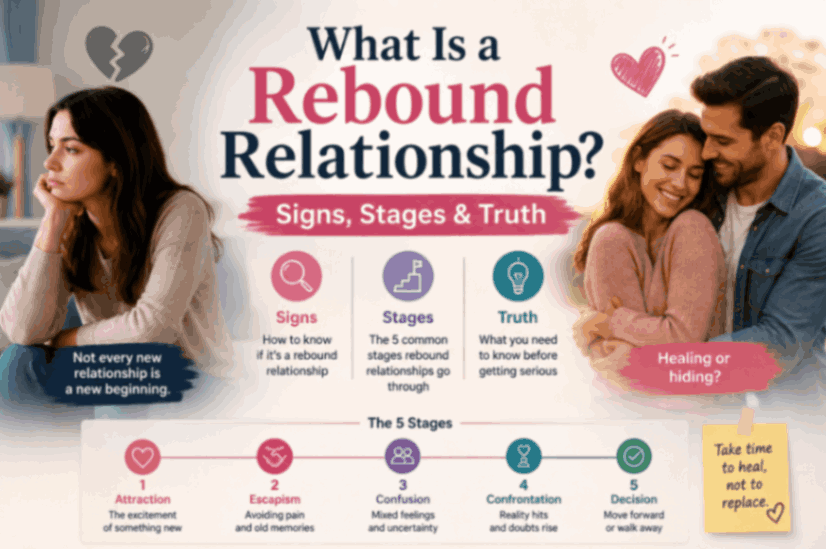
After a breakup, starting to date again can feel exciting, comforting, or even healing. But sometimes a new relationship begins before someone has had enough time to process the previous one. This is where the question what is a rebound relationship becomes important. A rebound relationship is generally understood as a new romantic connection formed soon after a previous relationship ends, particularly when the new relationship is partly being used to cope with unresolved emotions from the breakup.
That does not automatically make the new relationship unhealthy. People recover from breakups differently, and there is no universal waiting period before dating again. The important issue is whether someone is genuinely ready to build a new connection or mainly trying to escape loneliness, grief, or thoughts about an ex.
What Is a Rebound Relationship?
The rebound relationship meaning is more nuanced than simply "dating someone soon after a breakup." Timing can be a clue, but it is not proof.
For example, imagine someone ends a three-year relationship and begins dating another person two weeks later. If they constantly compare the new partner with their ex, talk about getting their ex back, or use the new relationship mainly to avoid being alone, it may be a rebound.
On the other hand, someone can meet a new partner shortly after a breakup and develop a genuine connection. The calendar alone cannot determine whether a relationship is a rebound.
In simple terms, rebound meaning in relationship contexts often involves emotional substitution rather than emotional readiness.
Common Rebound Relationship Signs
Recognizing the signs can help both people understand what is happening without immediately labeling the relationship.
1. The previous partner dominates conversations
One of the clearest signs of a rebound relationship is excessive focus on an ex.
Occasionally mentioning a former partner is completely normal. However, frequent stories, comparisons, anger, or fantasies about reconciliation can indicate that the previous relationship still occupies significant emotional space.
2. The new relationship becomes intense very quickly
A rebound can sometimes move at an unusually fast pace.
Someone may want constant contact, make major promises early, or describe the new partner as "perfect" almost immediately. Intensity is not necessarily bad, but extreme speed can sometimes be an attempt to recreate the emotional security that was lost.
3. Dating seems designed to avoid being alone
Ask a simple question: "Would this person still want the relationship if they felt comfortable being single?"
If the answer seems uncertain, the relationship may be serving more as emotional protection than genuine partnership.
4. Comparisons with the ex are constant
Statements such as "You're so much better than my ex" may sound flattering, but repeated comparisons can create an unhealthy dynamic.
The new partner deserves to be appreciated for who they are, not evaluated against someone from the past.
5. Feelings change dramatically
A person may seem deeply invested one week and emotionally distant the next. This inconsistency can happen when the excitement of a new relationship fades and unresolved feelings from the previous breakup return.
Stages of a Rebound Relationship
There is no scientifically established sequence that every rebound relationship follows. Still, several common patterns can help explain how these relationships develop.
Stage 1: Relief and distraction
Immediately after a breakup, attention from someone new can provide relief. Dating may temporarily reduce loneliness and create a sense that life is moving forward.
Stage 2: Emotional excitement
The new connection may feel unusually powerful. New conversations, physical attraction, and attention can create a welcome contrast with the pain of the breakup.
Stage 3: Reality sets in
Once the initial excitement becomes more familiar, unresolved emotions may become noticeable. The person may start thinking about their former partner again or recognize that the new relationship is not solving the original emotional problem.
Stage 4: A decision point
At this point, the couple may either slow down and develop a healthier relationship or recognize that the connection began primarily as a coping mechanism.
This pattern is not inevitable. Some relationships that begin shortly after a breakup become stable and meaningful.
How Long Does a Rebound Relationship Last?
There is no reliable deadline for how long does a rebound relationship last. It could end within weeks, continue for months, or eventually become a long-term relationship.
The idea that every rebound lasts a specific number of weeks or months is misleading. Relationship duration depends on the people involved, the circumstances of the breakup, emotional readiness, compatibility, and how the new relationship develops.
What matters more than the length is the quality of the emotional connection.
A relationship that lasts six months can still be unhealthy if both people are avoiding unresolved issues. Conversely, a relationship that begins soon after a breakup can become serious if both partners are emotionally available and genuinely interested in each other.
Do Rebound Relationships Work?
So, do rebound relationships work? Yes, they can, but there is no guarantee.
A relationship does not become doomed simply because it started shortly after another one ended. What matters is whether both people can form an authentic connection rather than using each other to fill an emotional gap.
A healthier foundation usually includes:
- Honest communication about the past
- Emotional availability
- Realistic expectations
- Respect for boundaries
- Interest in the new partner as an individual
- Willingness to process unresolved feelings
Research on relationship transitions also shows that major life events can change different aspects of relationships in different ways, suggesting that relationship change is more complicated than simply starting or ending a partnership.
How to Tell If a New Relationship Is Healthy
Instead of asking only, "Is this a rebound?" consider asking more practical questions:
Can I enjoy this person without constantly thinking about my ex?
Am I interested in who they are, or mainly in how they make me feel?
Can I comfortably be single if this relationship ends?
Have I accepted that my previous relationship is over?
Am I giving this person time to be themselves instead of comparing them with my former partner?
These questions can reveal more than a simple timeline.
Cleveland Clinic also recommends allowing yourself to grieve after a breakup and being thoughtful about rushing into another relationship. Its guidance emphasizes processing the loss, caring for yourself, and maintaining supportive connections while healing.
What to Do If You Think You're in a Rebound
If you recognize several rebound relationship signs, there is no need to panic or immediately end the relationship.
Instead:
- Slow down. Avoid making major commitments simply because the relationship feels intense.
- Be honest. Tell your partner if you are still processing your previous relationship.
- Create emotional space. Spend time with friends, family, hobbies, and yourself.
- Stop comparing. Your current partner is not a replacement for your ex.
- Reflect on your motivation. Ask yourself why you entered the relationship.
- Give the relationship room to develop naturally.
Sometimes slowing down reveals that the connection is genuine. Other times, it makes clear that the relationship was mainly providing temporary comfort.
Both outcomes can be valuable.
The Truth About Rebound Relationships
The biggest misconception about rebound relationships is that they are automatically fake or destined to fail. Human emotions are rarely that simple.
Someone can be grieving one relationship while developing real feelings for another person. At the same time, someone can mistake relief, attraction, or loneliness for love.
The healthiest approach is not to judge the timing but to examine the emotional foundation.
If the new relationship is built on genuine compatibility, respect, communication, and emotional availability, it has room to grow. If it exists mainly to erase an ex or avoid being alone, problems are more likely to appear when the initial excitement fades.
For readers exploring relationship dynamics and dating advice, Favor offers additional perspectives on relationships and modern dating.
Conclusion
Understanding what is a rebound relationship starts with looking beyond the timing of a new romance. A rebound is not simply a relationship that begins quickly after a breakup. The more important question is whether unresolved emotions, loneliness, or the need to replace an ex are driving the connection.
Look for patterns such as constant comparisons, emotional inconsistency, rushed intimacy, and difficulty being alone. At the same time, remember that these signs do not automatically prove a relationship is a rebound.
With honesty, self-awareness, patience, and healthy communication, people can move from a difficult breakup toward a relationship that is based on genuine connection rather than emotional escape.
FAQs
What is a rebound relationship?
A rebound relationship is a new romantic connection that begins soon after a previous relationship ends, particularly when unresolved feelings or the need to cope with the breakup influence the new relationship.
What are the biggest rebound relationship signs?
Common signs include frequent discussions about an ex, constant comparisons, unusually rapid emotional intensity, fear of being alone, and sudden changes in feelings toward the new partner.
How long does a rebound relationship last?
There is no fixed duration. A rebound can last weeks, months, or much longer. Some relationships that begin as rebounds can eventually develop into genuine long-term partnerships.
Do rebound relationships work?
They can. Starting a relationship soon after a breakup does not automatically mean it will fail. Emotional availability, compatibility, communication, and genuine interest in the new partner are more important factors.
Are all relationships after a breakup rebounds?
No. People can be emotionally ready to date again at different times. The timing of a new relationship alone does not determine whether it is a rebound.