How Does the Reconstruction Mesh Cutter IOC-041 Work?
-

- Published Updated
- 1,846 views
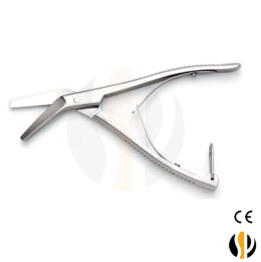
Reconstruction mesh is commonly used in surgical procedures where a surgeon needs to support, cover, or reconstruct a specific anatomical area. Because mesh may need to match the shape and dimensions of the surgical site, accurate cutting is an important part of preparation. A dedicated instrument such as the Reconstruction Mesh Cutter IOC-041 is designed to help surgeons or surgical teams cut reconstruction mesh into an appropriate size and shape.
Understanding how a reconstruction mesh cutter works can help explain why controlled cutting is important when preparing mesh for use during surgery.
What Is a Reconstruction Mesh Cutter?
A reconstruction mesh cutter is a surgical instrument intended for cutting mesh materials used during reconstructive procedures. Reconstruction mesh can be supplied in different sizes and may need to be adjusted according to the requirements of a particular procedure.
The Reconstruction Mesh Cutter IOC-041 provides a purpose-designed cutting mechanism that allows the user to separate sections of mesh with controlled hand pressure. Its function is different from that of general-purpose scissors because it is intended specifically for working with mesh materials.
The exact technique used depends on the type of mesh, the surgical procedure, and the manufacturer's instructions for the instrument.
How Does the Reconstruction Mesh Cutter IOC-041 Work?
The basic working principle is relatively simple. The instrument uses opposing cutting surfaces that come together when the handles are operated. When reconstruction mesh is positioned between these cutting surfaces, applied pressure allows the instrument to cut through the selected section.
The process generally involves positioning the mesh, identifying the required cutting area, and applying controlled pressure to create the desired cut.
Unlike cutting mesh with an unsuitable instrument, a dedicated mesh cutter can provide better control over the cutting action. This can be particularly useful when the mesh needs to be prepared for a specific anatomical contour.
Step 1: Positioning the Mesh
Before cutting, the reconstruction mesh is positioned on an appropriate sterile working surface. The surgical team determines the approximate dimensions and shape required for the procedure.
Correct positioning is important because an inaccurate starting position can affect the final dimensions of the mesh.
The mesh should be handled according to the applicable surgical protocol and the manufacturer's instructions for the specific material.
Step 2: Determining the Cutting Line
The required section of mesh is identified before the cutting action begins. Depending on the procedure, the surgeon may need a straight cut, a smaller section, or a shape that corresponds to the anatomy being reconstructed.
Planning the cutting line helps reduce unnecessary trimming and allows the mesh to be prepared more efficiently.
Step 3: Placing the Mesh in the Cutter
The selected portion of mesh is placed between the cutting surfaces of the Reconstruction Mesh Cutter IOC-041. The user needs to ensure that the mesh is properly positioned before applying pressure.
Stable positioning helps provide a controlled cut and reduces the possibility of unintentionally cutting the wrong section.
Step 4: Applying Controlled Pressure
Once the mesh is correctly positioned, the handles of the instrument are operated to bring the cutting surfaces together. Controlled hand pressure allows the cutter to pass through the mesh.
The amount of force required can vary according to the material and thickness of the mesh. The instrument should therefore be used according to its intended design rather than forcing the handles beyond normal operation.
Step 5: Checking the Cut
After cutting, the resulting section of mesh can be inspected to confirm that it has the intended dimensions and shape. Any required preparation should follow the surgical team's established procedure and the instructions supplied with the mesh.
The objective is to obtain a properly prepared piece without unnecessarily damaging the surrounding mesh.
Why Is Controlled Mesh Cutting Important?
Reconstruction procedures often require materials to fit particular anatomical areas. A piece of mesh that is too large may require additional adjustment, while an incorrectly shaped piece may not provide the intended coverage.
Controlled cutting can therefore help with preparation and handling. A dedicated cutter can also make the cutting process more predictable than using an instrument that was not designed for mesh.
However, the cutter itself does not determine the final surgical outcome. Mesh selection, positioning, fixation, surgical technique, and patient-specific anatomy are all important considerations.
Where Can Reconstruction Mesh Be Used?
Reconstruction mesh can be used in different areas of reconstructive surgery, depending on the material and clinical application. For example, mesh products may be used to provide structural support or coverage when reconstructing certain anatomical defects.
The specific application depends on the surgical specialty, the type of reconstruction required, and the characteristics of the mesh. Surgeons select the appropriate material and preparation technique based on the individual clinical situation.
Reconstruction Mesh Cutter vs. General Cutting Instruments
A general cutting instrument may not provide the same handling characteristics as an instrument specifically designed for reconstruction mesh. Mesh can have a structure that requires a controlled cutting action to separate it cleanly.
The Reconstruction Mesh Cutter IOC-041 is designed around this type of application. Its purpose is to provide a dedicated method for cutting reconstruction mesh rather than relying on an unsuitable general-purpose tool.
This distinction can be useful in surgical environments where consistency and instrument selection are important parts of procedure preparation.
Proper Handling and Maintenance
Like other surgical instruments, a reconstruction mesh cutter should be handled, cleaned, sterilized, inspected, and stored according to the manufacturer's instructions and the healthcare facility's applicable protocols.
Before use, the instrument should be checked for visible damage, unusual movement, contamination, or other conditions that could affect its function. Instruments showing damage or malfunction should be evaluated according to institutional procedures.
Following the recommended maintenance process helps preserve the instrument's mechanical performance and supports appropriate surgical instrument management.
Conclusion
The Reconstruction Mesh Cutter IOC-041 works through a straightforward mechanical cutting principle. Reconstruction mesh is positioned between the instrument's cutting surfaces, and controlled pressure is applied through the handles to separate the required section.
The cutting process generally involves positioning the mesh, identifying the desired cutting area, placing it correctly in the instrument, applying controlled pressure, and checking the resulting section. Proper instrument handling and adherence to manufacturer and facility protocols are also important.
Because reconstruction procedures vary significantly, the appropriate mesh, cutting method, and surgical technique should always be determined by qualified healthcare professionals according to the specific procedure and clinical requirements.