How Typography, Colors, and Layout Influence Restaurant Menu Design in France
-

- September 24th, 2026
- 131 views
itality, menu design deserves particular attention. Typography, colors, spacing, images, and layout all contribute to how customers perceive a restaurant and its food. This is why many restaurants consider professional Restaurant Menu Graphic Design Services France when creating or updating their menus.
A well-designed menu does not need to be complicated. Instead, it should balance visual appeal with readability and functionality. Whether it is a traditional French restaurant, modern café, bakery, bistro, hotel restaurant, or fine-dining establishment, the right combination of design elements can help create a menu that feels consistent with the brand.
The Importance of Menu Design for French Restaurants
Restaurant customers often make decisions quickly after receiving a menu. They look for familiar categories, scan prices, compare dishes, and search for something that matches their preferences. If the menu is difficult to read or poorly organized, the dining experience can become frustrating.
Professional menu design focuses on making this process simple while maintaining the restaurant's visual identity.
For restaurants in France, menu design can also help communicate a particular atmosphere. A traditional restaurant may prefer elegant typography and subtle colors, while a contemporary café may use modern fonts, brighter accents, and creative layouts.
This is where Restaurant Menu Graphic Design Services France can provide value. Professional designers can combine branding, visual hierarchy, typography, and layout to create a menu that is both attractive and practical.
How Typography Influences Restaurant Menu Design
Typography is one of the most noticeable elements of a menu. The font style, size, spacing, and arrangement can influence how customers perceive the restaurant.
For example, elegant serif fonts can create a classic and sophisticated feeling. They may work well for French restaurants that want to communicate tradition or fine dining. On the other hand, clean sans-serif fonts can create a modern and approachable appearance.
The most important factor is readability. Decorative fonts may look attractive, but they can become difficult to read when used for long descriptions or small text. A professional menu should use decorative typography carefully and reserve it for headings, restaurant names, or special sections.
Font Hierarchy Matters
A good menu usually has a clear typographic hierarchy. Restaurant names, section headings, dish names, descriptions, and prices should not all look identical.
For example:
- Restaurant name can use a distinctive font.
- Category headings can be slightly larger or bolder.
- Dish names should be easy to identify.
- Descriptions should use a comfortable reading size.
- Prices should be visible without dominating the menu.
This hierarchy allows customers to scan the menu quickly.
Professional Restaurant Menu Graphic Design Services France can help establish this hierarchy so that every piece of information has a clear visual purpose.
The Role of Colors in Restaurant Menus
Color has a powerful influence on visual communication. Different colors can create different moods and help reinforce a restaurant's branding.
Warm colors such as red, orange, and yellow can create an energetic and welcoming feeling. Earthy colors such as brown, beige, olive, and muted green can create a natural or traditional atmosphere. Black, white, deep blue, and other sophisticated tones can be used for elegant and premium restaurant concepts.
However, using too many colors can make a menu look confusing. A professional menu normally works with a controlled color palette that complements the restaurant's logo, interior, signage, and overall branding.
For example, a French bakery might use soft, warm tones that reflect its artisanal identity, while a modern restaurant may choose a minimal black-and-white palette with one accent color.
Color and Readability
Color selection should also consider readability. Text needs enough contrast against the background. Light gray text on a white background may look subtle, but it can be difficult for customers to read.
The goal is to create visual interest without sacrificing usability.
This balance is an important part of professional Restaurant Menu Graphic Design Services France, especially when menus need to work across different lighting conditions inside restaurants.
Why Layout Matters
Layout determines how customers move through a menu visually. Even excellent typography and colors cannot compensate for a confusing layout.
A good layout guides the customer's eyes naturally from one section to another. Categories should be clearly separated, dish names should be easy to locate, and descriptions should sit close to the relevant items.
Spacing is equally important. A crowded menu can feel overwhelming, while excessive empty space may make the menu appear incomplete.
Professional designers carefully consider margins, columns, section spacing, alignment, and visual balance.
Creating a Strong Visual Hierarchy
Visual hierarchy tells customers what to notice first, second, and third.
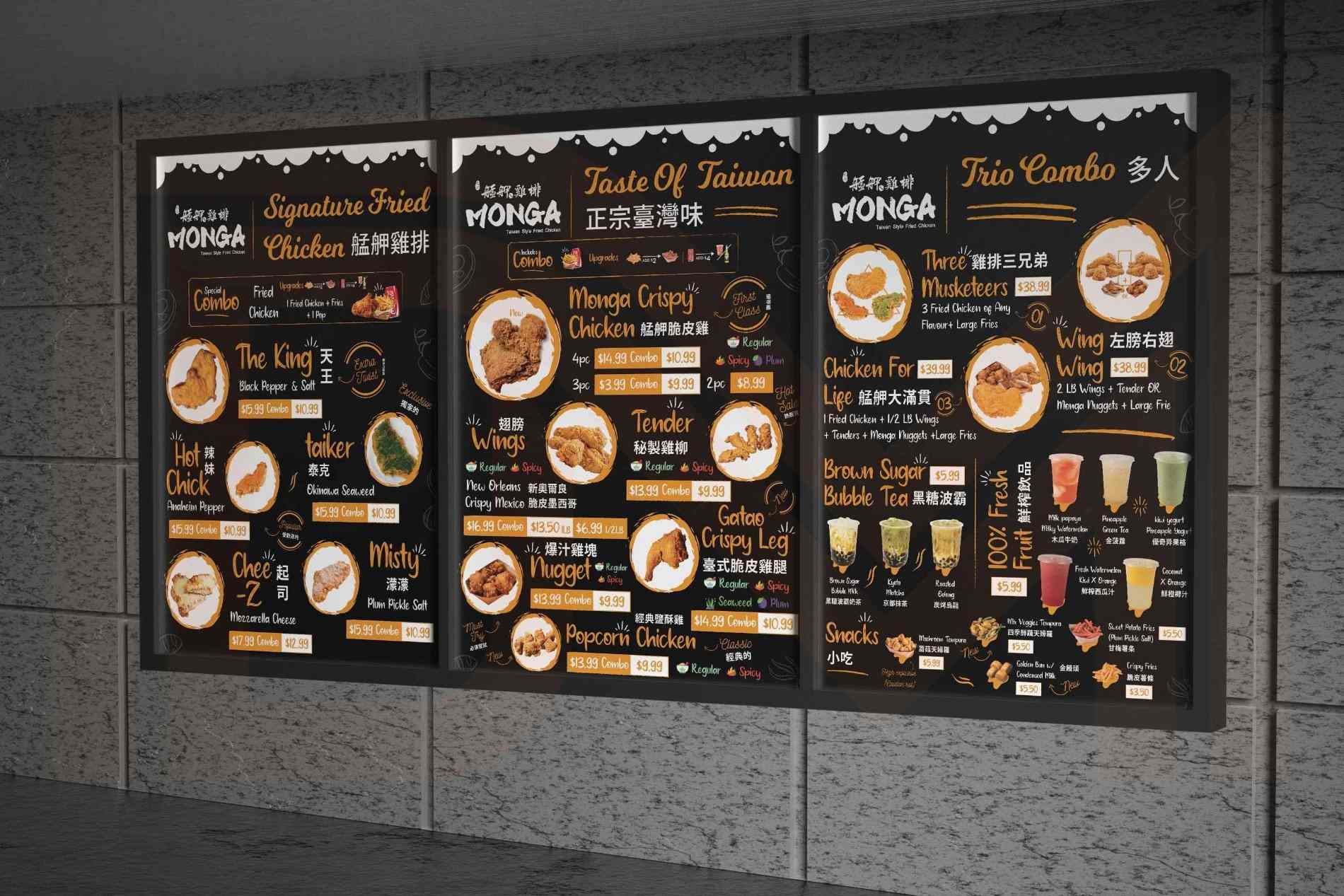
For example, a menu might begin with appetizers, followed by main courses, desserts, and beverages. Within each category, popular or signature dishes may receive subtle visual emphasis.
This does not necessarily mean making every special dish extremely large or colorful. Small design techniques can be effective, such as:
- Using bold typography for signature dishes
- Adding small icons
- Creating a subtle highlighted section
- Using whitespace around important items
- Placing popular dishes in strategic locations
The objective is to make navigation natural rather than forcing customers to search through every line.
Menu Photography and Graphic Elements
Images can make food menus more visually appealing, but they should be used thoughtfully.
High-quality food photography can help customers understand a dish and create appetite appeal. However, too many images can make a menu feel crowded.
Graphic elements such as lines, icons, patterns, illustrations, borders, and decorative shapes can also support the restaurant's identity.
For French restaurants, these elements can be selected according to the concept of the establishment. A traditional bistro may use understated decorative details, while a modern restaurant may prefer geometric shapes and minimalist graphics.
The key is consistency.
Designing Menus for Different Restaurant Styles
There is no universal menu style that works for every restaurant. Design should reflect the business.
Fine-Dining Restaurants
Fine-dining menus often benefit from minimal layouts, elegant typography, generous whitespace, and sophisticated colors. The design should feel premium without becoming distracting.
Cafés and Bakeries
Cafés and bakeries can use friendly typography, warm colors, illustrations, and organized sections. Menus may include coffee, pastries, sandwiches, desserts, and seasonal items.
Traditional French Restaurants
Traditional restaurants can combine classic typography with elegant colors and subtle decorative elements. The design can support a sense of authenticity while remaining easy to read.
Modern Restaurants
Modern restaurants often use clean layouts, bold typography, minimal color palettes, and carefully selected imagery. Digital menu options can also be integrated into the overall design.
Print and Digital Menu Design
Restaurant menu design is no longer limited to printed menus. Many businesses now use digital displays, QR code menus, websites, and social media platforms to present their food selections.
The design should remain consistent across these formats.
A menu that looks excellent on paper may require adjustments for a smartphone or digital screen. Text size, image proportions, navigation, and spacing all need to be considered.
Professional Restaurant Menu Graphic Design Services France can help businesses create designs that adapt to different formats while maintaining brand consistency.
Seasonal Menu Design
Restaurants frequently introduce seasonal dishes, special promotions, or limited-time menus. A flexible menu design makes these updates easier.
For example, a restaurant might create a summer menu featuring lighter dishes and fresh ingredients, followed by a winter menu with warmer and more substantial selections.
A consistent design system allows seasonal menus to feel fresh while still looking like part of the same brand.
The Connection Between Branding and Menu Design
A menu should feel like an extension of the restaurant's brand.
The logo, colors, typography, imagery, packaging, signage, website, and menu should work together visually. When these elements are consistent, customers can recognize the restaurant more easily.
This is why menu design should not be treated as an isolated project. It should be connected to the restaurant's broader visual identity.
Design My Menu focuses on creative menu design solutions that can help restaurants present their offerings in an organized and visually appealing format. From traditional printed menus to modern digital menu concepts, a consistent design approach can support a stronger restaurant brand.
Common Menu Design Mistakes to Avoid
Even a beautiful menu can become ineffective if basic usability is ignored.
Some common mistakes include:
Too Many Fonts
Using several decorative fonts can make the menu look inconsistent. Two or three complementary typefaces are often enough.
Poor Color Contrast
Text that blends into the background can be difficult to read. Contrast should always be considered.
Overcrowded Layout
Trying to fit too many dishes onto one page can create a cluttered appearance. Organizing the content into clear categories can solve this problem.
Low-Quality Images
Blurry or poorly lit food images can negatively affect the overall appearance of a menu.
Inconsistent Branding
If the menu uses colors and fonts that do not match the restaurant's other branding materials, the business may appear less consistent.
Ignoring the Customer Journey
A menu should be designed from the customer's perspective. Customers should be able to find categories, dishes, descriptions, and prices without unnecessary effort.
How Professional Menu Design Supports Restaurant Businesses
A professionally designed menu can contribute to a more polished customer experience. It can help organize information, strengthen visual branding, highlight important dishes, and make the restaurant appear more established.
However, good design is not simply about decoration. It is about communication.
Every design decision should have a purpose. Typography should support readability. Colors should reinforce the brand. Layout should guide customers. Images should enhance the food presentation. Spacing should make the menu comfortable to explore.
This combination is what makes professional Restaurant Menu Graphic Design Services France valuable for restaurants that want to improve the presentation of their menus.
Choosing the Right Menu Design Service
Restaurants looking for a menu designer should consider several factors.
First, review the designer's portfolio to understand their experience with restaurant and food-business projects. Look for examples that demonstrate different styles rather than only one visual approach.
Second, consider whether the designer understands both aesthetics and functionality. A menu should look attractive while remaining practical.
Third, discuss the menu format before starting. A printed menu, takeaway menu, digital menu, QR menu, and television menu may require different design considerations.
Finally, make sure the designer understands the restaurant's brand, target customers, menu categories, and overall atmosphere.
Conclusion
Typography, colors, and layout are essential components of effective restaurant menu design. Together, they influence readability, visual appeal, brand perception, and the overall customer experience.
For restaurants in France, a well-designed menu can reflect the character of the establishment while making food choices easier for customers. Whether the restaurant is a traditional French bistro, modern café, bakery, hotel, or fine-dining establishment, thoughtful design can make a meaningful difference.
By working with professional Restaurant Menu Graphic Design Services France, businesses can create menus that combine attractive visuals with practical organization. With the right typography, carefully selected colors, balanced layouts, and consistent branding, a restaurant menu can become more than a list of dishes—it can become an important part of the restaurant's identity.
Frequently Asked Questions
1. Why is typography important in restaurant menu design?
Typography affects readability and visual personality. The right fonts help customers quickly understand categories, dish names, descriptions, and prices while supporting the restaurant's brand style.
2. How do colors influence a restaurant menu?
Colors can establish mood and reinforce branding. They can make a menu feel elegant, energetic, traditional, modern, or welcoming when selected appropriately.
3. What makes a restaurant menu layout effective?
An effective layout organizes information clearly, provides enough spacing, creates visual hierarchy, and allows customers to find dishes and prices easily.
4. Should every restaurant use food images on its menu?
Not necessarily. High-quality images can enhance certain menus, but a carefully designed text-based menu can also be highly effective, particularly for restaurants with a minimalist or fine-dining concept.
5. Can menu designs be created for both print and digital formats?
Yes. A professional design can be adapted for printed menus, QR menus, digital displays, websites, and other platforms while maintaining consistent branding.
6. What are Restaurant Menu Graphic Design Services France?
These services involve professionally designing restaurant menus for businesses in France. They may include layout design, typography, color selection, branding, food imagery, print-ready files, and digital menu formats.
7. How can Design My Menu help restaurants?
Design My Menu provides creative menu design solutions designed to help restaurants present their dishes in a clear, attractive, and brand-consistent way across different menu formats.
8. How often should a restaurant update its menu design?
There is no fixed schedule. Restaurants may update their menus when their branding changes, when they introduce new dishes, during seasonal promotions, or when the existing menu becomes difficult to use or visually outdated.
Link - https://www.designmymenu.com/fr/menu-design-services