What is a Robotic Massage Chair? A Complete Guide for First-Time Buyers
-

- Published Updated
- 2,076 views
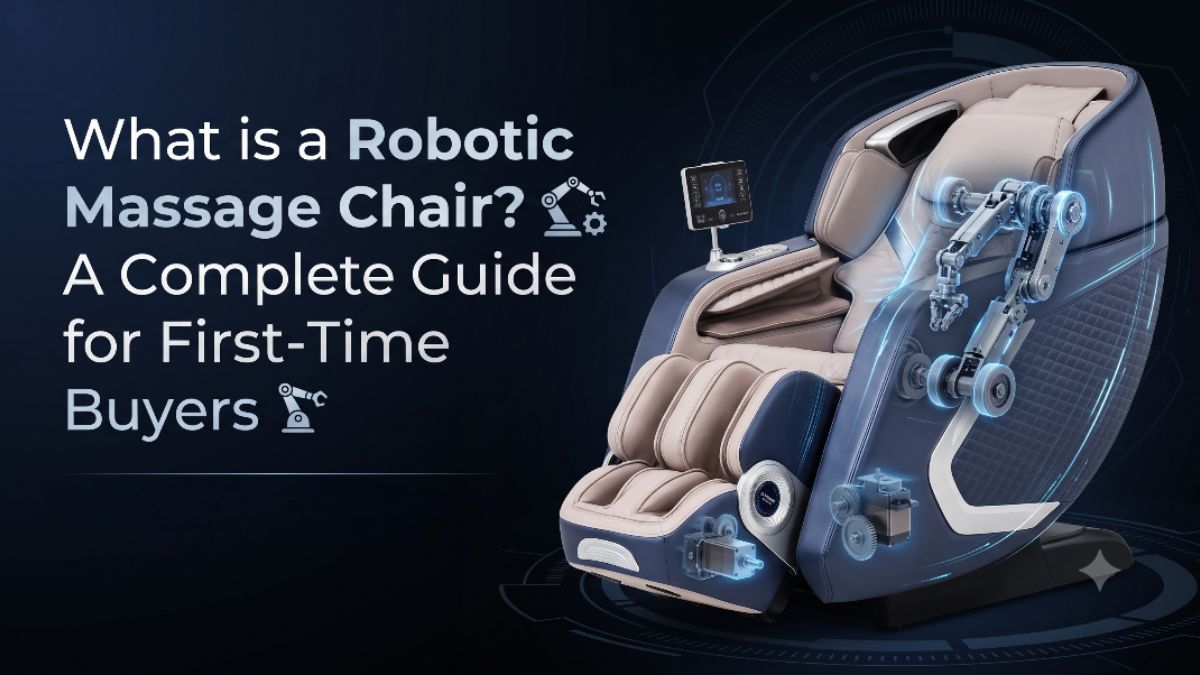
If you've spent any time browsing wellness products lately, you've probably noticed that the humble massage chair has quietly evolved into something much more advanced. Brands no longer just talk about "massage chairs" — they talk about robotic massage chairs, AI body scanning, 4D rollers, and zero-gravity recline. For a first-time buyer, that can feel like a lot of jargon standing between you and a simple question: is this actually better, and is it worth it?
This guide breaks down what a robotic massage chair really is, how the technology works, how it compares to a standard massage chair, and what to actually look for before you buy one.
What Is a Robotic Massage Chair?
A robotic massage chair is a massage chair built around motorized, sensor-guided mechanisms that adapt to your body rather than running a single fixed motion. Instead of rollers moving along a pre-set track regardless of who's sitting in the chair, a robotic massage chair uses body-mapping sensors, multiple independent roller "cores," and software to adjust pressure, position, and technique in real time.
The word "robotic" here isn't just marketing—it refers to a few specific things:
- Body scanning sensors that detect your height, shoulder position, and spine curvature before the massage starts
- Independently controlled roller mechanisms (sometimes two separate cores—one for the upper body, one for the lower body) that can move differently at the same time
- Software-driven adjustment, where the chair changes pressure or technique based on the feedback it receives, rather than repeating one fixed program
- Multi-directional movement, commonly described as 3D or 4D massage, referring to how the rollers move not just up-and-down and side-to-side, but also in and out with varying speed and intensity
In short, a basic massage chair vibrates or kneads along a track. A robotic massage chair reads your body first, then decides how to work on it.
How the Technology Actually Works
It helps to break the experience into three layers.
1. Sensing. Most robotic massage chairs use Hall sensors or similar detection systems that scan your body as soon as you sit down — measuring height, shoulder width, and back curvature. This is what allows the chair to avoid a generic, one-size-fits-all massage and instead line up the rollers with your actual muscles and pressure points.
2. Mechanism. The rollers themselves sit on tracks (often described in degrees, like a 160° track) that follow the natural curve of the spine. In more advanced chairs, there are two separate roller systems working at once — one handling the neck, shoulders, and back, and a second, independent system handling the hips and lower body. This is what's meant by "dual-core" or "4D + 3D" massage: two mechanisms running simultaneously instead of one mechanism doing everything in sequence.
3. Air compression and stretch. Alongside the rollers, airbags positioned around the shoulders, arms, waist, calves, and feet inflate and deflate to simulate hand pressure and compression therapy. Some chairs add stretching systems that move the legs independently, mimicking assisted stretches a physiotherapist might perform, which is where terms like "Bi-Stretch" or "PNF stretch" come from.
Put together, this is what separates a robotic massage chair from older recliner-style chairs: it's not one motor running a loop, it's a coordinated system of sensing, movement, and compression working together.
Robotic Massage Chair vs. Standard Massage Chair
Feature |
Standard Massage Chair |
Robotic Massage Chair |
Body detection |
None or basic |
AI/sensor-based body scanning |
Roller mechanism |
Single fixed track |
Multiple independent cores (e.g., 4D + 3D) |
Massage adaptation |
Fixed programs |
Real-time pressure/technique adjustment |
Stretch functions |
Rare |
Dedicated stretch systems (leg, hip, spine) |
Airbag coverage |
Limited (back, arms) |
Extensive (shoulders to feet, 30+ airbags common) |
Customization |
Few presets |
Multiple auto programs + manual modes |
Typical price range |
Entry-level |
Mid-to-premium |
This doesn't mean every robotic chair is automatically "better" for every person — a simpler chair may suit someone who just wants a basic evening wind-down. But if you're dealing with ongoing back stiffness, sit at a desk for long hours, or want a genuinely tailored full body massage chair experience, the sensor-and-dual-core approach makes a real, noticeable difference in accuracy and comfort.
What to Look For as a First-Time Buyer
Before comparing specific models, it helps to know which specs actually matter:
- Body scanning accuracy — look for chairs that state a compatible height range (this tells you the sensors are doing real work, not guessing)
- Number of massage cores — dual-core (4D + 3D) systems generally give more precise, independent coverage of the upper and lower body
- Airbag count and placement — more airbags spread across shoulders, arms, waist, calves, and feet means more complete compression coverage, not just back and arm squeezing
- Recline range and zero-gravity positions — a wider recline reduces spinal load and improves circulation during longer sessions
- Stretch functionality — useful if you deal with stiffness, sit for long hours, or want something closer to assisted physiotherapy stretching
- Certifications and warranty — safety certifications (CE, FCC, ISO, etc.) and a solid warranty period are a good proxy for build quality, especially with electronics-heavy products
- Heating, connectivity, and safety sensors — smaller details like anti-pinch sensors, USB charging, and heating zones affect day-to-day usability more than they seem to on paper
Where Rotai's R-NEXA Fits In
One example of this dual-core, sensor-driven approach is the Rotai R-NEXA 4D Robotic Massage Chair. It's built around a dual-core synergy mechanism—a 4D SmartSync core handling the neck-to-back area and a separate 3D hip mechanism covering the lower body—so both regions are massaged with independent precision rather than one track trying to do everything.
It also uses Hall sensor body detection to map users from 1500 mm to 1900 mm in height, a 38-airbag system covering shoulders through feet, and a Bi-Stretch² leg system that combines techniques like PNF stretching and full-body stretching into one sequence. Two zero-gravity recline positions and a 160° flexible track round out the mechanical side, while 29 total programs (auto and manual) give you room to adjust the experience as you get used to the chair.
It's a useful reference point simply because it illustrates, in one product, most of the concepts covered above—body scanning, dual-core massage, airbag compression, and stretch technology—working together rather than as separate marketing terms.
Is a Robotic Massage Chair Worth It?
For most first-time buyers, the decision comes down to how you plan to use it. If you want occasional relaxation, a simpler massage chair may be enough. If you're looking for something that can genuinely support muscle recovery, posture correction, or daily stress relief—especially if you sit for long hours or deal with recurring stiffness—the sensor-driven, dual-mechanism design of a robotic massage chair tends to deliver a more consistent and targeted result over time.
Whichever route you choose, it's worth actually testing a chair in person if you can, paying attention to how well it reads your body shape and how the stretch and airbag features feel for your specific problem areas, rather than going purely by spec sheets.