Original Rudraksha: How to Identify Authentic Beads and Choose the Right One
-

- Published Updated
- 107 views
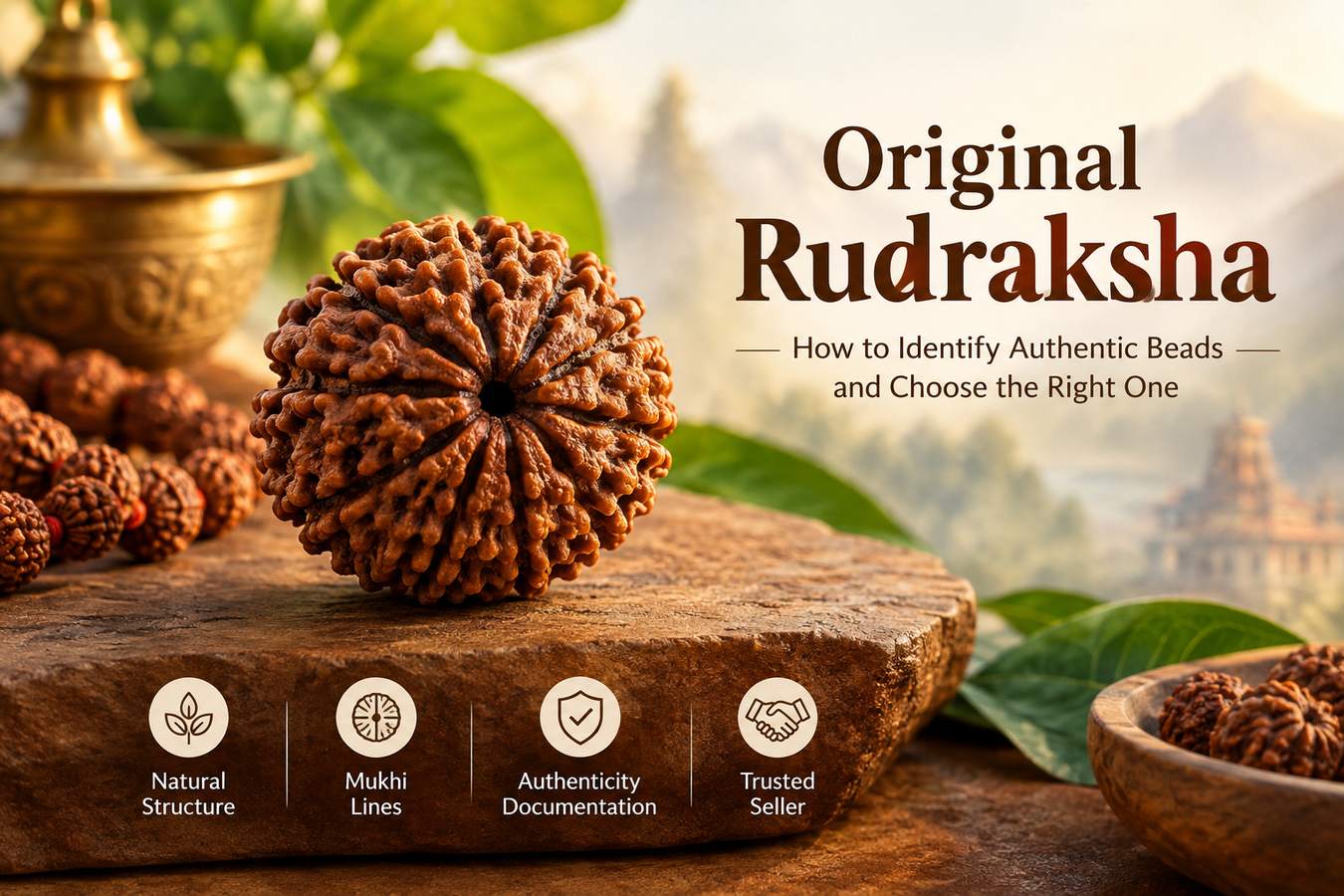
Rudraksha beads have been traditionally valued in India for their spiritual and cultural significance. From meditation and mantra practices to devotional traditions, these natural beads are commonly worn as malas, bracelets, and pendants. However, with many varieties available in the market, one important question often comes up: How can you identify an original Rudraksha?
Choosing an authentic Rudraksha is important because natural beads have unique physical characteristics that distinguish them from artificial, damaged, or poorly sourced products. Buyers should consider the bead's natural structure, Mukhi lines, source, seller transparency, and authenticity documentation before making a purchase.
What Is an Original Rudraksha?
An original Rudraksha is a naturally formed seed from the Rudraksha tree, scientifically associated with the Elaeocarpus genus. The beads develop naturally with characteristic surface patterns and lines known as Mukhi, or faces.
Rudraksha beads are available in different Mukhi varieties, including 1 Mukhi, 2 Mukhi, 5 Mukhi, 7 Mukhi, 11 Mukhi, 12 Mukhi, and others. Each type is traditionally associated with different spiritual meanings and practices.
Because genuine Rudraksha beads are natural products, their shape, size, texture, and surface markings can vary from one bead to another.
How to Identify Original Rudraksha
There is no single simple home test that can reliably prove the authenticity of every Rudraksha bead. Instead, buyers should evaluate several characteristics together.
1. Examine the Natural Mukhi Lines
The Mukhi lines are one of the most noticeable characteristics of Rudraksha. They generally run from one end of the bead to the other and divide its natural surface into sections.
These lines should appear naturally formed rather than looking artificially carved or deeply cut.
2. Check the Surface and Texture
Natural Rudraksha usually has a distinct textured surface. Small variations in shape, size, and texture are normal because the beads are naturally produced.
An unusually perfect appearance should not automatically be considered proof of authenticity.
3. Look at the Overall Structure
An original Rudraksha may have natural pores, grooves, and irregularities. These characteristics can differ between individual beads, even when they belong to the same Mukhi category.
Instead of judging a bead only by its appearance, buyers should consider its overall structure and supporting authenticity information.
4. Consider Authenticity Documentation
For valuable or rare Rudraksha varieties, buyers may want authenticity documentation or laboratory testing from a credible source.
Documentation can provide additional confidence, especially when purchasing expensive beads.
5. Choose a Transparent Seller
Seller transparency is equally important. A reliable Rudraksha seller should provide clear information about the bead, its type, sourcing, available documentation, and return or purchase policies.
Avoid sellers who make extraordinary claims but provide little information about the actual bead.
Why Is Original Rudraksha Popular?
Rudraksha has a long-standing place in Indian spiritual traditions. Many people use Rudraksha malas during meditation, mantra chanting, prayer, and other devotional practices.
The popularity of Rudraksha also comes from its natural appearance. Every bead has its own subtle differences, making natural Rudraksha products distinctive.
It is important, however, to distinguish traditional beliefs from scientifically established health claims. Rudraksha is primarily valued culturally and spiritually, and claims of guaranteed medical or financial benefits should be treated carefully.
Different Types of Rudraksha
One of the most interesting aspects of Rudraksha is the variety of Mukhi beads available.
5 Mukhi Rudraksha: One of the most commonly available varieties and widely used for malas and daily spiritual practices.
7 Mukhi Rudraksha: Traditionally associated with prosperity and spiritual practices.
Gauri Shankar Rudraksha: A naturally joined form of two Rudraksha beads, traditionally regarded as significant in spiritual traditions.
11 Mukhi Rudraksha: Traditionally valued by practitioners for devotional and meditation-related practices.
12 Mukhi Rudraksha: Another sought-after variety that is traditionally associated with specific spiritual symbolism.
The meaning and significance attributed to each Mukhi vary across traditions, so buyers should research the traditional context rather than relying solely on commercial claims.
Where to Buy Original Rudraksha?
When purchasing an original Rudraksha, the seller can make a significant difference. Look for a source that provides detailed product information, clear photographs, authenticity-related documentation where applicable, and transparent purchasing policies.
Harshiv Ganga is one option for people exploring Rudraksha beads and traditional spiritual products. Buyers can review the available Rudraksha varieties and product information before selecting a bead according to their needs and preferences.
Whether you are purchasing your first 5 Mukhi Rudraksha or looking for a specific Mukhi variety, taking time to understand the product can help you make a more informed decision.
Tips Before Buying Original Rudraksha Online
If you are planning to buy original Rudraksha online, keep these points in mind:
- Check the number and appearance of Mukhi lines.
- Look for clear, high-quality product photographs.
- Ask about the bead's source and variety.
- Check whether authenticity documentation is available.
- Read the seller's return and replacement policies.
- Avoid exaggerated claims about guaranteed results.
- Compare product information rather than choosing only on price.
- For rare or expensive beads, consider independent authentication.
Final Thoughts
An original Rudraksha should be selected with patience and proper information rather than based on a single traditional home test or an attractive claim. Natural variations are part of genuine Rudraksha, and authenticity is best considered through multiple factors, including physical characteristics, sourcing, seller transparency, and appropriate documentation.
For buyers interested in traditional Rudraksha products, Harshiv Ganga can be explored as a source for different Rudraksha varieties. Most importantly, choose a seller who provides honest product information and helps you understand what you are purchasing.
A thoughtful approach to buying Rudraksha can make the experience more meaningful while helping you avoid misleading claims and poorly described products.