Looking for the Best Rural Universities? Here's Everything You Need to Know
-

- September 08th, 2026
- 2,534 views
Introduction
Rural India is rapidly changing. Rural finance, agriculture, the digital economy, food processing, microfinance, supply chain management, and social enterprises are creating numerous opportunities beyond traditional farming. As these sectors continue to grow, companies increasingly need professionals who understand both management concepts and rural markets.
There is growing interest in rural universities, rural management programs, and specialized management courses designed for the agricultural and rural sectors. For students looking for one of the best rural universities, it is important to look beyond rankings and evaluate factors such as curriculum, practical exposure, industry connections, specializations, internships, faculty expertise, and career opportunities.
Students interested in management careers related to rural markets can consider programs such as an MBA in Rural Development, Rural Management, Agribusiness Management, or Rural Marketing. These programs can provide a more focused learning path for careers in rural and agricultural industries.
What Are Rural Universities and Rural Management Institutions?
Rural universities and specialized rural management institutions focus on education, research, and professional development related to rural economies and communities. They may offer programs in areas such as rural development, agriculture, rural finance, rural marketing, agribusiness, sustainability, development management, and entrepreneurship.
Unlike conventional management programs, which may focus primarily on urban and corporate markets, rural management education helps students understand the unique characteristics of rural consumers, agricultural value chains, financial inclusion, communities, and businesses operating in rural areas.
Students should evaluate institutions based on their academic curriculum, practical learning opportunities, faculty, internships, alumni networks, and career support rather than selecting a college solely because it appears on a "top" list.
Why Is Rural Management Becoming an Important Career Choice?
Rural markets cover a wide range of business activities, from agriculture and allied industries to insurance, banking, consumer goods, logistics, healthcare, e-commerce, and digital services.
Businesses operating in these markets require professionals who understand:
Rural consumer behaviour
Agricultural supply chains
Distribution networks
Rural finance
Agribusiness
Rural marketing strategies
Development programs
Digital transformation
Social entrepreneurship
This makes Rural Management a relevant career option for students who want to combine business knowledge with opportunities to contribute to rural and agricultural development.
What Should You Look for in the Best Rural Universities?
There is no single institution that is the perfect choice for every student. The right institution depends on your career goals, preferred specialization, budget, and learning preferences.
When comparing the Best Rural Universities and rural management institutions, consider the following factors.
1. Relevant Curriculum
Look for programs that cover fundamental management concepts along with subjects related to rural business. Courses in agribusiness, rural marketing, rural finance, supply chain management, development management, and digital business can provide relevant industry knowledge.
2. Practical Learning
Rural management is closely connected to real-world challenges. Field projects, internships, case studies, industry interactions, village exposure, and practical assignments can help students understand how management concepts are applied outside the classroom.
3. Specializations
Students should determine whether an institution offers specializations that match their professional interests. These may include:
Rural Management
Rural Marketing
Agribusiness Management
Rural Finance
Development Management
Digital Business Management
4. Industry Exposure
A well-designed program should provide opportunities to interact with businesses, financial institutions, agribusiness companies, development organizations, and industry professionals. Such exposure can help students understand current market practices and career opportunities.
5. Career Support
Career counselling, placement assistance, interview preparation, internship opportunities, alumni networks, and industry interactions are important factors to consider when evaluating a management institution.
How Is an MBA in Rural Development Different from Rural Management?
An MBA in Rural Development and a Rural Management program can have overlapping areas, but their educational focus may differ depending on the institution.
An MBA in Rural Development may place greater emphasis on development programs, government policies, community development, social organizations, and the transformation of rural communities.
Rural Management, on the other hand, may have a stronger business and management orientation, covering areas such as rural marketing, rural finance, agribusiness, supply chain management, entrepreneurship, and the management of organizations operating in rural markets.
Students should compare the curriculum, specialization options, practical exposure, and career outcomes of each program before making a final decision.
Why Consider IIRM for Rural Management Education?
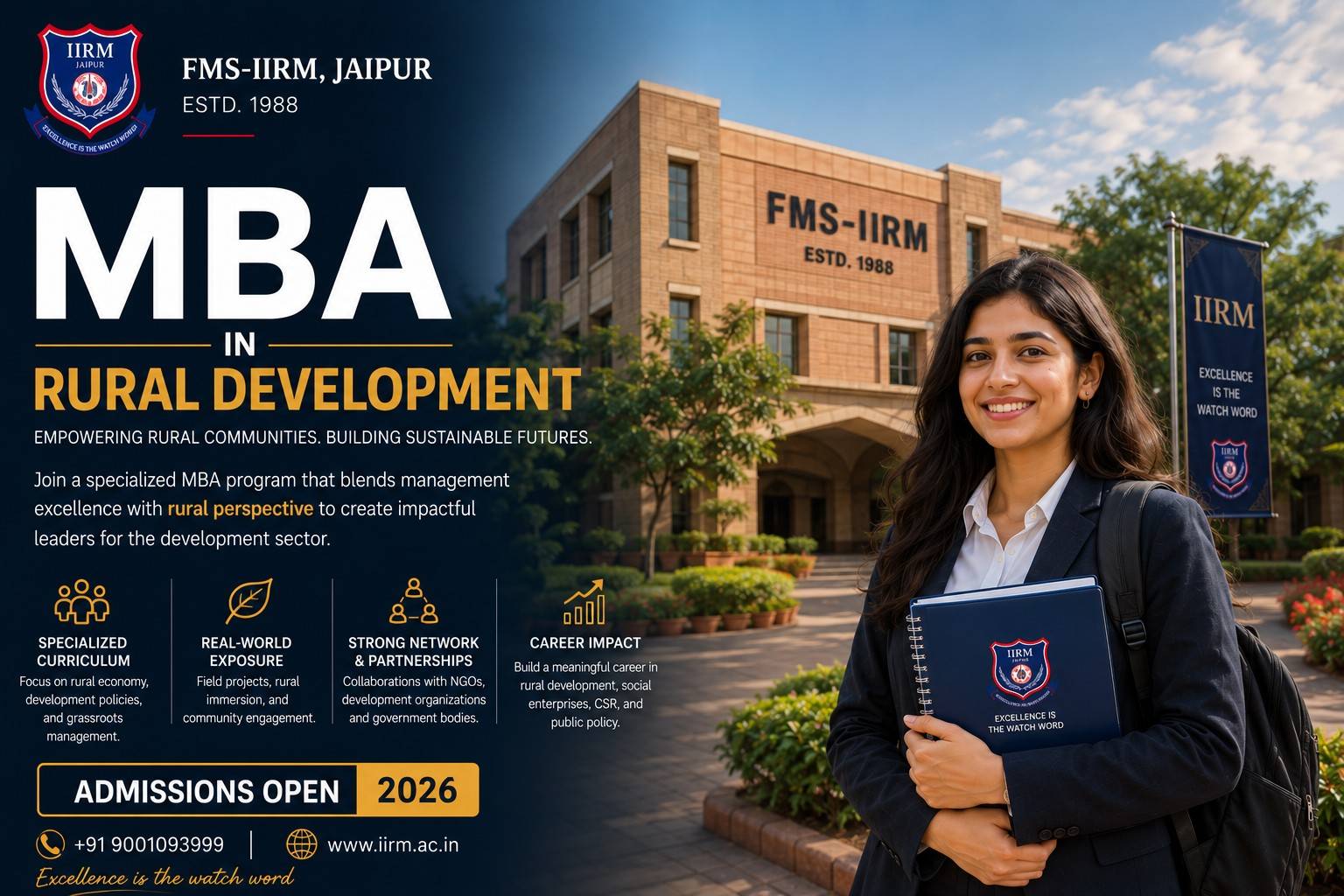
The Faculty of Management Studies, Institute of Rural Management (FMS-IRM), Jaipur, focuses on management education related to rural and emerging markets. Its two-year PGDM-RM program is designed to address managerial challenges and opportunities associated with rural businesses and markets.
The institute states that its program is approved by AICTE and covers areas such as agriculture and agribusiness management, rural finance, rural marketing, and digital business management.
The program also includes practical learning through internships, workshops, case studies, industry interactions, field exercises, and other experiential activities. According to the program information provided by FMS-IRM, students undertake summer and winter internships as part of the overall program structure.
This type of specialized education can be particularly useful for students who want to understand rural markets and industries alongside core management concepts.
What Career Opportunities Are Available After Rural Management?
A Rural Management education can lead to career opportunities across various sectors. Depending on their specialization, skills, experience, and interests, graduates may pursue roles in:
Rural Marketing
Agribusiness
Rural Banking and Finance
Microfinance
Insurance
Supply Chain Management
Sales and Distribution
Development Sector
Social Enterprises
Business Development
Consulting
Digital Business
Entrepreneurship
The exact career path depends on the student's academic background, skills, work experience, specialization, and the organization they join.
What Skills Should Students Develop?
Students interested in Rural Management should develop a combination of management and domain-specific skills.
Important skills include:
Communication
Data analysis
Problem-solving
Marketing
Financial understanding
Business development
Leadership
Negotiation
Research
Digital skills
Understanding of rural consumers
Knowledge of rural and agricultural value chains
Combining these skills with practical experience can help students become better prepared for careers in rural businesses, agribusiness companies, financial institutions, and development organizations.
How Can Students Choose the Right Rural Management Institution?
Instead of relying entirely on online rankings or lists that claim to identify the "best" institutions, students should create their own evaluation criteria based on their career goals.
Before making a decision, check:
Curriculum: Does the program align with your career objectives?
Recognition: Is the program appropriately recognized and approved?
Internships: Does the institution provide internship or field-based learning opportunities?
Specializations: Can you study the subjects that match your career interests?
Faculty: Does the institution have faculty members with relevant academic and industry expertise?
Career Support: What kind of career development, placement assistance, and industry support does the institution provide?
Cost and Location: Are the tuition fees, living expenses, and location suitable for you?
This approach can help students make a more informed decision rather than relying solely on rankings.
Conclusion
Choosing among the Best Rural Universities or rural management colleges requires more than comparing rankings. Students should evaluate the curriculum, specializations, industry exposure, faculty expertise, internships, career support, and overall alignment with their professional goals.
For students interested in careers related to rural markets, agriculture, rural finance, rural marketing, agribusiness, and development, a specialized Rural Management program can provide focused and practical learning.
FMS-IRM Jaipur is one institution that focuses its management education on rural management and related areas through programs such as the PGDM-RM course.
Ultimately, the right choice depends on your career goals and the program that offers the best combination of management knowledge, practical experience, industry exposure, and sector-specific skills.
Frequently Asked Questions
What Are Rural Universities?
Rural universities and specialized rural management institutions focus on education and research related to rural economies, development, agriculture, rural businesses, and community-based activities.
Is Rural Management a Good Career Choice?
Rural Management can be a good career choice for students interested in agriculture, rural markets, finance, development, marketing, agribusiness, and entrepreneurship. It can provide opportunities across several industries connected to rural and emerging markets.
What Course Should I Choose After Graduation If I Am Interested in Rural Development?
Depending on your career goals, you can consider programs such as an MBA in Rural Development, Rural Management, Agribusiness Management, Development Management, or related management programs.
What Is the Difference Between Rural Management and Rural Development?
Rural Development generally focuses more on economic, social, and community development. Rural Management combines an understanding of rural environments with business and management concepts.
What Are the Career Options After Rural Management?
Graduates can explore careers in agribusiness, rural marketing, rural finance, banking, supply chain management, insurance, development organizations, sales, consulting, business development, and entrepreneurship.
Why Is Practical Exposure Important in Rural Management?
Rural markets have unique consumer, geographical, economic, and social characteristics. Internships, fieldwork, and industry interactions can help students understand these factors and apply classroom knowledge to real-world situations.