How SaaS Product Development Services Drive Business Growth: 8 Practical Strategies
-

- March 07th, 2026
- 1,270 views

FREE SEO Topical Map Generator: Find Your Next Content Ideas
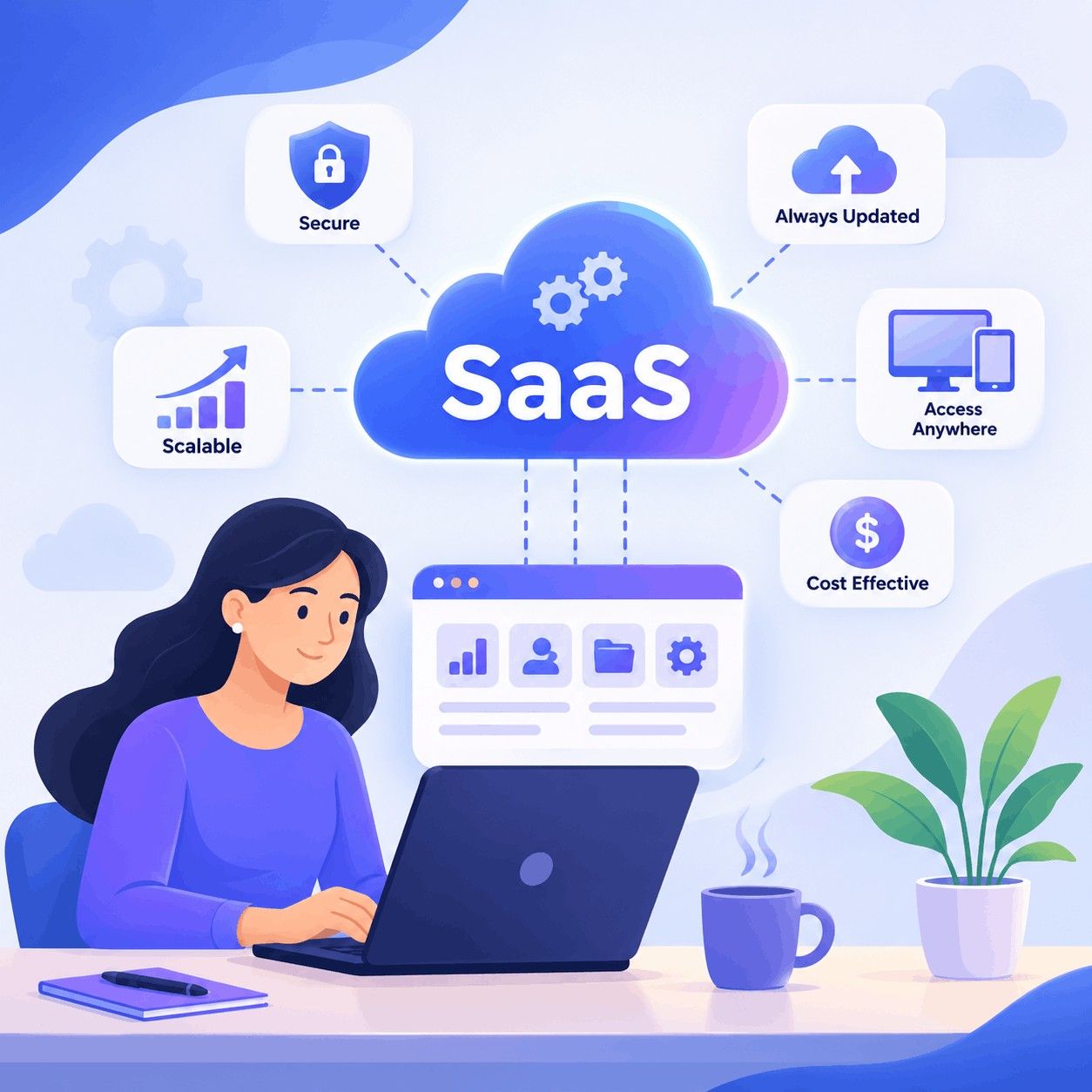
SaaS product development services can accelerate growth by turning market needs into scalable, secure cloud products. Organizations that use specialized development services often gain faster time-to-market, clearer product roadmaps, and technical practices that support subscription models and customer retention.
- Eight practical ways SaaS product development services help grow businesses
- Focus areas include MVPs, UX, cloud architecture, security, integrations, analytics, cost control and retention
- References to industry standards and regulatory considerations for enterprise deployment
SaaS product development services: 8 ways they help your business grow
1. Faster time-to-market through iterative development
Using agile methods and a minimum viable product (MVP) approach, SaaS product development services reduce the time between concept and customer feedback. Shorter development iterations let teams validate assumptions, prioritize features that deliver value, and avoid costly rework. This responsiveness can increase revenue potential and competitiveness.
2. Customer-focused UX and product design
Specialized teams apply user research, usability testing, and interface design to create onboarding flows and interfaces that reduce friction. Improved UX can raise trial-to-paid conversion rates and reduce churn by making the product easier to learn and use across devices.
3. Scalable cloud architecture and performance engineering
SaaS development services design cloud-native architectures and implement autoscaling, caching, and load-balancing strategies to maintain performance as usage grows. Planning for scalability early helps avoid outages during rapid adoption and supports global availability for customers in multiple regions.
4. Security, privacy, and regulatory compliance
Security-by-design practices, identity and access management, data encryption, and regular vulnerability assessments reduce risk. Development teams also account for regional privacy and compliance frameworks such as GDPR and industry standards like ISO/IEC 27001. For guidance on cloud security and definitions, see the National Institute of Standards and Technology (NIST) resources (NIST SP 800-145).
5. Integration and API-first strategies
APIs and integration patterns enable SaaS products to connect with CRM systems, payment gateways, analytics tools, and third-party services. An API-first approach reduces friction for enterprise customers, supports partner ecosystems, and makes the product more extensible for custom workflows.
6. Data-driven product management and analytics
Instrumenting products with telemetry, event analytics, and experimentation frameworks allows objective measurement of user behavior and feature impact. Data-driven roadmaps prioritize developments that increase retention, lifetime value, or revenue per user.
7. Operational efficiency and cost optimization
DevOps practices, infrastructure-as-code, and cloud cost monitoring help predict and control running costs tied to usage. Efficient ops practices reduce support overhead, shorten incident resolution times, and enable predictable margin management for subscription pricing models.
8. Improved onboarding and customer retention
Onboarding flows, in-app guidance, personalization, and customer success integrations are often part of SaaS development contracts. These features shorten time-to-value for customers and increase retention rates—critical factors for subscription-based revenue growth.
How to evaluate and implement SaaS product development services
Define business outcomes and metrics
Clarify desired outcomes—such as trial conversion rate, monthly recurring revenue (MRR), churn reduction, or uptime targets—and use measurable KPIs to track progress. Contract language should include deliverables and milestones aligned to those metrics.
Assess technical and organizational fit
Evaluate potential partners for experience in cloud platforms, API design, security practices, and domain-specific constraints. Consider whether the provider can work with internal teams, align with existing toolchains, and support a roadmap that matches business priorities.
Plan for governance and compliance
Ensure clear responsibilities for data handling, access controls, and incident response. Regulatory requirements and standards vary by industry and region; incorporating those considerations into architecture and testing reduces future compliance costs.
Frequently asked questions
What are SaaS product development services and how do they help businesses?
SaaS product development services encompass design, engineering, testing, deployment and operational practices tailored for cloud-delivered software. They help businesses by accelerating delivery, improving product-market fit, and providing technical foundations for scale, security, and subscription monetization.
How do development services support regulatory compliance?
Experienced teams implement controls for data protection, access management, and audit logging. They also incorporate privacy-by-design and help prepare documentation needed for audits under frameworks such as GDPR or industry-specific regulations.
Can these services integrate with existing systems and workflows?
Yes. API-first design, webhooks, and connector patterns enable SaaS products to integrate with CRM systems, payment processors, analytics platforms, and enterprise single sign-on solutions.
What outcomes should be expected in the first 6–12 months?
Early outcomes often include a validated MVP, established CI/CD pipelines, initial user analytics, and a prioritized roadmap. Subsequent months typically focus on scaling, hardening security, and improving retention metrics.
How does pricing for SaaS product development services typically work?
Engagements can be fixed-price for well-defined scopes, time-and-materials for flexible development, or outcome-based models tied to milestones. Pricing varies with project complexity, regulatory needs, and required operational support levels.
References to standards and regulators (such as NIST, ISO, and regional privacy laws) can guide technical choices and procurement. Selecting the right mix of technical capabilities and product strategy helps ensure that SaaS development efforts translate into measurable business growth.