Why Safety Shoes Are Essential in Modern Workplaces: A Practical Guide Based on Real Industry Experience
-

- May 19th, 2026
- 6,888 views
In many industrial environments, safety is often discussed as a rulebook requirement. Helmets, gloves, reflective vests, and protective gear are mandatory, yet one of the most underestimated items remains safety shoes. Over the years, working closely with industrial suppliers, site supervisors, and workers across construction, logistics, and manufacturing sectors has made one thing very clear: most foot injuries do not happen due to extreme accidents, but due to small, preventable oversights.
This article is not theoretical. It is written from real workplace patterns, repeated incidents, and practical insights gathered from industrial environments where safety footwear is not optional but essential for survival and productivity.
Understanding the Real Role of Safety Shoes
Safety shoes are not just protective footwear. In industrial terms, they are engineered equipment designed to protect workers from multiple overlapping hazards that exist simultaneously on job sites.
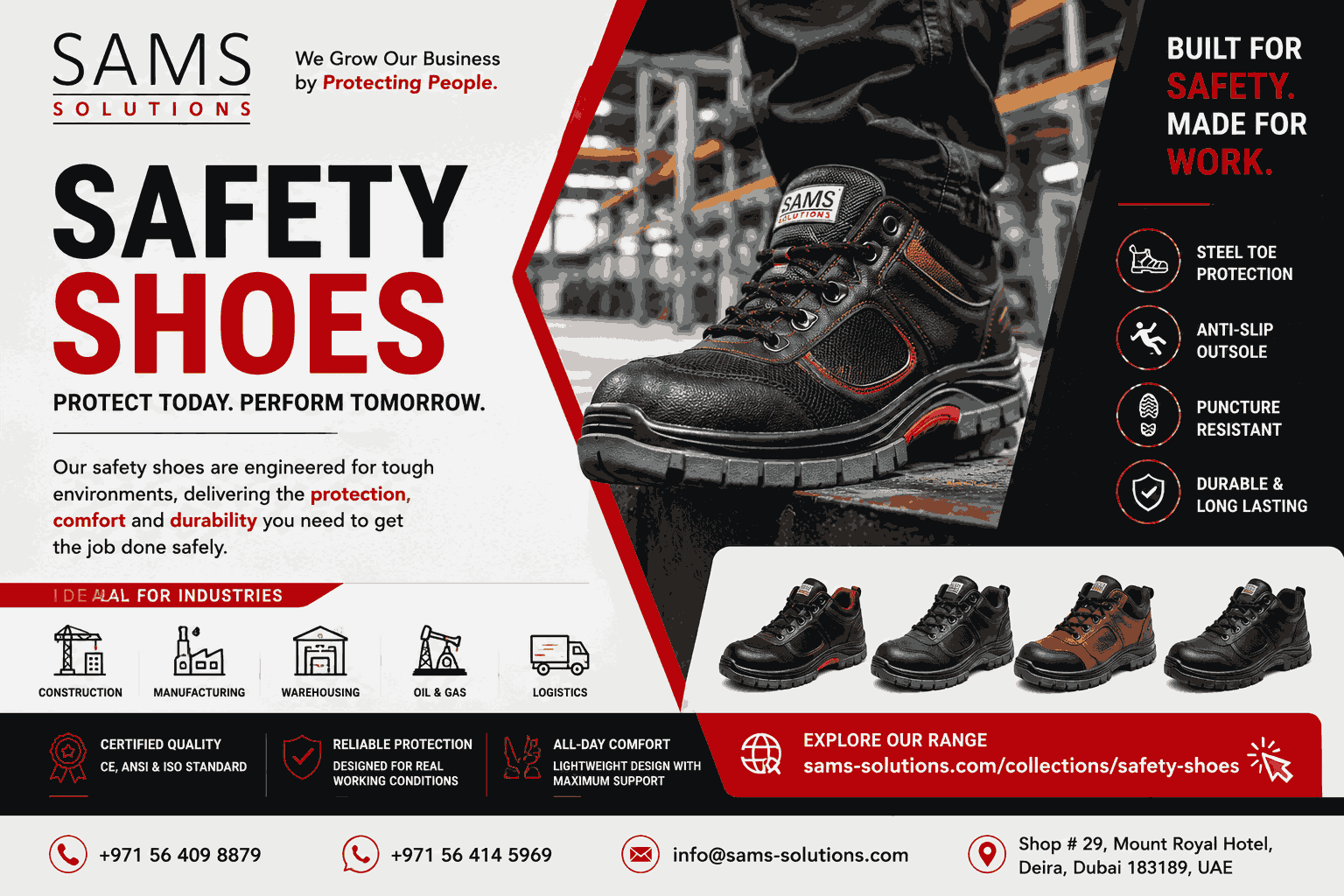
A proper pair of safety shoes typically protects against:
- Impact from falling objects
- Compression injuries from heavy materials
- Slipping on oil, water, or uneven surfaces
- Puncture risks from nails or sharp debris
- Electrical hazards in specific environments
- Long-term fatigue caused by standing or walking on hard surfaces
What makes safety shoes critical is not a single risk factor, but the combination of risks present in real working conditions.
Many workers only recognize their importance after experiencing discomfort or injury. However, companies that prioritize safety culture understand that prevention is always more cost-effective and humane than treatment.
A Real-World Observation from Industrial Sites
During multiple site visits across construction and warehouse facilities, a common pattern emerges. Workers often begin their shift wearing safety helmets and gloves, but footwear compliance is inconsistent. Some continue using regular shoes or low-grade industrial shoes that are not certified for impact or puncture resistance.
One site supervisor shared a recurring issue:
Workers often underestimate ground-level hazards because they are not immediately visible. Unlike falling objects or machinery noise, hazards on the ground are silent and constant.
Examples include:
- A nail hidden under debris
- A heavy tool dropped during lifting
- Wet flooring in loading areas
- Uneven concrete surfaces
- Sharp metal scraps from cutting work
In most cases, injuries occur not because safety equipment was unavailable, but because it was not taken seriously at the time of use.
This gap between awareness and action is exactly where safety shoes become critical.
Why Foot Injuries Are More Serious Than They Seem
Foot injuries in industrial environments are often underestimated. Unlike minor cuts or scratches, foot injuries can result in:
- Long-term mobility issues
- Extended recovery periods
- Loss of income due to missed work
- Reduced productivity after return to work
- Psychological hesitation in high-risk zones
Even a minor toe injury can affect balance and movement, which increases the risk of secondary accidents.
From a workplace management perspective, foot injuries also lead to operational delays, compensation costs, and reduced workforce efficiency.
This is why industries with mature safety systems treat safety shoes as mandatory protective equipment rather than optional gear.
What Defines High-Quality Safety Shoes
Not all safety shoes provide the same level of protection. Many products in the market look similar externally but differ significantly in performance, certification, and durability.
A professional-grade safety shoe should include the following key features:
1. Impact-Resistant Toe Protection
Steel toe or composite toe protection is designed to absorb and distribute force from falling objects. Steel toe offers higher resistance for heavy industries, while composite toe provides lighter weight for long working hours.
2. Slip Resistance
One of the most common causes of workplace injury is slipping. High-quality safety shoes use oil-resistant and anti-slip soles designed for industrial flooring conditions.
3. Puncture Protection
Industrial floors often contain sharp materials such as nails, screws, or metal fragments. A puncture-resistant midsole prevents these objects from penetrating the shoe.
4. Electrical Hazard Protection (Where Required)
In certain environments, safety shoes provide insulation against accidental electrical contact, reducing risk in electrical or hybrid work zones.
5. Comfort for Long Working Hours
Safety footwear is worn for 8 to 12 hours daily. Without proper cushioning, ventilation, and ergonomic design, fatigue builds quickly, increasing the risk of human error.
The Connection Between Comfort and Safety
One overlooked reality in industrial safety is that discomfort leads to negligence.
When shoes are too heavy, too tight, or poorly designed:
- Workers adjust posture incorrectly
- Fatigue increases faster
- Concentration decreases
- Movement becomes inefficient
Over time, this leads to shortcuts in safety behavior.
Modern safety footwear design focuses on balancing protection with comfort. The goal is not only to prevent injury but also to ensure consistent usage throughout the workday.
Industry Shift: From Compliance to Real Protection
In the past, safety equipment was often treated as a compliance requirement. Companies provided PPE to meet regulations rather than to actively reduce risk.
However, there is a noticeable shift happening across industries such as construction, oil and gas, logistics, and manufacturing. Businesses are now prioritizing:
- Worker comfort
- Long-term durability
- Certified safety standards
- Real-world performance testing
This shift is driven by experience. Companies have realized that accidents reduce productivity far more than the cost of quality safety equipment.
Organizations like SAMS Solutions have contributed to this shift by supplying certified industrial safety footwear and PPE designed for real working conditions, not just theoretical compliance requirements.
How to Choose the Right Safety Shoes in Practice
Instead of focusing on technical specifications alone, selection should be based on practical working conditions.
A simple decision framework includes:
- If the job involves heavy lifting, prioritize impact resistance
- If the environment is wet or oily, prioritize grip and slip resistance
- If the work involves long walking or standing, prioritize lightweight comfort
- If electrical exposure is possible, choose insulated protection
- If sharp materials are present, ensure puncture-resistant soles
The most effective safety shoes are not the most expensive ones, but the ones aligned with actual job risks.
The Business Impact of Proper Foot Protection
From a management perspective, investing in proper safety shoes has measurable benefits:
- Reduced workplace injuries
- Lower compensation and medical costs
- Improved employee productivity
- Higher compliance with safety audits
- Stronger workforce morale
Employees who feel protected tend to perform with greater confidence and consistency.
Final Perspective
Safety shoes are often treated as a basic requirement, but in reality, they are one of the most important components of industrial safety systems. Most accidents do not happen due to lack of awareness, but due to underestimated risks.
In real working environments, protection is not about reacting to accidents. It is about ensuring that accidents never happen in the first place.
For workers, safety shoes are protection for mobility, livelihood, and long-term health. For companies, they are an investment in productivity and operational stability.