Science Education | RMC Universe – Learn & Explore Science
-

- Published Updated
- 8,838 views
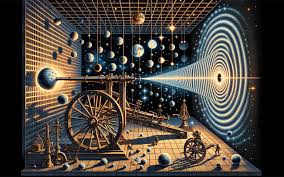
Timelines of Science and Circumference of Earth Orbit: From Ancient Discoveries to Modern Space Understanding
Science is a journey, not a destination. It grows slowly over time through observation, experimentation, and discovery. When we study the timelines of science, we see how human knowledge has developed step by step across centuries. At the same time, concepts like the circumference of earth orbit show how advanced our understanding of space has become.
In this article, we will explore the timelines of science in a simple and user-friendly way and understand how the circumference of earth orbit connects with modern scientific thinking.
What Are Timelines of Science?
The timelines of science refer to the chronological development of scientific ideas, inventions, and discoveries. It shows how science evolved from basic observations to highly advanced technologies.
Science did not appear suddenly. It developed through many stages:
- Ancient scientific observations
- Classical scientific ideas
- Medieval knowledge preservation
- Renaissance scientific revolution
- Modern and digital scientific era
Each stage contributed something important to our current understanding of the world and the universe.
Ancient Stage of Science
In ancient times, science was based mainly on observation and experience. People studied nature to solve everyday problems.
Key Contributions:
- Tracking stars for time and seasons
- Early mathematics for trade and construction
- Herbal medicine for healing diseases
Ancient civilizations like India, Egypt, China, and Greece played a major role in building early scientific knowledge.
Even early ideas about Earth’s shape and movement started forming during this stage, which later helped in understanding concepts like the circumference of earth orbit.
Classical Period of Science
The classical period marked the beginning of structured scientific thinking.
Important Developments:
- Geometry and mathematics were formalized
- Early astronomy models were developed
- Logical reasoning became more important
Thinkers started moving away from myths and focused more on reasoning and evidence. This stage in the timelines of science laid the foundation for future discoveries.
Medieval Period of Science
During the medieval period, scientific knowledge was preserved, translated, and expanded.
Key Highlights:
- Growth of medical knowledge
- Improvements in astronomy and navigation
- Preservation of ancient scientific texts
Scholars from different cultures contributed to keeping scientific knowledge alive and passing it to future generations.
Early understanding of Earth’s movement slowly developed during this time, which later helped scientists calculate the circumference of earth orbit.
Renaissance: The Scientific Awakening
The Renaissance period was a turning point in the timelines of science. It marked a shift from traditional beliefs to observation and experimentation.
Major Changes:
- Development of the scientific method
- Breakthroughs in physics and astronomy
- Focus on evidence-based learning
Scientists began to study the universe more deeply, leading to discoveries about planetary motion and space.
Modern Science Revolution
The modern era brought rapid and powerful changes in science.
Major Discoveries:
- Laws of motion and gravity
- Electricity and magnetism
- Evolution and biological sciences
- Industrial and technological advancements
During this period, scientists improved their understanding of Earth’s movement in space, including better calculations of the circumference of earth orbit.
Contemporary Science: The Digital Age
Today, we are in the most advanced stage of the timelines of science.
Current Innovations:
- Artificial intelligence and machine learning
- Space exploration missions
- Satellite communication systems
- Nanotechnology and biotechnology
Science is now faster, more connected, and more accessible than ever before.
Understanding the Circumference of Earth Orbit
The circumference of earth orbit refers to the total distance Earth travels around the Sun in one complete revolution.
Approximate Value:
- Around 940 million kilometers
Earth follows an elliptical path and takes about 365 days to complete one orbit around the Sun.
This enormous distance helps us understand the scale of our planet’s movement in space.
How Scientists Measured Earth’s Orbit
The calculation of the circumference of earth orbit was achieved through careful observation and mathematics.
Basic Method:
- Measuring Earth’s distance from the Sun
- Understanding the shape of the orbit (ellipse)
- Applying geometric formulas
The main formula used is:
- Circumference = 2 × π × radius
This shows how mathematics plays a key role in understanding space.
Connection Between Timelines of Science and Earth’s Orbit
The timelines of science and the circumference of earth orbit are deeply connected.
1. Development of Astronomy
Early scientific stages introduced basic ideas about Earth’s movement.
2. Growth of Knowledge
Over time, scientists improved calculations about planetary motion.
3. Modern Space Science
Today, satellites and space missions depend on accurate orbital measurements.
Importance of Earth’s Orbit in Daily Life
Even though it sounds like a distant concept, the circumference of earth orbit affects many things in our daily lives.
1. Seasons
Earth’s orbit influences seasonal changes.
2. Time Systems
The 365-day year is based on Earth’s orbit around the Sun.
3. Satellite Technology
Communication, GPS, and weather systems depend on orbital science.
4. Space Exploration
Missions to other planets require precise knowledge of Earth’s orbit.
Learning Science Through Timelines
Studying the timelines of science helps students understand how knowledge grows over time.
Benefits:
- Shows the progress of human thinking
- Makes learning structured and logical
- Encourages curiosity and exploration
- Connects history with modern science
When combined with real-world examples like the circumference of earth orbit, science becomes easier to understand.
Challenges in Understanding These Concepts
Some learners may find these topics difficult because:
- Space concepts involve large distances
- Historical timelines can be complex
- Mathematical calculations may seem difficult
Simple Solutions:
- Use diagrams and visual charts
- Learn step-by-step explanations
- Relate concepts to real-life examples
The Future of Science
The future of the timelines of science is very promising.
Future Developments:
- Advanced space exploration missions
- Improved understanding of planetary systems
- Artificial intelligence in scientific research
- Deeper study of the universe
The study of the circumference of earth orbit will continue to be important in space missions and astronomy.
Conclusion
The timelines of science show how human knowledge has grown from simple observations to advanced discoveries. At the same time, the circumference of earth orbit helps us understand the massive scale of Earth’s journey through space.
Together, they represent the beauty of scientific progress—from ancient thinkers observing the sky to modern scientists exploring the universe with powerful technology.
By studying these concepts in a simple and practical way, we gain a deeper understanding of both our planet and the universe. Science is a continuous journey, and every discovery adds a new chapter to the timelines of science.