How to Get a Single Status Certificate Apostilled in India
-

- Published Updated
- 81 views
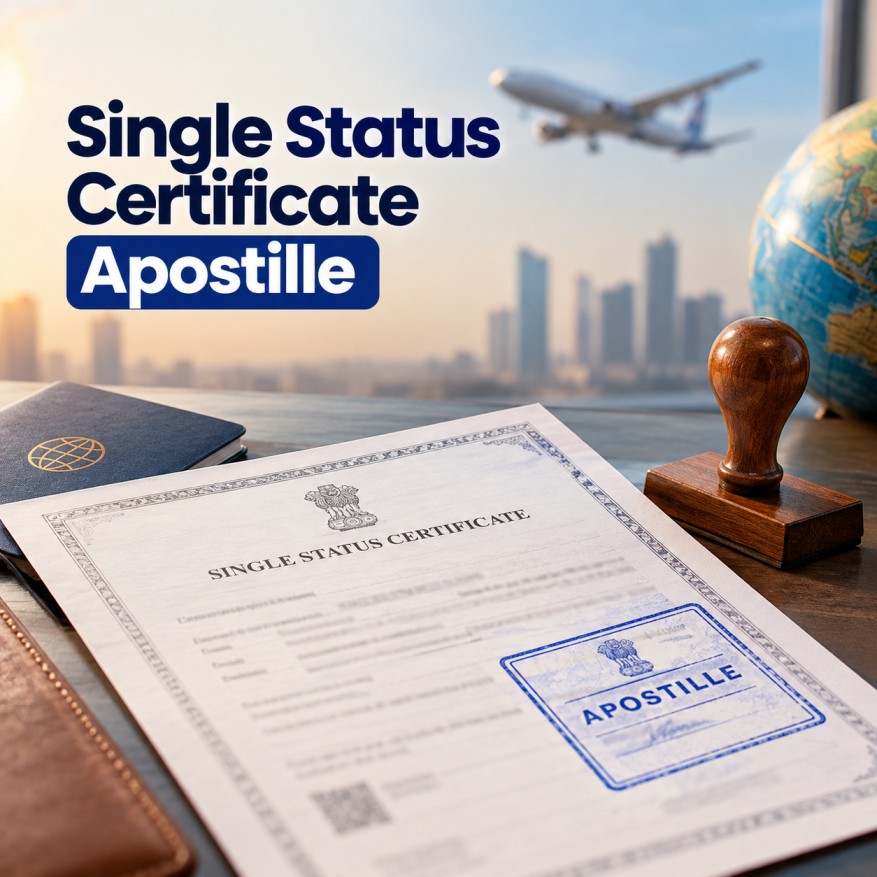
Most people hear about this document at the worst possible moment. A wedding date is fixed, a visa appointment is booked, and then the foreign office writes back asking for proof that you are single, with an apostille on it. If that is where you are right now, relax. Once you know the order of steps, a Single Status Certificate Apostille is a manageable process.
What a Single Status Certificate actually is
It is an official paper saying you are unmarried. In some states, the local revenue office issues it, usually the Tehsildar or Sub-Registrar. Other states treat it as a notarised affidavit that gets verified afterwards. You will also see it called an Unmarried Certificate, Marital Status Certificate or Certificate of No Impediment. The foreign office may care about the exact wording, so ask them before you apply.
What the apostille does
The apostille is a second certificate that the Ministry of External Affairs (MEA) attaches to your paper. Its only job is to confirm that the official's signature and seal are genuine. It does not say that the contents of your certificate are true. Countries that belong to the Hague Apostille Convention accept it, and India joined that group in 2005. If your destination is not a member, you will need embassy legalisation instead, so find that out first.
Why it is asked for and who needs it
A registrar in another country has no way of telling whether an Indian seal is real. The apostille answers that question for them. A Single Status Certificate Apostille usually comes up for marriage abroad, fiancé or spouse visas, and residence permits. If you are divorced or widowed, this is not your document. Those cases need a divorce decree or a death certificate.
How to get it done
Ask what they want. Get the exact document name, the format and the age limit from the receiving office. Written instructions are best.
Get the certificate. Apply to the correct local authority in your state with identity proof, address proof and photographs. If your state uses an affidavit, get it notarised.
Do the state verification. The Home Department or General Administration Department of the issuing state confirms the official's signature. People skip this step because nobody mentions it, and the MEA then sends the file back.
Apply for the apostille. Use the MEA's online apostille portal. Upload the papers, pay the fee and follow the submission or appointment instructions it gives you.
Check before you leave. Read every name and date on the finished document. One wrong letter can mean starting all over again.
What to keep ready
Keep your original certificate, passport or Aadhaar, address proof, photographs, and a notarised affidavit if your state wants one. Lists change a little from state to state, so call the local office and ask for the current one.
Papers that often travel with it
Marriage registries abroad rarely ask for only one thing. You may also be asked for a copy of your passport, proof of address, or a police clearance certificate. Find out early which of these need attestation as well, because doing them in one batch saves a second trip through the system.
How long it stays valid
The apostille itself has no printed expiry date. The trouble is on the other side. Many foreign offices want the underlying certificate to be recent, often issued within three to six months. An older certificate can be turned down even when the apostille is perfectly genuine.
What it costs
The official fees are small. The MEA charges a modest amount per document, and the notary and state office add their own. The bill grows with agent fees, courier and pickup. The MEA website shows the current fee, and it does get revised, so check there instead of trusting an old figure.
How long it takes
A smooth run takes about one to two weeks. Missing papers, mismatched names, full appointment slots and public holidays can stretch that. Please do not book flights or fix a wedding date until the apostilled paper is actually in your hands.
Mistakes that cost people weeks
The biggest one is a name spelled differently on the certificate and the passport. Others are handing in photocopies where originals are needed, skipping state verification, going to the wrong office, and starting late. Nearly all of these can be avoided by checking every detail twice before you submit.
Doing it yourself or getting help
You can handle the whole thing on your own. Some people in larger cities choose Apostille services in Chennai because it saves them the queues, appointment hunting and document checking, especially when more than one paper is involved. If you go that way, ask for a written list of steps and charges, and ask what the government fee is separately from the service fee.
Wrapping up
The path is simple when you take it in order. Learn what the foreign office wants, get the certificate from the right authority, complete state verification, and then apply to the MEA. Keep your details identical on every document, leave yourself extra time, and check official websites for current rules before you start your Single Status Certificate Apostille.