What to Consider When Buying a Solid Wood Coffee Table?
-

- Published Updated
- 48 views
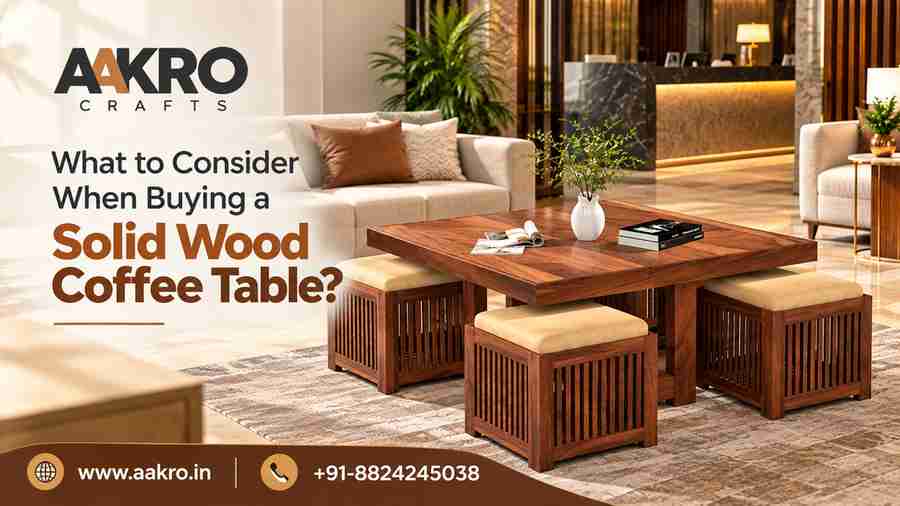
A coffee table may look like a small part of an interior, but choosing the wrong one can affect the entire seating area. A table that is too large can make movement difficult, one that is too low may feel uncomfortable and a beautiful design made with unsuitable materials may not perform well under regular use.
This becomes even more important in hotels, resorts and other hospitality spaces where furniture is used by different guests every day. When buying a solid wood coffee table, you should therefore consider more than appearance. Size, shape, wood quality, construction, finish and everyday usability all matter.
Here is a practical guide to help you choose the right coffee table for your space.
1. Start With the Available Space
Before looking at colours, wood grains or designs, measure the area where you want to place the coffee table.
Consider the sofa, lounge chairs and other furniture surrounding it. There should be enough room for people to walk comfortably without constantly bumping into the table.
For a hotel lobby, the available area may allow for a larger statement table. In a guest room or compact lounge, a smaller design may be more practical.
Knowing your available space before shopping also prevents you from choosing a table simply because it looked well-proportioned in an online photograph.
2. Consider the Coffee Table Height
Height is one of the most important factors when selecting a coffee table.
The table should work comfortably with the seating around it. If it is significantly higher or lower than the sofa, using it for drinks, books or personal belongings may feel inconvenient.
Instead of selecting height independently, compare the coffee table dimensions with the actual seating arrangement.
This is particularly useful for hotels where guest comfort and practical usability should influence furniture decisions.
3. Choose the Right Shape
Coffee tables are available in many shapes, including rectangular, square, round and oval.
The best option depends on your layout.
Rectangular Coffee Tables
These work particularly well with longer sofas and larger seating arrangements. They can provide plenty of usable surface area without requiring excessive depth.
Square Coffee Tables
Square tables can suit symmetrical lounge arrangements where sofas or chairs are positioned around multiple sides.
Round Coffee Tables
Round designs have no sharp corners and can create a softer visual appearance. They can work nicely in conversational seating areas.
Oval Coffee Tables
Oval tables combine the length of a rectangular table with softer edges, making them useful where you want a flowing furniture arrangement.
Do not choose a shape based only on current design trends. Consider how people will move around and use the space.
4. Understand the Material
A product being described as “wooden” does not necessarily mean every component is made from solid wood.
Read the material specifications carefully before purchasing.
If you specifically want a solid wood coffee table, ask which wood species is used and whether the main structural components are made from solid wood.
Natural wood also has variations in grain, texture and tone. Rather than being defects, these variations can give each piece its individual character.
For commercial projects, however, it is still worth discussing how the manufacturer maintains overall consistency across multiple units.
5. Check the Construction Quality
An attractive table will not be a good investment if it feels unstable during everyday use.
Look beyond the tabletop and consider how the complete piece is constructed.
Important areas include:
- Leg and base stability
- Joint construction
- Tabletop thickness
- Smoothness of edges
- Overall balance
- Drawer or shelf construction, if included
For online purchases, request additional details when the product listing does not provide enough information.
Hotels buying multiple units may also consider evaluating a sample before confirming a large order.
6. Think About Everyday Use
Ask yourself one simple question:
How will this coffee table actually be used?
In a home, it may hold drinks, books, décor or remote controls. In a hotel, guests may use it for phones, laptops, handbags, newspapers, food trays and personal belongings.
A hotel lobby table may experience considerably more use than one placed in a private living room.
For frequent-use areas, prioritise stability, usable surface area and ease of maintenance alongside appearance.
7. Select a Finish That Complements the Interior
Wood finish can change the overall personality of a coffee table.
A lighter finish can complement bright, contemporary interiors, while deeper tones can create a warmer and richer atmosphere.
Look at the entire room before choosing.
Consider:
- Flooring
- Sofa upholstery
- Wall colours
- Rugs
- Lighting
- Side tables
- Other wooden furniture
The furniture does not have to match perfectly. In fact, excessive matching can sometimes make a space feel flat. Instead, aim for finishes that complement each other naturally.
8. Decide Whether You Need Storage
Coffee tables can be simple or multifunctional.
Some designs include drawers, open shelves or additional storage. These features can be helpful when you want to keep magazines, brochures or other small items organised.
For hotel suites, a storage coffee table can provide additional functionality. In a minimalist lobby, however, a simple tabletop with clean lines may work better.
Choose storage based on an actual requirement rather than assuming that more features always make a better table.
9. Consider Maintenance
Furniture looks very different after months of everyday use compared with the day it arrives.
Before purchasing, ask how the table should be cleaned and maintained.
This is especially important for hospitality properties because housekeeping teams may need to clean furniture regularly.
Understand the manufacturer's recommended care instructions for the wood and finish. Using appropriate cleaning methods can help maintain the appearance of the furniture over time.
10. Look at the Coffee Table From Every Angle
Online product photographs can sometimes focus heavily on the most attractive angle.
Before purchasing, look for images showing:
- Front
- Side
- Back
- Top
- Legs
- Base
- Drawers or shelves
Close-up images of wood grain and construction details can also be useful.
If you are placing a commercial order, ask the supplier for additional photographs or product specifications when required.
11. Think About Proportion, Not Just Size
Size tells you whether a table will physically fit. Proportion tells you whether it will look right.
Imagine a very small coffee table in front of a wide hotel lobby sofa. Even if there is plenty of walking space, the table may look visually disconnected from the seating.
The opposite is also true. An oversized table in front of compact chairs can dominate the entire arrangement.
Consider the scale of all the furniture together.
A well-proportioned coffee table should visually anchor the seating area without overwhelming it.
12. Consider Customisation for Hotel Projects
Hotels and commercial properties often have requirements that standard retail furniture cannot completely satisfy.
Perhaps the table needs to be slightly wider. Maybe the finish must coordinate with existing hotel furniture. Or the interior designer wants a particular height or storage configuration.
In such cases, custom manufacturing can be useful.
Depending on the manufacturer's capabilities, customisation may include:
- Dimensions
- Wood selection
- Finish
- Storage
- Design details
- Quantity
- Project-specific specifications
Share these requirements before production rather than requesting changes after an order has already been manufactured.
13. Compare Quality and Value, Not Just Price
Price matters, particularly when purchasing furniture in quantity, but the cheapest table is not always the most economical option for a commercial property.
Consider what you are getting for the quoted price.
Compare material specifications, construction, dimensions, finish, customisation options and supplier support.
For hotels, furniture is part of the guest environment. A buying decision based purely on the lowest quotation can become problematic if products arrive with inconsistent specifications or do not suit the intended space.
14. Choose the Right Supplier for Bulk Orders
If you are purchasing furniture for several hotel rooms, an entire resort or another hospitality project, supplier selection becomes just as important as product selection.
When looking for a bulk wooden furniture supplier india, discuss whether the manufacturer can handle your required quantity and specifications.
Before finalising an order, confirm details such as:
- Required quantity
- Product dimensions
- Wood specifications
- Finish
- Customisation
- Production timeline
- Packaging
- Delivery location
For projects requiring multiple furniture categories, also check whether the manufacturer can produce coordinated coffee tables, bedside tables, beds, wardrobes, dining furniture and other pieces.
Working with one capable manufacturer can make it easier to maintain a consistent design direction across a property.
15. Check Packaging and Delivery Before Ordering
When buying furniture online, the purchasing process does not end when production is complete.
The furniture still needs to reach your property safely.
Ask the supplier about packaging methods and delivery arrangements, particularly for interstate or bulk shipments.
Hotel procurement teams should also coordinate delivery dates with interior installation schedules. Receiving furniture too early can create storage problems, while delayed delivery may affect project completion.
Clear communication about timelines can prevent unnecessary complications.
Final Thoughts
The best coffee table is not necessarily the most expensive or the most decorative one. It is the table that works naturally with your space, seating arrangement and everyday requirements.
Before buying a solid wood coffee table, check its dimensions, height, shape, material, construction, finish and functionality. Think about how people will actually use the table and how easily it can be maintained.
For hotels and other commercial projects, go one step further by considering customisation, bulk consistency, packaging and delivery. A carefully selected coffee table can help create a seating area that feels comfortable, balanced and thoughtfully designed.
FAQs
1. What is the most important thing to consider when buying a coffee table?
Start with size and proportion. The table should fit comfortably within the available area and work well with the height and scale of surrounding seating.
2. Which shape of coffee table is best?
There is no single best shape. Rectangular tables suit longer sofas, square tables can work with symmetrical arrangements and round or oval tables can provide softer edges and easier movement in certain layouts.
3. Is solid wood suitable for a coffee table?
Yes. Solid wood can be an attractive and practical material for coffee tables when the furniture is properly constructed and finished.
4. Should a coffee table have storage?
Only if you need it. Drawers and shelves can be useful for magazines and small items, while a simple design may be more appropriate for minimalist interiors.
5. What should hotels consider when buying coffee tables?
Hotels should consider dimensions, construction, everyday guest use, maintenance, finish consistency and the supplier's ability to fulfil bulk or customised requirements.
6. Can coffee tables be customised for hotel projects?
This depends on the manufacturer. Some manufacturers can customise dimensions, finishes, storage and design details according to project requirements.
7. What should I ask a supplier before placing a bulk furniture order?
Confirm the material, dimensions, quantity, finish, customisation options, production timeline, packaging and delivery arrangements before approving the order.
Visit- www.aakrocrafts.in