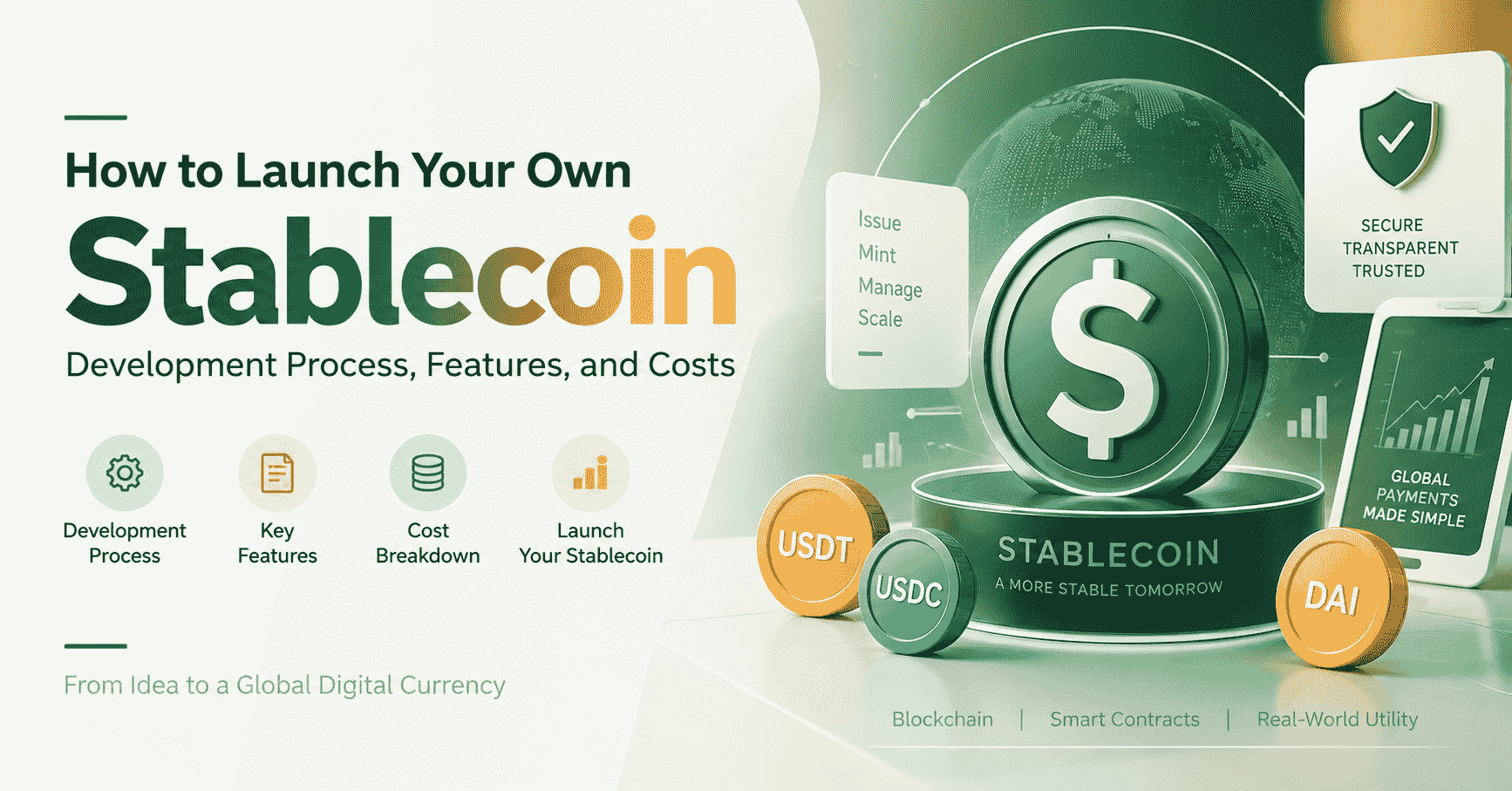
The Growing Importance of Stablecoins in Modern Financial Innovation
-

- May 10th, 2026
- 8,083 views

Stablecoins have emerged as one of the most influential components within the digital asset ecosystem, reshaping the way value is transferred, stored, and utilized across decentralized financial infrastructures. Unlike volatile cryptocurrencies that experience unpredictable price fluctuations, stablecoins are engineered to maintain price stability through asset-backed reserves, algorithmic balancing mechanisms, or collateralized financial structures. Their ability to preserve value while enabling blockchain-based transactions has positioned them as a foundational instrument in modern financial innovation.
As enterprises, fintech firms, and institutional investors increasingly adopt blockchain technology, stablecoins are becoming critical for enabling seamless cross-border settlements, liquidity management, programmable payments, and decentralized financial operations. The integration of stablecoins into payment networks, remittance channels, and digital banking platforms demonstrates how these assets are transitioning from speculative instruments into practical financial utilities.
The growing reliance on blockchain-powered ecosystems has accelerated demand for scalable and regulation-aware stablecoin infrastructures. This shift is encouraging businesses to explore advanced token engineering models and enterprise-grade Stablecoin development services that align with evolving compliance frameworks and financial interoperability standards.
Why Stablecoins Are Becoming Essential for Financial Systems
Traditional financial systems often struggle with transaction latency, expensive cross-border settlements, fragmented banking infrastructures, and limited accessibility. Stablecoins address these operational inefficiencies by combining the stability of fiat currencies with the programmability of blockchain networks.
Several factors explain the increasing institutional interest in stablecoins:
- Faster settlement cycles: Transactions can be processed within minutes instead of multiple banking days.
- Lower remittance costs: Blockchain-based transfers reduce intermediary banking fees and currency conversion expenses.
- 24/7 financial accessibility: Stablecoin ecosystems operate continuously without dependence on conventional banking schedules.
- Enhanced liquidity management: Enterprises can move capital across global markets with minimal operational friction.
- Programmable financial operations: Smart contracts enable automated treasury management, recurring payments, and decentralized escrow mechanisms.
These advantages are especially significant for multinational corporations, fintech startups, decentralized finance protocols, and digital commerce platforms seeking more agile financial infrastructures.
The Role of Stablecoins in Decentralized Finance and Tokenized Economies
The expansion of decentralized finance has significantly amplified the utility of stablecoins. Within DeFi ecosystems, stablecoins function as liquidity anchors, collateral assets, lending instruments, yield-generation tools, and settlement mediums. Their price stability enables users to participate in blockchain-based financial activities without excessive exposure to crypto market volatility.
Stablecoins also play a vital role in tokenized asset ecosystems. As real-world assets such as real estate, commodities, intellectual property, and securities become digitized, stablecoins provide the transactional layer required for fractional ownership models and instantaneous settlements. This creates a more efficient financial environment where tokenized assets can be traded globally with reduced operational overhead.
Key applications driving stablecoin adoption include:
- Decentralized lending and borrowing protocols
- Blockchain-powered payroll systems
- Cross-border B2B settlements
- Tokenized asset marketplaces
- Digital commerce payment gateways
- Institutional treasury management
- NFT ecosystem settlements
The convergence of tokenization, decentralized finance, and enterprise blockchain adoption is strengthening the long-term relevance of stablecoins within global financial infrastructures.
Regulatory Developments and Institutional Adoption
Regulatory clarity is becoming a defining factor in the future expansion of stablecoin ecosystems. Governments, central banks, and financial regulators are actively developing frameworks to ensure transparency, reserve accountability, anti-money laundering compliance, and consumer protection standards.
Institutional adoption is accelerating because regulated stablecoin models offer improved operational confidence compared to highly volatile digital assets. Financial institutions are increasingly exploring blockchain-native settlement networks that utilize stablecoins for treasury operations, trade finance, and payment modernization initiatives.
Large-scale enterprises are particularly interested in reserve-backed stablecoins due to their auditability and integration flexibility. Compliance-focused architecture, real-time reserve verification, and interoperable blockchain compatibility are becoming essential requirements for enterprise deployment.
At the same time, central bank digital currency initiatives are influencing the broader digital payment landscape. Although CBDCs differ structurally from privately issued stablecoins, both are contributing to the transformation of digital financial infrastructure and encouraging wider blockchain adoption across regulated markets.
The Future Outlook of Stablecoins in Financial Innovation
The long-term trajectory of stablecoins extends beyond cryptocurrency trading environments. Their integration into mainstream financial systems is expected to expand across banking, insurance, international trade, supply chain finance, and digital identity ecosystems.
Future stablecoin innovation will likely focus on:
- Multi-chain interoperability frameworks
- AI-powered compliance monitoring
- Advanced smart contract automation
- Institutional-grade custody solutions
- Real-time reserve transparency systems
- Integration with embedded finance platforms
As blockchain scalability improves and regulatory frameworks mature, stablecoins are positioned to become a core component of next-generation financial infrastructure. Their ability to facilitate programmable value exchange while maintaining transactional stability makes them highly attractive for enterprises seeking efficient, borderless, and transparent financial operations.
The broader financial industry is gradually shifting toward decentralized and digitally interoperable ecosystems where stablecoins can function as the connective layer between traditional finance and blockchain-based innovation. This transition is not merely technological; it represents a structural transformation in how value moves across global economic systems.
Stablecoins are no longer viewed solely as crypto-market instruments. They are evolving into strategic financial assets capable of supporting scalable digital economies, institutional-grade financial products, and highly efficient payment infrastructures. As adoption accelerates, stablecoins will continue influencing the future architecture of modern financial innovation.