Complete Guide to Steel Round Bar Types, Grades, and Applications
-

- Published Updated
- 1,346 views
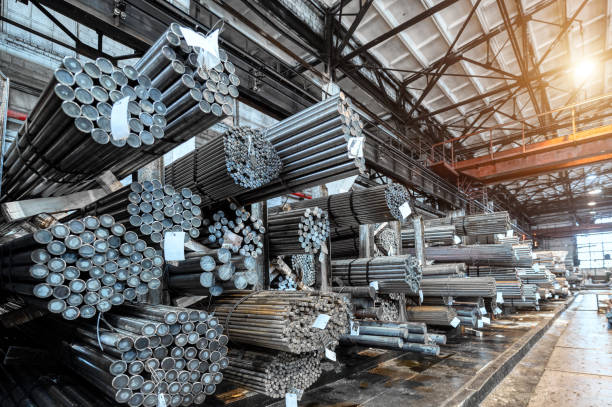
Steel round bar is a common raw material used across construction, manufacturing, machining, and metalworking. This guide explains the main steel round bar types, common grades, production methods, surface finishes, testing standards, and typical uses to help readers choose the appropriate material for a project.
- Steel round bars are available in carbon, alloy, stainless, and tool steel grades, plus different surface finishes such as hot-rolled and cold-drawn.
- Selection depends on mechanical properties (tensile strength, hardness), corrosion resistance, machinability, and intended use.
- Standards from bodies such as ASTM and ISO define dimensions, chemical composition, and testing methods.
- Common uses include shafts, pins, fasteners, structural components, and machined parts.
Types of Steel Round Bar
Carbon steel round bar
Carbon steel round bars are widely used because of their balance of strength, cost, and availability. Low-carbon grades are easier to machine and weld but have lower strength; medium- and high-carbon grades offer higher tensile strength and wear resistance but are less ductile.
Alloy steel round bar
Alloy steels include additional elements such as chromium, molybdenum, nickel, or vanadium to improve toughness, hardenability, and strength. Alloy round bars are commonly selected when improved performance under load or elevated temperature is required.
Stainless steel round bar
Stainless round bars (austenitic, ferritic, martensitic families) provide corrosion resistance for outdoor, marine, and food-contact applications. Grades like 304 and 316 are common for corrosion resistance, while martensitic types offer higher strength and moderate corrosion resistance.
Tool steel and specialty grades
Tool steels and wear-resistant alloys are used where abrasion resistance and edge retention are critical, such as punches, dies, and cutting tools. These grades often require heat treatment to achieve desired hardness.
Cold-drawn vs. hot-rolled
Hot-rolled round bars are formed at high temperature and are economical for large sizes. Cold-drawn or cold-finished bars are further processed at or near room temperature to improve dimensional accuracy, surface finish, and mechanical properties.
How steel round bars are produced
Primary production steps
Steel round bars start as steel billets produced by electric arc furnace or basic oxygen furnace routes, followed by hot rolling into bars. Cold drawing or centerless grinding can be applied for improved tolerances and finish. Heat treatment (annealing, quenching, tempering) is used to alter hardness and strength.
Quality control and testing
Manufacturers test bars for chemical composition, tensile strength, yield strength, elongation, hardness, and sometimes impact toughness. Non-destructive testing methods such as ultrasonic inspection may be used for critical structural applications.
Choosing the right grade and size
Key selection criteria
Choose a grade based on mechanical requirements (tensile/yield strength), corrosion exposure, heat-treatability, and machinability. Size selection considers diameter, length, and tolerances. Engineering drawings or material specifications usually reference standardized grades and size ranges.
Common engineering properties
Important properties include tensile strength (measured in MPa or psi), hardness (Rockwell or Brinell), yield strength, elongation at break, and fatigue resistance. Material data sheets and standards provide typical values for each grade.
Typical applications
Construction and structural use
Round bars are used as dowels, bracing rods, and tie rods in structural assemblies. They serve as economical reinforcement where round geometry is suitable.
Machining and manufacturing
Machinists use round bars to produce shafts, pins, studs, fasteners, bushings, and turned components. Cold-drawn bars are preferred when tight tolerances and surface finish are required.
Automotive and industrial equipment
High-strength alloy round bars are used for axles, transmission components, and wear parts that require specific mechanical properties and fatigue resistance.
Finishes, tolerances, and common sizes
Surface finishes
Common finishes include bright (cold-drawn), hot-rolled, polished, and ground. Finish selection affects corrosion behavior, appearance, and friction in assemblies.
Tolerances and sizing
Tolerances are expressed as dimensional classes (e.g., h9, g6 in some systems) or specific mill tolerances. Standard diameters range from a few millimeters to several inches, with long lengths cut to order.
Standards, testing, and regulatory guidance
Relevant standards
Industry standards define chemical composition, mechanical properties, manufacturing tolerances, and test methods. Organizations such as ASTM International, ISO, and national standards bodies publish specifications that guide selection and quality assurance. For industry technical standards and test methods, see ASTM International.
Traceability and certification
Critical projects may require material certification (mill test reports) showing batch traceability, chemical analysis, and mechanical test results. Always request documentation when compliance is required by engineering specifications.
Storage, handling, and care
Storage recommendations
Store bars in dry, covered areas to reduce corrosion risk. Use supports to prevent bending and to allow easy lifting. Segregate grades to avoid cross-contamination.
Cutting and machining considerations
Use appropriate tooling and cutting speeds for the selected grade. Apply cutting fluids or coolants for heat-sensitive or high-hardness materials to extend tool life and achieve the desired surface finish.
Recycling and lifecycle
Steel round bars are recyclable and can be melted and reprocessed with minimal loss of structural properties, supporting circular material use in manufacturing.
What is a steel round bar and how is it used?
A steel round bar is a cylindrical steel product used as raw stock for machining, structural elements, fasteners, shafts, and pins. Selection depends on required mechanical properties, corrosion resistance, and finish.
How do cold-drawn and hot-rolled round bars differ?
Cold-drawn bars have improved dimensional accuracy and surface finish and often higher strength due to work hardening. Hot-rolled bars are formed at high temperatures and are generally less expensive for larger diameters or when tight tolerances are not required.
Which standards should be checked for material certification?
Check standards referenced in engineering specifications (ASTM, ISO, or national standards) and request mill test reports that document chemical composition and mechanical test results for the supplied lot.
Can a round bar be heat treated after machining?
Some grades can be heat treated after rough machining, but allowance for distortion and dimensional changes must be made. Consult heat-treatment data for the specific alloy and process.
Is stainless steel always the best choice for corrosion resistance?
Stainless steels offer good corrosion resistance, but selection depends on environment, chlorides, temperature, and cost. Coatings or corrosion-resistant alloys may be more suitable in certain conditions.
How to verify a supplier's quality?
Request mill test reports, material certifications, and evidence of compliance with relevant standards. For critical components, consider supplier audits, third-party testing, or traceability documentation.