Streamline Data Flows: Advanced Data Integration Techniques and Best Practices
-

- February 23rd, 2026
- 1,315 views

FREE SEO Topical Map Generator: Find Your Next Content Ideas
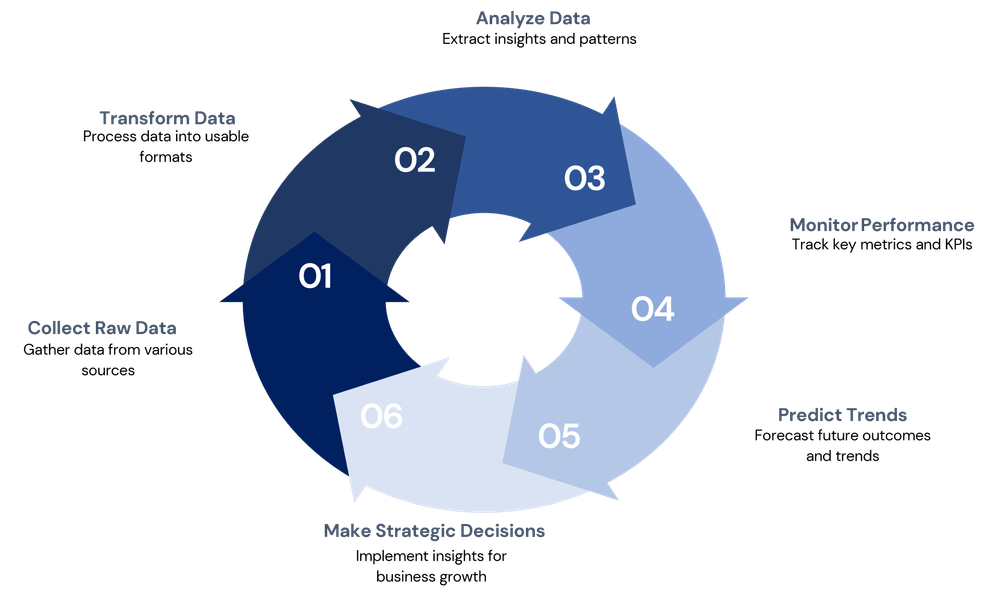
Advanced data integration techniques are methods and patterns that enable organizations to streamline data flows across systems, reduce latency, and maintain data quality in modern analytics and operational environments. These approaches address challenges such as heterogeneous data formats (JSON, XML, CSV), varied storage (data lakes, data warehouses), and mixed query models (SQL, NoSQL).
- Prioritize a clear integration architecture (ETL/ELT, streaming, CDC, virtualization).
- Use metadata management, schema mapping, and data orchestration to reduce friction.
- Implement governance, security, and compliance practices early (GDPR, ISO standards).
- Monitor pipelines and apply testing, validation, and observability to maintain quality.
Advanced Data Integration Techniques
Overview and when to use specific approaches
Determining which technique to apply depends on use case requirements for latency, throughput, transformation complexity, and data consistency. Traditional extract-transform-load (ETL) processes remain effective for batch reporting and archival workflows. Extract-load-transform (ELT) patterns are common where a centralized processing engine (for example, a cloud data warehouse) can perform transformations at scale. Streaming integration and change data capture (CDC) are preferred when near-real-time synchronization and event-driven architectures are needed. Data virtualization supports on-demand federated queries without moving all data, useful for unified views and low-latency lookups.
Key patterns and methods
Core patterns include:
- Batch ETL/ELT: Scheduled extraction from source systems, with transformations applied before or after loading into a central store.
- CDC and event streams: Capturing data changes at the source and propagating events through message brokers or streaming platforms for near-real-time updates.
- Data pipelines and orchestration: Using workflow orchestration to manage dependencies, retries, and parallelism across jobs.
- Data virtualization and federation: Querying across distributed sources with a virtual layer that handles schema translation and access control.
- API-led integration: Exposing and consuming standardized APIs to decouple systems and reduce tight coupling of data models.
Design and architecture considerations
Schema mapping and metadata management
Maintain a central metadata catalog to capture schemas, lineage, and data definitions. Automated schema mapping and versioning reduce breakage when source structures evolve. Tools that provide a unified data catalog improve discoverability and support impact analysis for downstream consumers.
Data quality and transformation strategies
Implement validation checks, deduplication, and enrichment close to the point of ingestion where possible. Adopt idempotent transformations and clear error-handling policies. Applying transformations incrementally or using late-binding approaches can reduce rework and support agile analytics.
Orchestration and workflow management
Use orchestration to coordinate data movement, enforce SLAs, and provide visibility into pipeline health. Observability for pipelines—logs, metrics, and distributed tracing—helps detect bottlenecks and data drift. Establish retry policies, backpressure handling, and resource isolation to ensure predictable performance.
Security, governance, and compliance
Access control and encryption
Apply role-based access control, least privilege principles, and encryption in transit and at rest. Manage credentials securely and rotate keys regularly. Map sensitive data elements to classification levels and restrict exports where necessary.
Regulatory and standards alignment
Follow relevant standards and guidance for secure data management, such as ISO/IEC information security standards and national frameworks. Ensure compliance with data protection regulations (for example, the GDPR in the European Union) by implementing consent tracking, data subject rights workflows, and retention controls. For design and interoperability guidance, consult authoritative resources such as the National Institute of Standards and Technology (NIST) Big Data Interoperability Framework (NIST).
Implementation best practices
Tooling and connector strategy
Select connectors that support native change capture and incremental reads to limit full-reload operations. Favor modular, composable tools that separate transport, transformation, and storage concerns. When adopting cloud services, ensure chosen services align with organizational security and residency requirements.
Testing, validation, and monitoring
Implement automated tests for transformations, reconcile record counts, and validate referential integrity. Continuous monitoring through metrics and alerting ensures early detection of schema changes, latency spikes, or failed jobs. Maintain runbooks and automation for common recovery steps to reduce mean time to repair.
Performance and cost optimization
Optimize data partitioning, file formats (columnar formats for analytics), and compression to reduce storage and improve query performance. Use sampling and tiered storage for older data. Monitor compute usage to prevent runaway costs and employ autoscaling where appropriate.
Common pitfalls and mitigation
- Hidden coupling: Mitigate by enforcing contracts and API schemas.
- Poor observability: Improve by adding telemetry and lineage tracking.
- Security gaps: Address through regular audits and access reviews.
- Overcentralization: Balance central platforms with federated autonomy to reduce bottlenecks.
FAQ
What are advanced data integration techniques?
Advanced data integration techniques include approaches such as CDC-based streaming, ELT for scalable transformations, data virtualization for federated queries, metadata-driven schema mapping, and orchestration for managing complex pipelines. These techniques aim to reduce latency, maintain data integrity, and support analytics and operational needs across heterogeneous systems.
How do streaming and batch approaches differ, and when should each be used?
Batch approaches (ETL/ELT) are suited to periodic processing, large-volume transformations, and use cases tolerant of latency. Streaming and CDC support low-latency requirements, real-time analytics, and event-driven workflows. The choice depends on SLA, data volume, and processing complexity.
What governance steps help streamline data flows safely?
Establish a metadata catalog, enforce access controls, classify sensitive data, define retention policies, and implement monitoring for policy adherence. Regular audits and alignment with standards such as ISO/IEC and regional regulations like GDPR help maintain compliance while enabling efficient data movement.
Which metrics indicate healthy data integration pipelines?
Key metrics include end-to-end latency, data throughput, error rates, job success/failure counts, data freshness, and reconciliation discrepancies. Tracking these metrics with alerting thresholds supports proactive maintenance.
Can advanced integration techniques reduce costs?
Yes. Techniques such as incremental processing, efficient file formats, appropriate partitioning, and autoscaling compute resources reduce storage and compute expenses. However, architectural choices should balance cost with required performance and reliability.