Why Is My Hair Suddenly Falling Out? Here's What's Actually Going On
-

- Published Updated
- 1,956 views
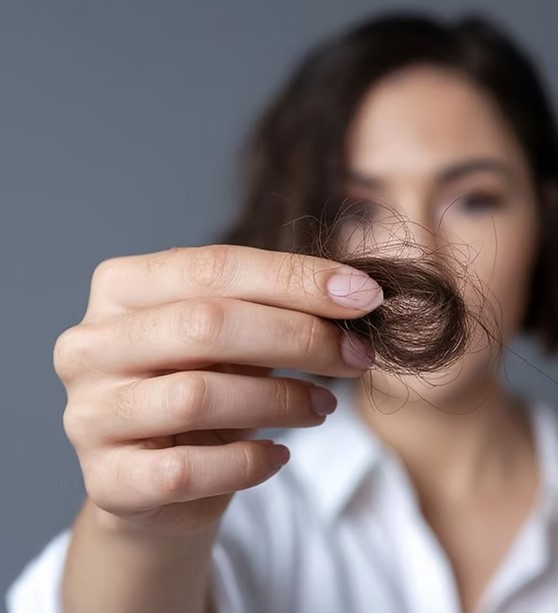
Nobody thinks about hair loss until it's already staring back at them from the drain. Or the pillow. Or that photo your friend took from an angle you didn't approve of. Wherever it snuck up on you, you're definitely not the only one dealing with it. And the honest truth? There's a lot more you can do about it now than there was even five or six years ago.
So you're looking into hair loss treatment los angeles has to offer. Fair. You've probably already burned through a shampoo or three, maybe a supplement that promised "visible results in 90 days" and delivered... nothing you could actually see. That's not unusual, and it's not really your fault either. Hair loss isn't one problem with one fix. It takes an actual diagnosis to know what's going on under there, not a guess based on a bottle's marketing copy.
It's Not Always Genetics
Most people hear "hair loss" and immediately think male pattern baldness, or female pattern thinning, case closed. But that's really just one slice of a much bigger picture. Thyroid problems can do it. So can low iron. Hormones shifting around, certain medications, and yes — plain old stress.
Which brings up something worth mentioning: stress hair loss treatment is a search that's climbed a ton lately, and honestly? Makes sense. There's a condition, telogen effluvium, where a rough stretch — illness, surgery, grief, a crash diet, whatever — shoves a big batch of follicles into a resting phase all at once. Then a few months later, out it comes. Watching clumps fall out is scary, no way around that. But here's the part that's actually reassuring: this kind of shedding tends to reverse itself once whatever triggered it gets sorted out.
If this sounds like your situation, you're probably after a hair shedding treatment, not the same thing people use for a classic receding hairline. And that difference matters more than people assume — treating diffuse shedding across the whole scalp isn't the same game as treating a hairline that's slowly creeping back.
Okay, So Who Do You Actually See?
This is where most people get stuck, and I get why. Dermatologist? Endocrinologist? Some guy who only does transplants? It really depends on the cause, but a decent starting point is a hair loss specialist near me search where the provider actually pulls bloodwork and looks at your scalp under magnification before recommending a single thing.
A real hair loss doctor near me — one worth your time, anyway — asks about your medical history, your family's history, what meds you're on, what's happened in your life recently. Not someone who glances at your scalp for four seconds and pushes a package deal. If a provider skips all that and jumps straight to selling you something, that's a red flag. A pretty obvious one.
And if you're past the early-stages worry and thinking bigger, hair restoration near me opens up more than what's sitting on a drugstore shelf — topical prescriptions, procedures meant to wake dormant follicles back up, the whole range.
What People Mean by "Regenerative"
You've probably seen this word everywhere lately, thrown around like it explains itself. It doesn't, really. A regenerative hair treatment is built on the idea that a lot of "dead" follicles aren't actually dead — they're dormant. Asleep, basically. And under the right conditions, you can wake them back up instead of just covering the problem or moving hair from one spot to another, which is what older approaches mostly focused on.
There's a handful of options under this umbrella, and no, they don't all work the same way or suit the same kind of thinning. Some lean on your body's own healing materials. Some rely on targeted injections. Some combine a few methods depending on how far things have progressed.
Let's Talk About the Injections
This is usually where the questions pile up, so here's the plain version, no jargon.
Hair growth injections do exactly what the name says — they deliver growth factors, nutrients, or concentrated components from your own blood, straight into the scalp, right at the spot where things are thinning. A cream sitting on top of skin has to work its way in, and that's not always efficient. An injection skips that step and puts everything right at the follicle.
Scalp injections for hair loss generally work by causing a mild, controlled inflammatory response — enough to nudge follicles out of their nap and back into an active growth phase. Sounds intense when you say it like that, but most people describe the actual sensation as quick pinpricks, nothing dramatic, especially with numbing cream applied first.
One version of this that comes up constantly uses your own platelets. Here's how it actually goes, skipping the sales pitch:
Blood gets drawn, same as a routine lab visit
It's spun in a centrifuge to pull out the platelet-rich part, which is loaded with growth factors
That plasma gets injected back into the thinning areas
Sessions are usually spaced a few weeks apart — four to six is a common starting series before anyone assesses results
After that, a lot of people keep going with occasional maintenance sessions to hold onto what they've gained
If you've run across prp hair loss los angeles while digging around online, that's exactly what this is — platelet-rich plasma. Since it's coming from your own body, there's basically no risk of an allergic reaction the way there might be with something foreign, which is a big reason people gravitate toward it over systemic medications.
A lot of folks specifically want a prp hair treatment near me provider instead of driving across town or flying somewhere. Reasonable. This isn't a treatment where you need some famous name three states away — what matters more is a provider who's actually done this a lot and will be straight with you about the timeline. Because it is a timeline. Months, not days.
Set Your Expectations Now, Not Later
Nobody's walking out of a consultation with a full head of hair two weeks later. That's not how this works, and any provider telling you otherwise is selling, not treating. Regenerative approaches — PRP included — usually need three to six months before you notice a real, believable difference, and things keep improving for a while after that too. Honestly, photos taken every few weeks show progress way better than your own mirror does, since gradual change is nearly impossible to notice in yourself day to day.
Worth knowing too: these treatments work best on follicles that are shrinking, not follicles that are already gone. A spot that's been bald for a decade doesn't really have anything left to wake up. Which is exactly why an actual evaluation matters before you commit to anything — a provider willing to tell you "you're not a great candidate for this" is worth ten times more than one who tells everybody yes.
Questions Worth Asking First
Before signing up for anything, ask a few things point blank. How many sessions before we even check if it's working? How much experience do you actually have with this specific method? Are you pairing it with anything else, and why that combination? What's the real cost and timeline look like for someone in my situation — not the brochure version. A provider who answers all that without getting cagey or pushy is generally someone worth trusting.
Conclusion
Hair loss messes with people more than they usually admit, and it doesn't help that every search leads to a different explanation or a different "miracle" fix. The reality's a bit less exciting but a lot more useful: some causes fade on their own, some are genetic and need ongoing management, and the right path depends entirely on which one you're actually dealing with. Regenerative treatments and injection-based options have given people real, evidence-backed choices that just didn't exist a decade or two ago — but none of it works overnight, and none of it works identically for everyone. Getting evaluated by someone who actually takes the time to figure out your specific case is still, hands down, the most important first move, whatever you end up choosing to do next.
Who's Actually Treating You?
If you're weighing where to actually go for care in Los Angeles, Zeeba Medical has built a reputation around treating patients as more than just a number on a schedule. A lot of people just call it Zeeba Med for short, and honestly, that's fine — it's the same team, the same approach, whichever way you say it. At the center of it is Dr Ryan Gorji, who leads the practice with a focus on integrative medicine and aesthetics rather than the assembly-line model a lot of clinics fall into these days. Ask around and you'll hear people specifically request dr gorji zeeba medical by name, mostly because word travels fast when a provider actually listens instead of rushing through appointments. Credentials matter too, obviously — Ryan Gorji MD brings real medical training to every consultation, which isn't something every aesthetics-focused practice out there can genuinely claim.
FAQs
Is hair shedding the same thing as permanent hair loss?
Not really. Shedding usually means a temporary spike in hair fall, often tied to stress, illness, or hormones shifting — and it can settle down on its own or with the right treatment. Permanent loss, like pattern baldness, follows a different track, and it's usually progressive if left alone.
How long before I actually see results from injection-based treatments?
Most people start noticing something around the three-to-six month mark, with more improvement stacking up after that. Hair grows slow. There's no getting around that, so patience genuinely matters here.
Do these treatments hurt?
Not much, honestly. It's usually described as quick pinpricks, and numbing cream beforehand takes the edge off even that. Not a comfortable spa day, but not something people dread either.
Can stress actually cause noticeable hair loss?
Yes, absolutely. A big enough stressor can push a large chunk of follicles into a resting phase all at once, and the shedding shows up a few months later. It's a documented pattern, and it usually improves once whatever triggered it gets handled.
Is one session enough, or do I need several?
Almost always several. Most regenerative approaches, PRP included, are built as a series — a handful of initial sessions, then periodic maintenance down the line to keep the results going.