Techno Softwares: Custom Mobile App Solutions for Enterprises and Startups
-

- April 26th, 2026
- 355 views

👉 Best IPTV Services 2026 – 10,000+ Channels, 4K Quality – Start Free Trial Now
Overview: What to expect from custom mobile app solutions
Choosing a provider for custom mobile app solutions requires clarity on process, trade-offs, and outcomes. This guide explains how Techno Softwares structures projects, what delivery milestones mean, and how to evaluate technical and commercial fit for enterprise mobile app development services and smaller startup apps.
- Core offering: end-to-end customized mobile apps (native iOS/Android and cross-platform).
- Typical engagements: enterprise integrations, consumer apps, and MVPs for startups.
- Key considerations: scope, platform, integration, security, and long-term maintenance.
Detected intent: Commercial Investigation
How Techno Softwares approaches custom mobile app solutions
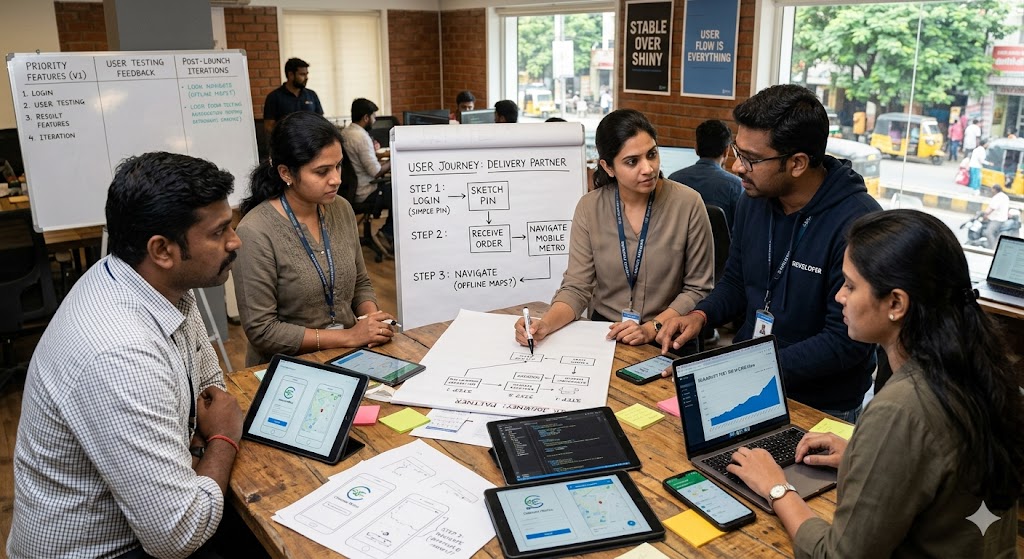
Projects start with a requirements sprint, followed by architecture and a phased delivery plan. Deliverables often include UX prototypes, API contracts, CI/CD pipelines, and production rollouts. For organizations evaluating enterprise mobile app development services, emphasis is placed on secure API design, scalability, and compliance with standards such as OWASP Mobile Top Ten and platform guidelines.
CLASP framework: a named checklist for predictable delivery
The CLASP framework (Collect, Lead, Architect, Ship, Post-launch) helps translate business goals into reliable apps.
- Collect — Gather requirements, KPIs, user journeys, and third-party integration lists.
- Lead — Prioritize features using business value and risk; create an MVP backlog.
- Architect — Define tech stack (native vs cross-platform), data flow, and security controls.
- Ship — Implement sprints, QA, beta testing, and App Store/Play Store submission pipelines.
- Post-launch — Monitor analytics, iterate on UX, and maintain CI/CD and security patches.
Project flow, budgets, and typical timelines
Smaller MVPs often complete in 8–12 weeks with a focused feature set; enterprise projects with backend integrations and compliance needs frequently span 4–12 months. Budget ranges depend on scope: a basic consumer app can start in the low five-figure range, while complex enterprise-grade projects with single sign-on, offline sync, and analytics can reach six figures. These estimates reflect trade-offs between time-to-market, polish, and integration depth.
Trade-offs and common mistakes
Common mistakes include over-scoping the first release, underestimating integration complexity, and neglecting performance testing. Trade-offs include:
- Speed vs quality: Faster launches may require more post-launch fixes.
- Native vs cross-platform: Native often yields higher performance and UX fidelity; cross-platform can reduce development cost and speed up delivery for many use cases.
- Feature scope vs maintenance: More features increase ongoing support and infrastructure costs.
Real-world example: regional retail chain modernization
A regional retail chain engaged a custom mobile app team to build a customer loyalty app with in-store barcode scanning, personalized offers, and backend integration to the POS system. Using an initial 10-week MVP, the team delivered core features, validated the loyalty model with 5,000 users, and then expanded the integration to support real-time inventory updates. The phased approach limited upfront risk and enabled measurable KPIs: 18% increase in repeat visits and 12% lift in average basket size after six months.
Platform and technology considerations
Decisions often revolve around native iOS/Android stacks versus cross-platform frameworks such as Flutter or React Native. For apps that require advanced animations, deep OS integrations, or platform-specific hardware access, native development may be more appropriate. For teams prioritizing single codebase maintenance and rapid feature parity, cross-platform mobile app customization is a common choice. Other topics include API standards (REST, GraphQL), authentication (OAuth2, SAML), push notifications, and analytics.
Standards and best practices
Follow platform publishing guidelines and security best practices. For general mobile web and app interoperability guidance, see the W3C Mobile Web Best Practices: W3C Mobile Web Best Practices. Adhering to standards reduces rework during app store reviews and improves accessibility.
Practical tips for selecting a provider
- Require a documented onboarding sprint that produces measurable acceptance criteria and an MVP backlog.
- Ask for an integration readiness checklist: APIs, auth, data mapping, and test environments.
- Request a security and data privacy plan referencing OWASP Mobile guidance and applicable regulations (GDPR, CCPA).
- Plan for observability: define analytics, crash reporting, and release rollback procedures before launch.
Common mistakes when evaluating offers
- Accepting fixed-price bids without a detailed scope — leads to disputes and scope creep.
- Skipping performance and load testing until after launch — causes user complaints and churn.
- Failing to plan for ongoing maintenance and OS updates — increases long-term costs.
Core cluster questions for internal linking and next reads
- How to budget for a mobile app MVP?
- When to choose native versus cross-platform development?
- What security controls are required for enterprise mobile apps?
- How to measure mobile app ROI and user engagement?
- What are best practices for app store submission and review?
Practical checklist before signing a contract
Use this short checklist to reduce risk:
- Defined acceptance criteria for each sprint and release.
- Integration test plan and sandbox access for backend services.
- Security and compliance statements tied to specific controls.
- Clear post-launch SLA for bug fixes and security patches.
FAQ
How much do custom mobile app solutions cost?
Costs vary widely based on scope and integrations. Expect a basic consumer app MVP in the low five-figure range, while enterprise apps with integrations and compliance can cost significantly more. Always ask for a breakdown of discovery, design, development, QA, and maintenance.
How long does it take to build an enterprise mobile app?
Typical timelines range from 8–12 weeks for an MVP to 4–12 months for a fully integrated enterprise rollout with multiple platforms.
Which is better: native or cross-platform mobile development?
Native offers best performance and platform-specific UX; cross-platform suits faster delivery and a single codebase. The right choice depends on performance needs, device features required, and long-term maintenance strategy.
What security measures should be included in a mobile app project?
Include secure authentication (OAuth2), encrypted storage, transport-layer security (TLS), input validation, and regular dependency scanning. Reference OWASP Mobile Top Ten and platform security documentation when defining scope.
Who maintains the app after launch and how are updates handled?
Maintenance can be handled by an internal team or contracted to the provider under an SLA. Updates require versioning strategy, CI/CD for releases, and monitoring for OS updates or security patches that affect app behavior.