Solitaired Winning Tips: Practical Strategies to Win More Klondike Games
-
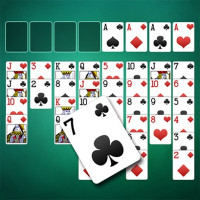
- February 27th, 2026
- 284 views
Solitaired winning tips focus on move prioritization, tableau management, and smart use of the stock to increase the chance of finishing Klondike games. This guide explains clear, repeatable strategies — a named framework, a short example, and an easy checklist to put into practice right away.
- Focus on move priority: expose hidden cards, free Aces and Twos, and avoid trapping Kings.
- Use the STACK framework (Sequence, Tableau priority, Ace/King rules, Count the stock, Keep options).
- Apply the move checklist each hand and undo sparingly to learn patterns.
Detected intent: Informational
Solitaired winning tips: core strategy and priorities
Winning more on Solitaired requires consistent decision rules rather than lucky plays. Prioritize exposing face-down tableau cards and getting Aces to the foundation quickly. Track the stock and avoid moves that permanently block useful sequences. These Solitaired strategy principles reduce guesswork and increase solvability.
Key concepts and related terms
- Tableau: seven piles where most play happens.
- Foundation: A-to-K piles where cards are ultimately built.
- Stock and waste: draw pile behavior—knowing the draw rule (1 or 3) matters.
- Sequence, build, expose: common verbs used in Klondike play.
STACK framework: a repeatable checklist for each deal
Use the STACK framework as a short, repeatable model before every move. Treat it as a checklist to run in about two seconds:
- Sequence — Can the move extend a descending alternating-color sequence without blocking deeper cards?
- Tableau priority — Does the move expose a face-down tableau card or free a column for a King?
- Ace/King rules — Prefer moves that place Aces/Twos on foundations and reserve empty columns for Kings.
- Count the stock — Consider how many unseen cards remain and whether the move helps use the stock efficiently.
- Keep options — Avoid moves that reduce future legal moves (don’t bury useful cards).
This checklist doubles as a quick mental filter: if a candidate move fails two or more STACK checks, try a different play.
Practical tips for immediate improvement
Small habits deliver big results. The following practical tips follow from the STACK framework and are easy to apply on Solitaired.
- Expose before building: When in doubt, make the move that flips a face-down card rather than moving a long sequence to the foundation.
- Free columns matter: Empty tableau columns are most valuable for placing Kings — don’t fill them unless it frees a hidden card.
- Delay auto-foundation: If an Ace can be moved but removing it would reduce future options, delay. Auto-moving to foundations is not always optimal.
- Track the stock: Know whether the draw is one or three cards and how many cycles remain; this affects when to play stock cards.
Solitaired strategy: prioritizing moves and avoiding traps
One common error is moving a mid-sequence card that looks playable without considering whether it prevents exposing a hidden card later. Always ask: does this move add long-term options or remove them? If the move buries a low-value red card under high blacks, it may block multiple tableau plays.
Common mistakes and trade-offs
Understanding trade-offs prevents repeating the same losses.
- Common mistake — Filling empty columns prematurely: Filling an empty column with anything other than a King can block recovery.
- Trade-off — Foundation vs tableau exposure: Moving cards to the foundation is good, but moving too many early can reduce tableau mobility and trap sequences.
- Common mistake — Overusing undo: Reliance on undoes prevents learning patterns. Use undo to test a theory once, then internalize the decision rule.
Short real-world example (one-turn walkthrough)
Scenario: The tableau shows three hidden cards in column 4, an exposed black 8 on column 3, and an exposed red 7 on column 6. The stock draw is three.
- Move the black 8 onto a red 9 in column 2 only if doing so flips a hidden card in column 3. If it does not, instead move the red 7 to a black 8 to expose column 6.
- If a move exposes an Ace or reveals a low card that can free another column, do it before using a stock card from the waste pile.
- If the stock has many unseen cards, avoid immediate foundation moves unless they increase tableau options.
Outcome: Following the checklist exposed hidden cards and opened a column for a King, improving solvability on the next cycle through the stock.
Core cluster questions
- How should moves be prioritized to expose the most hidden tableau cards?
- When is it correct to move cards to the foundation early in a game?
- How does tracking the stock change play strategy in Klondike?
- What are the best practices for using empty tableau columns?
- Which common mistakes reduce the chance of winning on Solitaired?
For a concise reference on Klondike rules and draw variations that affect these decisions, see the Klondike (Solitaire) rules summary (external rules reference).
Practical checklist to run in 5–10 seconds (before each move)
- Will this move expose a face-down card? If yes, prefer it.
- Does it free or fill an empty column? Reserve empties for Kings.
- Does it place an Ace/Two to foundation without reducing options?
- Could this move bury a card needed to build sequences? If yes, avoid.
Putting it into practice
Practice the STACK framework for a week of short sessions and use the 5–10 second checklist on every move. Track outcomes: wins per session and common losing positions. Adjust habits (e.g., delaying foundation moves) based on which errors recur.
FAQ: What are the best Solitaired winning tips for beginners?
Begin with the STACK framework: expose cards, reserve empty columns for Kings, prioritize Aces/Twos to foundation when it increases mobility, and track the stock. Practice the quick checklist and avoid filling empty columns with non-Kings.
How does Solitaired strategy change with 1-card vs 3-card draw?
With a 1-card draw, stock cards are immediately accessible, so using the waste earlier is fine. With a 3-card draw, stock cards come in sets; plan moves that will make those sets useful and avoid wagering single-card moves that won’t align with upcoming waste draws.
When should a card be moved to the foundation?
Move cards to the foundation if doing so does not reduce tableau play options. Prioritize freeing hidden cards and preserving columns; occasionally leave foundation moves for later in the hand if they would trap sequences.
What are the most common mistakes that reduce wins?
Common mistakes include filling empty columns too early, auto-moving cards to foundations without checking consequences, and not tracking the stock/draw cycles. Each habit reduces flexibility and increases the chance of unsolvable layouts.
Can using undo on Solitaired improve long-term skill?
Undo is useful for experimentation but overuse prevents learning. Use undo sparingly to test alternative sequences, then commit to chosen rules to build pattern recognition.