Essential Office Amenities That Attract Top Talent in 2024
-

- March 20th, 2026
- 619 views
Office amenities to attract top talent: what companies should prioritize
Intent: Informational
Choosing the right office amenities to attract top talent means matching employee needs, business strategy, and budget. This guide explains which amenities have practical value, how to prioritize investments, and how to align offerings with a hybrid workforce and workplace wellness goals.
- Prioritize amenities that improve productivity, health, and flexibility.
- Use the 5C Amenities Checklist (Comfort, Convenience, Collaboration, Care, Choice) to score options.
- Include workplace wellness amenities and hybrid workplace amenities to address modern needs.
- Start with low-cost, high-impact changes and measure outcomes with simple KPIs.
How to evaluate office amenities to attract top talent
Evaluation starts with alignment: what do current and prospective employees value, and how do amenities support job performance? Use employee surveys, exit interviews, and hiring feedback to surface priorities. Consider operational constraints such as square footage, local regulations, and ongoing maintenance costs.
Core criteria for assessment
- Impact on productivity and employee experience
- Cost to implement and maintain
- Scalability for growth or hybrid schedules
- Equity — accessible to all staff, not just a subset
Top categories and specific amenities
Below are categories that consistently influence candidates and help with retention. Within each category, examples are listed with trade-offs addressed further down.
Workplace wellness amenities
Workplace wellness amenities such as quiet rooms, lactation rooms, on-site or nearby fitness partnerships, ergonomic workstations, and healthy food options signal care for employee health. These amenities can reduce sick days and improve morale when implemented accessibly and consistently.
Hybrid workplace amenities
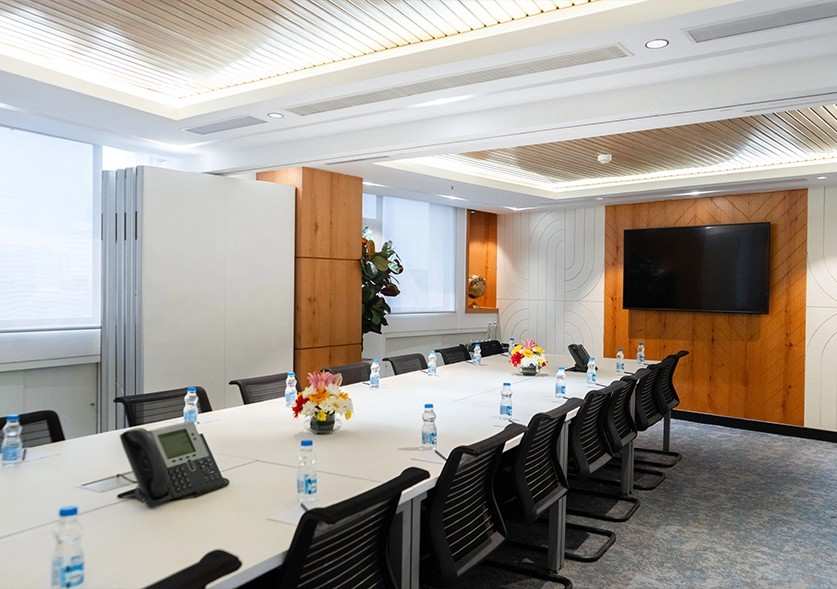
Hybrid workplace amenities include hoteling desks, improved audiovisual systems for hybrid meetings, booking apps, and flexible hours policies. These reduce friction for remote/hybrid teams and make in-office days more productive.
Collaboration and focus
Designated collaboration zones, small-team rooms, phone booths for private calls, and modular furniture support both teamwork and heads-down work. Balance shared spaces with enough private options to prevent noise disruption.
Convenience and commute
Commuter benefits, secure bike storage, and flexible arrival hours make daily routines easier. On-site lockers, package handling, and simple concierge services are high-value for employees who value convenience.
5C Amenities Checklist (framework)
Use this named checklist to score potential amenities before rollout. Score each item 1–5 for the company context.
- Comfort — Ergonomics, climate control, seating, nap/quiet spaces.
- Convenience — Commuter support, lockers, food access, secure storage.
- Collaboration — Meeting tech, team zones, writable surfaces.
- Care — Wellness rooms, mental health access, lactation facilities.
- Choice — Flexible schedules, hybrid support, desk reservation systems.
Practical rollout example
Scenario: A 120-person technology firm moved to a hybrid schedule and used the 5C Amenities Checklist to prioritize changes. Initial investments: improved AV in 4 meeting rooms, 6 phone booths, upgraded chairs for 30% of desks, and a commuter stipend. After a six-month pilot, hiring feedback noted easier coordination for interviews and fewer no-shows for in-person meetings. Lessons included staggering installation to limit disruption and communicating clearly about booking etiquette for shared spaces.
Core cluster questions
These questions reflect common searches that can be used as related content:
- Which office amenities most influence hiring and retention?
- How much should companies budget for office amenities per employee?
- What amenities work best for hybrid teams?
- How can small companies offer competitive amenities on a tight budget?
- How should the impact of new amenities be measured?
Practical tips for implementation
- Start with a pilot: test one or two changes in a single floor or department before scaling.
- Survey staff pre- and post-implementation to measure perceived value and adoption.
- Bundle low-cost, high-impact items (better lighting, ergonomic mice/keyboards, noise masks) for immediate wins.
- Prioritize amenities that support equity and accessibility to avoid creating perks only available to some employees.
- Document ongoing costs and assign a maintenance owner to avoid amenities falling into disrepair.
Common mistakes and trade-offs
Choosing amenities involves trade-offs. Common mistakes include:
- Over-investing in amenities that serve a small subset of employees (e.g., a game room that rarely gets used).
- Ignoring hidden ongoing costs like utilities, cleaning, and maintenance.
- Not aligning amenities with talent strategy — flashy perks may not replace poor management or unclear career paths.
- Failing to consider hybrid workplace amenities that support remote days, which can reduce overall office utility.
Measuring success
Use simple KPIs: utilization rates (room and desk bookings), employee satisfaction survey scores, time-to-hire, and voluntary turnover rate. Combine qualitative feedback with usage metrics to understand the true value of amenities.
Sources and best practices
For guidance on employee benefits and workplace practices, refer to industry resources like the Society for Human Resource Management (SHRM), which publishes research on benefits and employee experience. Also review local building codes and occupational safety requirements when adding physical amenities.
Practical next steps checklist
- Survey employees to rank amenity preferences and pain points.
- Apply the 5C Amenities Checklist to proposed options.
- Create a phased pilot with clear metrics and a budget cap.
- Communicate launch rules and reservation etiquette to staff.
- Measure results at 3 and 6 months and iterate.
FAQ
What are the best office amenities to attract top talent?
Focus on amenities that improve day-to-day work and wellbeing: ergonomic workstations, hybrid meeting tech, private phone/quiet rooms, commuter support, and basic wellness facilities. The best set depends on workforce composition and company priorities.
How much should be budgeted per employee for office amenities?
Budgeting varies widely by industry and location. Start by scoring amenities with the 5C checklist to prioritize high-impact items; pilot low-cost winners first and track utilization before larger investments.
Are expensive amenities like on-site childcare necessary?
Expensive amenities can be powerful but are not necessary for every employer. Consider partnerships or subsidies (e.g., nearby childcare discounts) that offer value without large capital expense.
How can small companies compete with large employers on amenities?
Small companies can win by focusing on flexibility, personalized perks, and meaningful non-material benefits like clear development paths and supportive management. Low-cost wellness and convenience items can have outsized perceived value.
How should hybrid workplace amenities be different from traditional office perks?
Hybrid workplace amenities emphasize seamless collaboration between remote and in-office staff: strong AV systems, desk-booking software, and flexible scheduling. These reduce friction and make the office a place for high-value in-person work rather than routine tasks.