What Does Professional Tree Pruning Include?
-
- Published Updated
- 1,710 views
Homeowners asking, What does professional tree pruning include?, are usually trying to figure out what they're actually paying for when they hire a tree company. It should be more than sending someone into the canopy with a chainsaw and cutting branches until the tree looks smaller. Good pruning starts with looking at the tree, finding the branches that need attention, and figuring out how to correct those problems without unnecessarily removing healthy growth.
Around Dallas-Fort Worth, that can mean anything from removing a couple of dead limbs to working on a mature oak with branches hanging over a roof, driveway, pool, or neighboring property. Every tree and property are a little different, so the amount of pruning should match what's actually going on in the yard.
Professional Tree Pruning Starts With Looking at the Whole Tree
Before cutting begins, the tree should be looked over from the ground. The branch that caused the homeowner to make the call may only be part of the story.
There may be dead wood higher in the canopy, a branch rubbing against another limb, or old storm damage that isn't obvious at first glance. The crew also needs to see what's underneath the tree and how much room there is to work.
Sometimes that first look results in a much smaller job than the homeowner expected. If the tree only needs three problem branches removed, there's no reason to turn it into a full-canopy pruning project.
Dead Branch Removal Is a Common Part of Pruning
Dead branches are one of the more common reasons mature trees need attention. Smaller dead wood may not create much concern, but a heavy dead limb above a driveway, patio, sidewalk, or roof is a different situation.
Dead branches can become brittle as they deteriorate. They may remain attached for a long time, but strong Dallas winds can eventually bring them down.
Professional pruning can remove those branches in a controlled way rather than waiting to see where they land. The location and size of the dead wood should help determine how the job is handled.
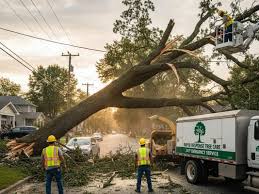
Broken and Storm-Damaged Limbs May Need to Come Out
North Texas storms can leave trees with obvious damage, but not every damaged branch ends up on the lawn. Some limbs crack and remain partially attached, while others become caught in surrounding branches.
Those hanging limbs can be difficult to judge from below. A branch that appears fairly secure from the ground may have very little holding it in place.
Professional tree pruning after a storm may include removing broken branches, cleaning up damaged sections, and checking the surrounding canopy for other problems. The goal isn't automatically to prune the entire tree just because one branch failed.
Storm Damage Doesn't Always Mean Tree Removal
A mature tree can lose a substantial limb and still remain in good condition. If the trunk is sound, the root system appears stable, and enough healthy canopy remains, pruning may be all that's needed.
That can be worth considering with a mature oak or pecan that's been shading a Dallas property for decades. Losing one branch doesn't erase all those years of healthy growth.
More serious problems such as extensive decay, major trunk splitting, or root movement need to be looked at differently. In those situations, pruning may only address part of the problem.
Crossing and Rubbing Branches Can Be Corrected
Trees don't always grow in neat directions. Branches can cross through the canopy and rub against each other whenever the wind moves them.
Repeated rubbing can damage the bark where the branches make contact. On younger trees, correcting those problems early can keep the limbs from becoming much larger and harder to deal with later.
Mature trees require more thought. Removing a large established branch affects more of the canopy, so the crew should consider which branch is better positioned before deciding what comes out.
Roof and Structure Clearance Can Be Part of the Job
Trees growing close to houses are common throughout Dallas-Fort Worth. As they mature, branches can gradually reach roofs, gutters, siding, windows, fences, and other structures.
Professional tree pruning can create clearance where it's actually needed. That doesn't mean every branch on the house side should disappear.
A few selective cuts can often provide enough room around the structure while keeping most of the healthy canopy intact. The tree should still look natural when the work is finished.
Large Branches Over Houses Require More Planning
A large limb over an open lawn is fairly different from one sitting directly above a roof. The branch may need to be removed in smaller sections so the crew can control its weight.
Ropes and rigging can also be used when pieces need to be lowered instead of dropped. This becomes especially useful around swimming pools, fences, landscaping, vehicles, and neighboring property.
The cut itself may only take a moment. Planning where that heavy piece of wood goes afterward is a big part of professional tree work.
Pruning May Include Clearance Over Driveways and Walkways
Not every clearance problem involves a house. Lower branches can gradually extend across driveways, sidewalks, parking areas, or paths through the yard.
A homeowner may notice branches brushing vehicles or hanging low enough that people have to duck underneath them. Commercial properties can have similar problems around parking lots and customer entrances.
Selective pruning can raise or improve clearance in those areas without unnecessarily removing branches higher in the canopy. The work should fit the way the property is actually being used.
Professional Pruning Should Preserve Healthy Growth
One of the most important parts of a pruning job is knowing when not to cut. Healthy branches that aren't causing a problem don't need to come off just because the crew can reach them.
This is especially true with mature trees. A large oak may have spent forty years developing its canopy, and removing a major healthy limb changes something that took decades to grow.
A good pruning job may produce less debris than the homeowner expected. That's not a bad thing if the branches that needed attention were handled correctly.
Heavy Pruning and Tree Topping Aren't the Same Thing
Some homeowners call a tree company because a mature tree simply feels too large. They may be tempted to have the top cut down or the entire canopy heavily reduced.
Tree topping isn't the same as selective pruning. Cutting major limbs back to random points can leave large wounds and encourage dense new growth around the cuts.
If the real concern is a branch over the roof or a section of canopy that's become too heavy, those specific areas should be evaluated first. There may be a way to solve the problem without drastically changing the entire tree.
Property Protection Should Be Part of Professional Tree Work
The tree isn't the only thing a crew needs to pay attention to. Everything underneath it matters too.
Before pruning starts, vehicles, patio furniture, grills, toys, and other movable items can usually be cleared from the work area. Roofs, fences, pools, air-conditioning equipment, landscaping, and neighboring structures obviously have to stay where they are.
The crew should plan the pruning around those obstacles. This is especially important with large tree pruning where a single section of wood can be extremely heavy.
Cleanup and Debris Removal Should Be Discussed
A few branches in a tree don't look like much until they're spread across the yard. Large pruning jobs can create a surprising amount of brush and wood.
Homeowners should ask whether hauling and cleanup are included in the estimate. It's better to know beforehand than to find out afterward that a mountain of branches is staying in the driveway.
Professional tree service should include leaving the work area in reasonable condition. The tree may be the focus of the job, but the rest of the property shouldn't be forgotten.
What Should Be Included in a Tree Pruning Estimate?
A tree pruning estimate should give the homeowner enough information to understand what's being proposed. It doesn't need several pages of technical language.
It should be clear which trees are being worked on and generally what kind of pruning is planned. If large branches are involved, homeowners can ask how they'll be handled and whether debris removal is included.
A few useful things to clarify are:
- Dead and damaged branch removal
- Roof or structure clearance
- Storm-damaged limb removal
- Large branch removal when needed
- Debris hauling and cleanup
- Property protection during the work
- Any areas of the tree that require special attention
Knowing what's included also makes it much easier to compare estimates from different tree companies.
Residential and Commercial Tree Pruning Can Look Different
Residential pruning often means working around houses, pools, fences, backyard landscaping, and neighboring yards. Commercial tree pruning may involve parking lots, sidewalks, customer entrances, apartment walkways, signs, and other busy areas.
The trees may need similar work, but the property changes how the crew approaches it. A large branch above an apartment walkway requires different planning than the same branch over an unused section of lawn.
Professional pruning should take both the tree and the surrounding property into account. Getting the tree right while ignoring everything underneath it isn't enough.
What Does Professional Tree Pruning Include?
For Dallas-Fort Worth property owners asking, What does professionaltree pruning include?, the work can include dead and damaged branch removal, storm-damaged tree pruning, correcting rubbing limbs, creating roof and structure clearance, handling large branches, protecting the surrounding property, and cleaning up afterward. Just as important, professional pruning should include knowing when healthy branches don't need to be removed.
Chippers Tree Service is one local DFW option for residential and commercial tree pruning, mature tree care, storm damage, hazardous branches, and clearance around homes and other structures. A good pruning job shouldn't be measured by how full the truck is when the crew leaves. It should be measured by whether the right branches were addressed, the healthy canopy was respected, and the property was handled carefully throughout the job.