How Turo-Like Car Rental Apps Are Changing the Future of Mobility
-

- Published Updated
- 7,136 views
The transportation industry is rapidly shifting toward flexible, app-driven mobility solutions. People no longer want to deal with long rental queues, fixed office timings, or expensive traditional rental systems. Instead, users prefer mobile-first car-sharing platforms where vehicles can be booked instantly from local owners.
This change in consumer behavior has created massive opportunities for entrepreneurs to launch peer-to-peer car rental marketplaces similar to Turo. Startups are now building digital platforms that connect vehicle owners with renters while generating recurring revenue through commissions, subscriptions, and service fees.
A Turo-like platform is no longer just a transportation app. It has evolved into a complete mobility ecosystem powered by marketplace technology, real-time booking systems, digital payments, GPS integrations, and automated rental workflows.
What Is a Turo Clone App?
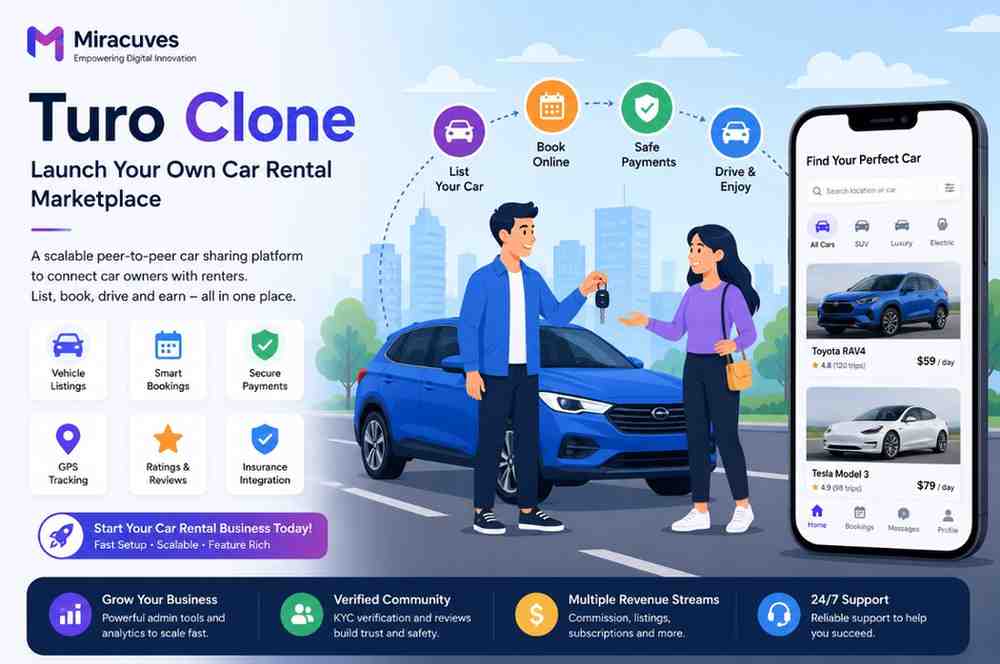
A Turo clone app is a ready-made car rental marketplace solution designed to help businesses launch a peer-to-peer vehicle-sharing platform quickly. The platform allows car owners to list vehicles while renters can browse, book, and manage rentals through mobile or web applications.
Instead of building an entire marketplace infrastructure from scratch, businesses use a pre-built Turo clone solution to reduce development costs and accelerate launch timelines.
Modern Turo clone platforms typically include:
- Renter applications
- Vehicle owner dashboards
- Admin management systems
- Secure payment gateways
- Booking calendars
- Driver verification
- Ratings and reviews
- GPS and map integrations
- Analytics dashboards
- Commission management
The goal is to create a scalable ecosystem where both vehicle owners and renters can interact securely and efficiently.
Why Entrepreneurs Are Investing in Peer-to-Peer Car Rental Platforms
The biggest advantage of peer-to-peer car-sharing is that businesses do not need to own large fleets of vehicles. Instead, the marketplace operates using user-generated inventory where vehicle owners monetize idle cars.
This model creates several advantages:
Lower Startup Costs
Traditional rental companies require large investments in vehicles, parking, maintenance, and operational infrastructure. A marketplace-driven platform reduces these capital requirements significantly.
Faster Expansion
Since users add vehicles to the platform, businesses can scale into multiple cities without purchasing additional inventory.
Recurring Revenue Opportunities
A Turo-like marketplace can generate income through:
- Booking commissions
- Service fees
- Insurance add-ons
- Premium listings
- Subscription packages
- Delivery charges
- Cancellation fees
Better User Convenience
Users gain access to flexible booking experiences, wider vehicle selection, transparent pricing, and mobile-first rental management.
Core Features Every Turo-Like Platform Should Include
A successful car-sharing marketplace requires more than vehicle listings. The platform needs workflows that support renters, hosts, and administrators simultaneously.
Features for Renters
Renters expect a smooth and secure booking experience with features such as:
- Advanced vehicle search
- Location-based filtering
- Real-time availability
- Secure payments
- Trip scheduling
- Booking history
- Reviews and ratings
- Notifications and reminders
Features for Vehicle Owners
Hosts need tools to manage vehicles and earnings effectively:
- Vehicle listing controls
- Availability calendars
- Dynamic pricing
- Booking approvals
- Earnings tracking
- Vehicle analytics
- Payout management
Features for Admins
The admin panel manages overall marketplace operations:
- User management
- Commission settings
- Booking monitoring
- Fraud prevention
- Analytics dashboards
- Dispute handling
- Vehicle verification workflows
Without strong admin workflows, scaling a peer-to-peer marketplace becomes difficult.
Why Startups Prefer Ready-Made Turo Clone Solutions
Custom app development can take months of engineering, testing, and deployment. For startups validating a business model, this often delays market entry and increases operational risk.
A ready-made Turo clone solution provides a faster launch path because core systems are already developed and tested.
Faster Time-to-Market
Businesses can launch quickly with pre-built booking engines, payment systems, and marketplace workflows.
Reduced Development Complexity
Instead of building every feature from scratch, startups can focus on branding, partnerships, and customer acquisition.
Easier Customization
Modern clone solutions support custom branding, API integrations, multilingual support, and feature upgrades.
Scalable Infrastructure
Cloud-ready architecture helps platforms scale as bookings and user traffic increase.
Technology Behind a Modern Car Rental Marketplace
A scalable Turo-like platform typically combines mobile apps, backend systems, cloud infrastructure, and third-party APIs.
Common technologies include:
- Flutter for Android and iOS apps
- Laravel or Node.js backend systems
- MySQL or PostgreSQL databases
- Google Maps API integration
- Payment gateway APIs
- Push notification systems
- Cloud hosting infrastructure
Some advanced platforms also integrate AI-powered pricing engines, predictive maintenance systems, and recommendation algorithms to improve user experience.
Challenges in Building a Car Rental Marketplace
Launching a peer-to-peer rental platform involves operational and technical challenges that founders should prepare for early.
Common challenges include:
- Insurance partnerships
- User verification
- Vehicle quality control
- Fraud prevention
- Damage claim workflows
- Customer support operations
- Regional compliance regulations
The strongest platforms focus heavily on trust, safety, and operational transparency.
How Miracuves Helps Entrepreneurs Launch Turo-Like Platforms
Miracuves provides a white-label Turo clone solution designed for startups and mobility businesses looking to launch scalable peer-to-peer car rental marketplaces.
The platform includes renter apps, host dashboards, admin panels, booking workflows, payment integrations, GPS systems, analytics tools, and deployment support. Businesses can customize branding, manage commissions, integrate APIs, and scale operations through a flexible marketplace infrastructure.
Miracuves also supports source-code ownership, mobile app deployment, backend setup, and publishing assistance for Android and iOS applications.
Final Thoughts
Peer-to-peer car-sharing platforms are transforming how people access transportation. Entrepreneurs no longer need massive fleets to build a scalable rental business. Marketplace-driven mobility apps now allow businesses to connect vehicle owners and renters through secure digital ecosystems.
A ready-made Turo clone solution helps startups launch faster, reduce development risk, and focus on growth rather than rebuilding standard marketplace infrastructure from scratch.
For founders entering the mobility industry, choosing the right technology foundation can play a major role in long-term scalability and operational success.