How to Choose SEO Service Sydney That Drives Real Business Growth
-

- March 10th, 2026
- 444 views

👉 Best IPTV Services 2026 – 10,000+ Channels, 4K Quality – Start Free Trial Now
Choosing the right SEO service Sydney can change how customers find a business online and directly affect revenue and growth. This guide compares provider types, explains trade-offs, and gives a checklist to evaluate options so local decision-makers can pick a service that fits goals and budget.
- Detected intent: Commercial Investigation
- Primary focus: how to evaluate and choose an SEO service in Sydney
- Includes a named checklist (SCOPE), a short real-world scenario, practical tips, and common mistakes
- Primary keyword: SEO service Sydney
SEO service Sydney: Why local SEO providers matter for business growth
Local visibility is the first step to traffic and customers: an effective SEO service Sydney aligns search optimization with local customer behavior, maps, and platform signals. For many small and medium businesses, organic search remains one of the highest-intent traffic sources — investing in the right provider improves discoverability, conversions, and long-term cost-per-acquisition.
Types of SEO providers and trade-offs
Understanding provider categories helps match capabilities to business needs. The main options are:
- In-house SEO — Best for businesses with ongoing content and technical needs. Trade-off: higher fixed cost, slower ramp-up.
- Full-service SEO agencies — Offer strategy, content, technical SEO, and link-building. Trade-off: higher retention fees but broader expertise.
- Specialist consultants or freelancers — Good for focused tasks like technical audits or local SEO optimizations. Trade-off: limited capacity and possibly inconsistent delivery.
- Performance or growth-focused firms — Aim for ROI-driven campaigns with agreed KPIs. Trade-off: often stricter contract terms and prioritized service tiers.
Common trade-offs and mistakes
- Expecting rapid rankings without investment in content and technical fixes.
- Choosing a provider based only on price — cheap solutions often skip foundational work.
- Failing to define measurable goals (traffic, leads, revenue) before hiring.
How to evaluate local expertise: indicators for Sydney-specific performance
Local knowledge matters. Evaluate candidates on these criteria:
- Experience with local business categories and platforms (Google Business Profile, local directories).
- Case studies showing traffic and conversions growth, not just ranking screenshots.
- Understanding of technical constraints common in Australian hosting and CMS choices.
- Clear reporting cadence and KPIs aligned with business goals.
Local SEO focus: local SEO for Sydney businesses
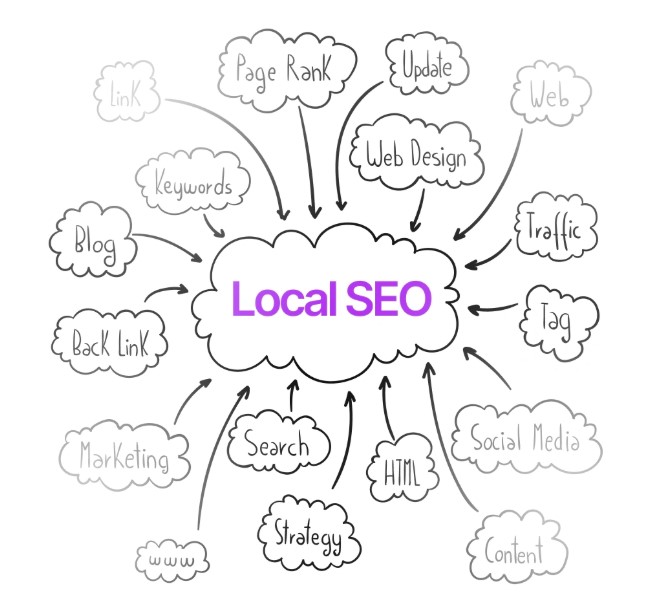
Local optimization is a distinct subset of SEO. Important tactics include Google Business Profile optimization, consistent NAP (name, address, phone) across directories, local content that answers city-specific queries, and local link-building from community or industry sites.
SCOPE checklist — a practical hiring framework
Use the SCOPE checklist to structure vendor evaluation. SCOPE stands for:
- Strategy: Is there a documented roadmap that ties SEO work to business goals?
- Content: Does the provider plan authority content and conversion-focused copy?
- On-page & technical: Are technical audits, structured data, and page performance included?
- Promotion: What is the backlink and local outreach strategy?
- Evaluation: Are KPIs, reporting intervals, and transparency defined?
Use the checklist as an RFP addendum: ask prospective providers to answer each SCOPE item with examples and deliverables.
Real-world scenario: a Sydney cafe increases bookings
Scenario: A small café near Bondi had low walk-in discovery for new visitors. An SEO service Sydney provider audited the site, fixed mobile load speeds, added schema for local business and menu, optimized Google Business Profile, and published neighborhood guides targeting 'coffee near Bondi Beach' queries. Within four months, organic directions and search-driven reservations grew by 38%, and weekend bookings improved — demonstrating how local SEO work can convert search visibility into revenue.
What to ask potential providers — key RFP questions
- What measurable outcomes will be delivered in 3, 6, and 12 months?
- How are technical issues prioritized and resolved?
- Who owns content and backlinks created during the contract?
- What reporting and analytics access will be provided?
- How does pricing break down between setup, monthly work, and ad-hoc tasks?
Practical tips for hiring and working with an SEO partner
- Define clear business goals: leads, phone calls, bookings, or e-commerce revenue — not only rankings.
- Require an initial technical audit and action plan before signing long-term contracts.
- Set transparent KPIs and a reporting schedule with access to the raw analytics data.
- Maintain an internal point-person to coordinate content approvals and local knowledge.
- Budget for content production — great content amplifies technical SEO work.
Measuring success and realistic timelines
SEO results are cumulative. Expect initial technical and local profile fixes to show value in 1–3 months, content-driven gains in 3–6 months, and competitive category improvements over 6–12 months. Use conversion-based KPIs (leads, revenue) and not solely position tracking to assess real impact.
For technical best practices and search guidance, refer to Google’s official resources on crawling, indexing, and ranking: Google Search Central.
Core cluster questions (for related articles or internal linking)
- How much does a professional SEO campaign cost for small businesses?
- What is the difference between local SEO and national SEO strategies?
- Which technical SEO fixes have the fastest impact on mobile performance?
- How should a business measure ROI from organic search?
- What are the signs of an underperforming SEO agency?
FAQ: What should a business expect from an SEO service Sydney provider?
Expect a documented plan that ties SEO tasks to measurable business goals, a technical audit, local profile optimization, a content plan, and transparent reporting. Contracts should define deliverables, ownership of content, and cancellation terms.
FAQ: How long until SEO shows results?
Early technical and local-profile improvements can show in weeks; content-driven traffic growth typically becomes measurable in 3–6 months. Competitive categories often require 6–12 months for substantial ranking gains.
FAQ: Can an SEO provider guarantee top rankings?
Reputable providers avoid absolute guarantees. Search results depend on competition, algorithm updates, and resource investment. Look for commitments around deliverables, reporting, and continual optimization instead of rank promises.
FAQ: What is the difference between an SEO audit and ongoing SEO work?
An SEO audit identifies technical, on-page, and content issues and provides prioritized recommendations. Ongoing SEO implements fixes, creates content, builds local signals, and measures results over time.
Choosing an SEO service Sydney requires matching business goals to provider capabilities, using a structured checklist like SCOPE, and tracking conversion-focused KPIs. Avoid common mistakes like choosing only by price or skipping a technical audit — instead, prioritize measurable outcomes and local expertise to make organic search a reliable growth channel.