U.S. Medical Schools: Admissions, Costs & Guide
-

- Published Updated
- 60 views
Choosing the ideal Medical School in the USA: What every student must be aware of
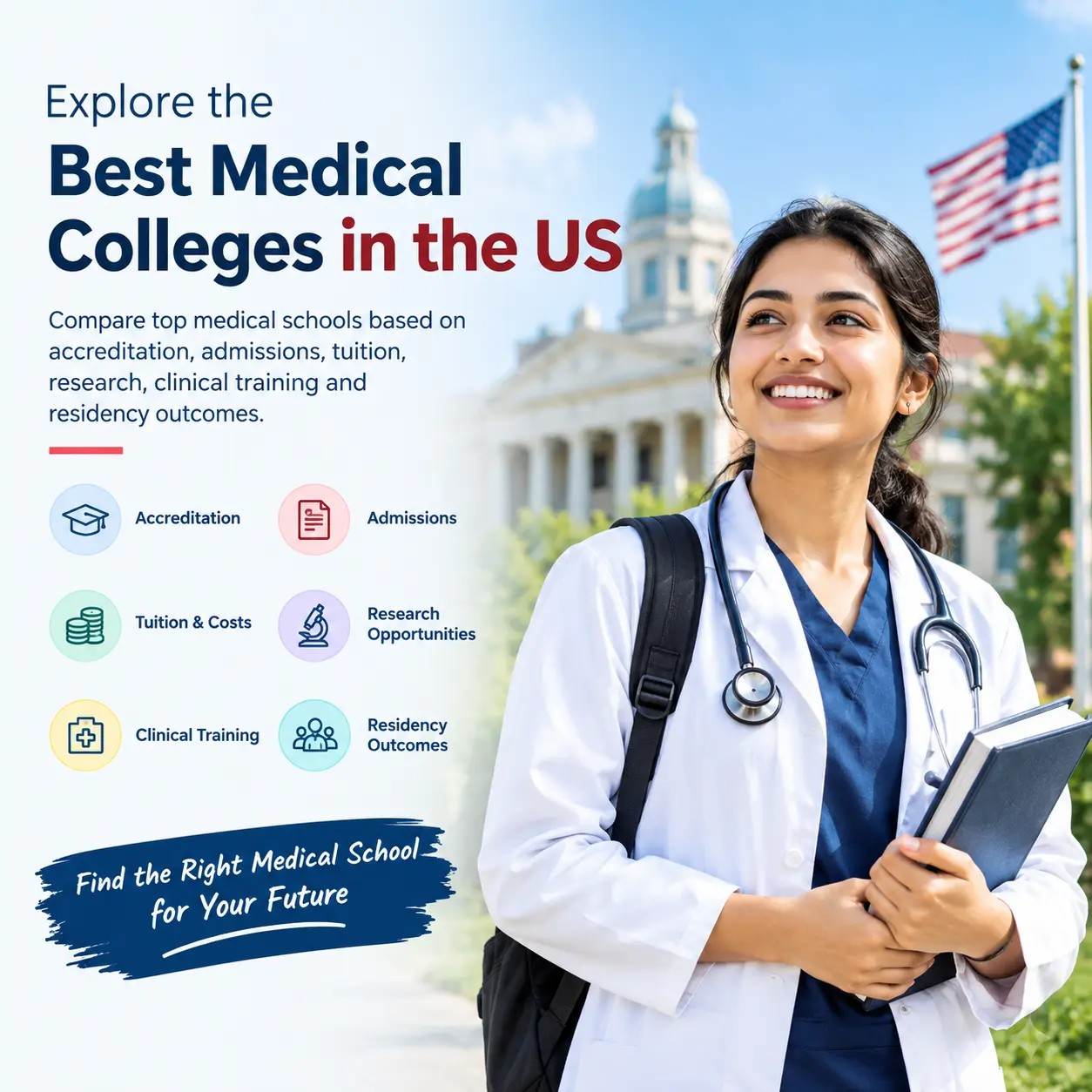
Picking a Medical School an important Step to a Medical Career. When students compare different schools, it is important to look at a variety of aspects. Aside from reputation, the student should look at the application process, tuition, accreditation, curriculum, clinicals, and post graduate employment prospects.
MBBS in America offers an informative platform for students who are looking for Medical colleges in the USA for MBBS & become Medical Doctor.
Understanding the U.S. Medical School System
Students looking for medical schools in the USA can learn about how American Medical Education is different from other countries where you can get an MBBS degree immediately after school.
US confer MD or DO levels. In the vast majority of cases, the prospective medical students have already obtained a college degree and have pre-medical training prior to applying to medical schools. After medical school, there's usually a four-year medical training program and then specialty training (residency).
Knowing this structure helps students determine the best time to start an application.
Admission Requirements for Medical Schools
Expectations vary from school to school, so you should consult the prospective schools' specific requirements. A lot of schools require applicants to earn a bachelor's degree, complete prerequisite science courses, and sit for the Medical College Admission Test.
Other considerations for applications include academic transcripts, letter of recommendations, personal statement, experience within clinical setting or community setting, interviews, etc. Some schools also consider research, leadership, volunteering, or other activities that show dedication to medicine.
International students need to be aware of some specific eligibility requirements. Not every U.S. medical school admits international students. And some schools have pre-requisite coursework that must be taken at a college or university in Canada or the United States.
Tuition and Total Study Cost Comparison
The expense of medical education depend on the institution, your residency status, your location and other personal factors. Tuition is a portion of the total education budget. Take into consideration your housing and food costs, transportation, health insurance, applications, exams and learning material expenses.
Check the calculated cost of attendance for the year you'll be studying. Those applying from abroad should inquire about required forms of proof of funds and then available scholarships and/or funding opportunities.
Thinking through the entire cost of the pathway- not just one year of college- can help students to make more realistic decisions.
Why Accreditation Matters
One thing to consider when choosing a medical school is accreditation. Accreditation is useful for students to confirm that a school is meeting the educational requirements.
Applicants need to verify the current accreditation status of a school through the official accreditation body. They should also verify that the program satisfies the criteria for licensing and postgraduate training track they plan to pursue.
Do not depend solely on rankings, advertising, and promises of guaranteed admission and in-state residency. No medical school can promise each student what their career will be.
Assessment of Curriculum and Clinical Opportunities
Each medical program varies in its clinical instruction, student resources, research, and patient base. Students need to consider whether the curriculum is a combination of applied medical science and supervised clinical practice.
Students can also look into the availability of academic advising, tutoring, wellness services, research labs, and clinical placements in order to determine the right institution for their learning style and future career plans.
Tackling the MCAT and Application Process
For a lot of applicants, prepping for the MCAT is a significant component of the medical school application journey. A consistent study schedule, tons of practice questions, and review of missed questions can reveal weak spots that need attention.
In addition, they should leave ample time to submit your application materials and get recommendation letters, research on the schools' individual requirements, and do interviews. You should research the school information sooner or later because the application deadlines and instructions differ from each other.
Post Medical School Planning
Completeing medical school does not end the journey of becoming a practising physician in the US. Those who graduate need to fulfill all the relevant exam and licensure conditions and complete internship. Residency placement and applications are competitive and no outcome is assured.
Candidates should be aware of how the programme selected will contribute to their overall plans, such as the specialty they might like to do and the country where they hope to practise.
Make a More Informed Decision
Selecting a medical school takes some research and planning. Match those medical school components – accreditation, admissions, overall expense, curriculum, clinical exposure, and career prospects – with your own situation for your four-step list of potential schools.
MBBS in USA provides information and guides on medical colleges in USA, MCAT, MD & DO, USMLE and Residency planning. Use this information as a guideline to find the best college and ensure to check with school and the official website for any updates.
know more details: MBBSInAmerica.com