WDOMS Explained: A Guide for Students Planning to Study Medicine Abroad
-
- Published Updated
- 68 views
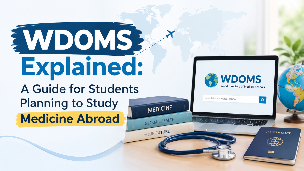
Studying medicine abroad requires careful research, especially when choosing a medical school in another country. Students need to understand an institution's background, accreditation status, and the requirements for pursuing medical training after graduation. One useful resource for this research is the World Directory of Medical Schools (WDOMS).
For students exploring medical schools in the Caribbean and other regions, understanding WDOMS can help them evaluate available information and make more informed decisions about their medical education.
What Is WDOMS?
The World Directory of Medical Schools (WDOMS) is an online directory that provides information about medical schools worldwide. It is maintained through a collaboration between the World Federation for Medical Education (WFME) and FAIMER, a division of Intealth.
The directory helps students, medical regulators, researchers, and other users find information about medical education institutions. A school's listing may include its location, contact information, and other institutional details.
Students planning to study medicine abroad can use WDOMS as an initial resource when researching potential medical schools. However, they should also verify important information through official institutional and regulatory sources.
Why Should Students Check WDOMS Before Applying?
Choosing a medical school involves more than comparing tuition fees or admission requirements. Students should also understand how their chosen institution fits their academic plans and future professional goals.
WDOMS can support this research in several ways.
1. Verifying Medical School Information
Students applying to an international medical school should confirm that they have identified the correct institution. Reviewing its directory entry can help them compare the available details with the information published on the school's official website.
Applicants should check the institution's name, location, and other relevant details before proceeding with an application.
2. Understanding Recognition and Accreditation
One important point is that a WDOMS listing does not automatically mean that a medical school is accredited or officially recognized.
Accreditation and institutional recognition are separate matters that students must investigate independently. They should identify the relevant accrediting organization and verify the school's current status with the appropriate authorities.
This step is particularly important for international students because medical education and licensing rules vary between countries.
3. Researching Future Medical Licensing Pathways
Some students plan to pursue postgraduate medical training or apply for a medical license in the United States, Canada, or another country after graduation.
Before enrolling, applicants should research the requirements that apply to international medical graduates in their intended destination.
For students considering the United States, the Educational Commission for Foreign Medical Graduates (ECFMG) provides information about certification requirements. Applicants should review the relevant Sponsor Notes in WDOMS and confirm that the applicable requirements are met for their intended graduation year.
A directory listing alone does not establish eligibility for ECFMG Certification or guarantee access to a residency pathway.
How to Use WDOMS to Research a Medical School
Students can follow a straightforward process to review an institution's available information.
Visit the official World Directory of Medical Schools.
Search for the medical school's name.
Open the relevant listing and review the available institutional details.
Check the Sponsor Notes section when researching eligibility for specific international certification pathways.
Verify accreditation and official recognition through the appropriate authorities.
Review the licensing requirements of the country where you intend to practise medicine.
Students should complete these checks before making an enrollment decision. If any details are unclear, contacting the institution or relevant regulatory authority can help clarify the information.
What Else Should You Consider When Choosing a Medical School Abroad?
WDOMS is a useful starting point, but it should form only one part of a broader evaluation.
Curriculum and academic structure: Review the subjects covered, program requirements, and educational approach to determine whether the program suits your goals.
Clinical training: Understand where clinical rotations take place, what arrangements are available, and how practical experience fits into the curriculum.
Total educational costs: Consider tuition, accommodation, travel, insurance, and other expenses that may affect your overall budget.
Recognition and licensing: Investigate the requirements of the country where you eventually want to complete postgraduate training or apply for medical licensure.
Student support: Research the academic guidance, administrative assistance, and other services available to international students.
Comparing these factors can help applicants look beyond a school's directory listing and assess whether the institution fits their educational and professional plans.
Researching Caribbean Medical Schools: The Example of CCU
Students exploring medical education in the Caribbean may also consider Columbus Central University (CCU) in their research.
CCU provides information about its medical education programs and institutional details through its official website. Prospective students can use these resources alongside the school's WDOMS listing and independent checks of relevant recognition and accreditation requirements.
Students planning to pursue further training in the United States or Canada should pay particular attention to the rules established by the relevant certification and licensing authorities. Requirements can differ by destination and may change over time, so reviewing current official guidance is essential.
The same research approach applies to any international medical school: examine the available institutional information, verify its status independently, and understand the requirements that relate to your future plans.
Common Mistakes to Avoid When Checking WDOMS
Students can make better decisions by avoiding several common misunderstandings.
Assuming listing means accreditation: WDOMS inclusion is not, by itself, proof of accreditation or endorsement.
Ignoring Sponsor Notes: Students researching specific certification pathways should check the relevant notes and applicable graduation-year requirements.
Relying only on a school's website: Important recognition and licensing details should also be verified through official external authorities.
Overlooking destination-country rules: A medical degree does not automatically meet every country's licensing requirements.
Using outdated information: Applicants should consult current official requirements before enrolling.
Understanding these distinctions can prevent confusion and help students approach the medical school selection process more carefully.
Conclusion
WDOMS is a valuable resource for students planning to study medicine abroad because it provides information about medical schools worldwide. It can help applicants begin their research, review institutional details, and investigate information relevant to their future plans.
However, students should not treat a directory listing as automatic proof of accreditation, recognition, or medical licensing eligibility. Combining WDOMS research with independent verification of accreditation, clinical training, and destination-country requirements provides a more complete basis for choosing a medical school.
Careful research before enrollment can help international students make informed decisions and plan their medical education with greater clarity.