What Separates a Good Web Design Company From One That Just Makes Sites Look Nice
-

- September 22nd, 2026
- 26 views
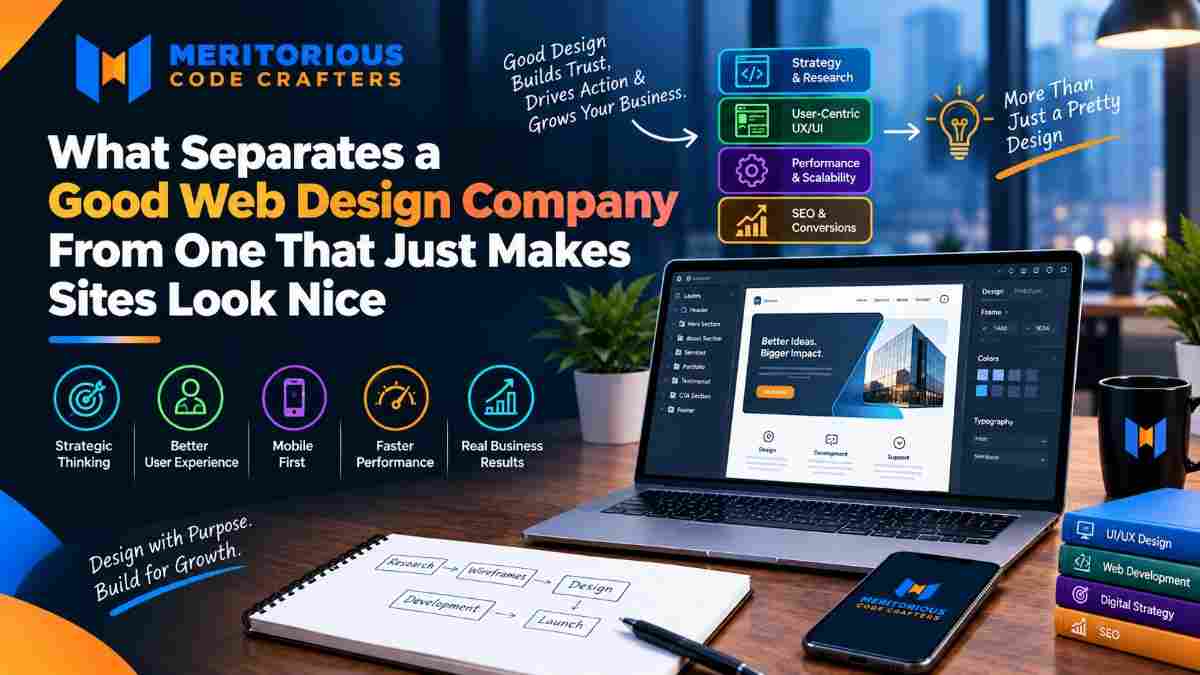
A website can look impressive in a portfolio screenshot and still fail the business behind it — loading too slowly, confusing visitors on mobile, or burying the one action that actually matters to the business under three menus of unnecessary navigation. Plenty of agencies can make something look polished. Far fewer can make something that actually performs once real traffic hits it, and that gap is exactly what separates a genuine web design company from one that's really just a visual design shop with a website attached.
Why "Looks Good" and "Works Well" Aren't the Same Thing
The easiest way to evaluate a web design agency is to ask what they optimize for. A team optimizing purely for visual polish tends to produce heavy, image-dense pages that look striking in a static preview but load slowly in a real browser on a real connection. A team that understands web design as a performance discipline builds with page speed, mobile responsiveness, and conversion in mind from the first wireframe — because a beautiful site that takes six seconds to load loses visitors before they ever see the design at all.
This distinction shows up directly in business outcomes. Page speed affects both user behavior and search rankings; a site that's slow to load measurably converts worse and ranks lower, regardless of how good the visual design underneath it is.
What a Genuine Web Design Process Actually Looks Like
A web design engagement that's set up to produce real results generally follows a specific sequence, not a jump straight to visual mockups:
- Understanding the business goal — what action does this site need visitors to take, and what's currently getting in the way of that
- Information architecture — deciding what pages exist and how they connect, before any visual work begins
- Wireframing — laying out structure and content hierarchy on each page without color or styling distracting from whether the layout actually works
- Visual design — applying brand identity, typography, and color once the structure is validated
- Responsive build — ensuring the design translates correctly across the full range of screen sizes it will actually be viewed on
- Performance optimization — compressing assets, optimizing load order, and testing real-world speed before launch
Agencies that skip straight to step four, treating design as a purely visual exercise, tend to produce sites that need significant rework once the business starts using them and discovers the structure doesn't actually support how customers move through it.
Web Design Doesn't Stop at the Homepage
A common failure pattern is a strong homepage backed by weak supporting pages — an about page, a contact form, or a services page that clearly got less attention because it wasn't the "hero" design piece. But most of a site's actual conversion happens on these secondary pages, not the homepage. A genuine web design partner treats the full site as one coherent system rather than one showcase page plus an afterthought of supporting content.
This is where broader UI/UX Design Services matter — mapping the entire user journey across every page a visitor might land on, not just designing in isolation for the page most likely to appear in a portfolio.
SEO Has to Be Built Into the Design, Not Added Afterward
Search visibility is largely decided by decisions made during the design and build process, not fixed with a plugin after launch. Clean URL structure, proper heading hierarchy, fast load times, and mobile usability are all outcomes of how a site is designed and built, not separate tasks handled by a different team later. A web design company that treats SEO as someone else's problem tends to hand off a site that looks right but structurally fights against ranking well from day one.
Where Web Design Fits Into a Broader Digital Strategy
For most businesses, the website itself is only one piece of a broader online presence. A properly designed site is the foundation, but it usually needs to connect to a content management system that a non-technical team can actually update, and it often needs to integrate with backend systems handling anything beyond static content. This is why comprehensive Web & CMS Development Services matter — a site designed in isolation from how it will actually be managed day to day tends to become difficult to maintain the moment the design agency's engagement ends.
What Great Web Design Sits Under
Web design is itself one part of a broader design discipline. The same principles that make a website effective — structure before visuals, performance as a design requirement, consistency across every page — apply across UX research, mobile app interfaces, and brand identity work more broadly. Businesses evaluating a design partner are often better served looking at their full Designing Services offering rather than a narrow, web-only specialist, since consistent design thinking across every touchpoint tends to produce a more coherent brand experience than siloed teams working on the website, the app, and the brand identity separately.
Questions Worth Asking Before Hiring a Web Design Company
- Do they show real load-time and performance data from past projects, or only visual screenshots?
- Is their design process structured — wireframes and information architecture before visual mockups — or do they jump straight to color and layout?
- Can they explain how SEO fundamentals get built into the site structure itself?
- Do they design for the full site, including secondary pages, or mostly the homepage?
- Do they understand how the site will be managed and updated after launch, or does the engagement end at handoff?
The Bottom Line
A good web design company isn't judged by how a homepage screenshot looks in a pitch deck — it's judged by how the finished site actually performs once real customers are using it on real devices with real connection speeds. Businesses that choose a partner who treats structure, performance, and SEO as design requirements, not afterthoughts, consistently end up with sites that convert better and need far less rework down the line.
For businesses evaluating their options, working with a team like Meritorious CodeCrafter that treats web design as a performance discipline rather than a purely visual one tends to produce a site that does more than just look good in a portfolio.