What Website-Wide Heading Problems Reveal About CMS Templates
-

- Published Updated
- 63 views
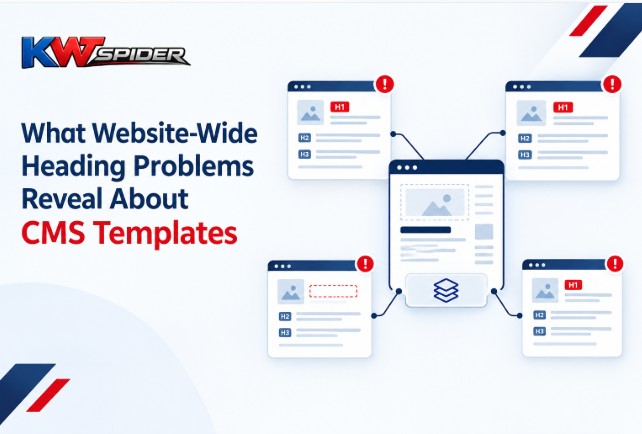
Heading troubles are routinely treated as minor SEO problems, but when similar errors appear in dozens of URLs, the motivation may also lie in the content-handling machine (CMS): H1 missing titles, repeated titles and incorrect title ranges- problems with templates responsible for creating page content you can suggest.
A template error can affect the weight of pages. The identification of these patterns enables the discovery of structural themes that may cross individual network surface opinions.
Why Heading Issues Appear Across Multiple Pages
Most websites use templates to keep layouts consistent across blog posts, product pages, category archives, and landing pages. These templates generate heading factors that include web page titles and section titles.When a template is incorrectly configured, the same difficulty can manifest in its use on every page. For example, a blog template might display an object identifier called H1 while assigning the same title phrase to a promotional banner.An extensive crawl of websites can well demonstrate those repetitive troubles in addition to examining individual URLs.
What Heading Patterns Reveal About CMS Templates
Multiple H1 Tags on Similar Pages
Multiple H1 elements aren’t a regular SEO problem but useless or repetitive titles can also indicate an inconsistent template layout.For example, product pages can use a product call-out as an H1, while a shared promotion page additionally uses an H1. If this pattern is found in multiple URLs, the template can consider their purpose and assign an outside header phase.Reviewing the affected pages helps determine if the problem is coming from templates or content entries.
Missing H1 Headings Across a Page Group
When an entire group of pages lacks an H1, the problem may involve a shared template rather than missing content. A CMS might display the page title visually while rendering it as ordinary text instead of a heading element.Checking the page’s HTML source can help identify whether the title field or template logic is responsible.
Identical Headings Across Different URLs
Repeating titles allow you to track how the CMS handles dynamic content. If multiple category pages have similar headings despite covering different topics, the template may use fixed labels instead of generating relevant text.Iterations are done daily for navigation and shared interface elements. The problem occurs when headings meant to describe specific content are repeated across unrelated pages.
Incorrect Heading Hierarchy
A template may assign heading levels based on visual appearance rather than document structure. For example, a section heading can truly use H4 because that tag corresponds to a suitable font size.This sample indicates that configuration options can additionally impact the HTML hierarchy. CSS allows you to control the heading look without requiring a degree next to the point header.
How Website Crawling Identifies Template Problems
"It takes time to manually inspect each URL, mainly on large websites. A technical search engine marketing crawler gathers headline facts across multiple pages to find common troubles.KWT Spider evaluates the back titles along with various technical Search Engine marketing factors. Grouping URLs through web page types or templates makes it easier to distinguish isolated bugs from broader structural problems.The review specializes in the absence of the H1 factor, repeated titles and incorrect title phrases. Comparing affected pages with skillfully structured examples can identify motives.However, automatic move records may not display the exact template responsible. It is necessary to regularly inspect the HTML and CMS configuration before making changes.
Fix the Template Before Editing Every Page
Correcting individual pages may address the symptoms of a shared template problem, but the issue can return when the CMS generates new pages using the same faulty configuration.Instead, identify the affected template, correct its heading structure, and test representative URLs. Check that page titles display correctly and section headings follow a logical hierarchy.After deployment, run another crawl to verify the changes across different page types, including articles, product pages, and category archives. This helps confirm that the template correction has resolved the recurring issue rather than fixing only a few individual pages.
Conclusion
Website-wide heading problems can reveal weaknesses in CMS templates, dynamic content generation, and HTML structure. These issues may affect multiple pages and create inconsistencies in how content is organized.Recognizing recurring patterns helps identify the source of errors and apply lasting fixes. Correcting the underlying template can improve heading consistency across the website, reduce repetitive manual work, and prevent the same problems from appearing on newly generated pages.