Custom White Label NFT Marketplace Development Guide for Brands
-

- February 23rd, 2026
- 1,407 views

FREE SEO Topical Map Generator: Find Your Next Content Ideas
White label NFT marketplace development helps organizations launch branded, feature-rich marketplaces without building every component from scratch. This approach enables faster time-to-market while supporting custom branding, token standards, wallet integration, and business rules tailored to different audiences.
White label NFT marketplace development balances off-the-shelf marketplace modules with customizable UI/UX, smart contracts, and integrations. Key decisions include blockchain and token standards (ERC-721, ERC-1155), custody and wallet strategies, KYC/AML compliance, payment rails, and scalability approaches such as layer-2 solutions and IPFS for asset storage.
White label NFT marketplace development: core benefits and use cases
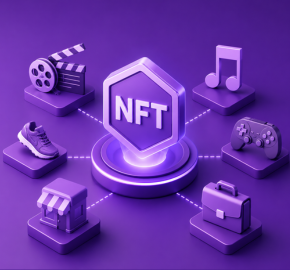
White label marketplaces let brands, publishers, creators, and communities deploy tailored NFT platforms while preserving brand identity and control over user experience. Common use cases include digital art galleries, gaming asset markets, ticketing platforms, collectibles stores, and corporate loyalty programs. Benefits include faster deployment, repeatable architecture, and the ability to integrate bespoke royalty and licensing rules.
Essential technical components
Blockchain and token standards
Choosing a blockchain affects fees, throughput, and developer tooling. Popular options include Ethereum and compatible layer-2 networks, Solana, and other EVM-compatible chains. Token standards such as ERC-721 (single-edition NFTs) and ERC-1155 (semi-fungible / batchable assets) influence smart contract design and marketplace logic. For authoritative resources on token standards and best practices, consult the Ethereum Foundation's developer documentation: https://ethereum.org.
Smart contracts and on-chain logic
Smart contracts should define minting flows, transfer mechanics, royalties (ERC-2981 or custom royalty logic), marketplace escrow, and auction mechanics. Audited contracts and upgradeability patterns (proxy patterns) reduce risk when deploying production marketplaces.
Storage and metadata
Decentralized storage (IPFS, Arweave) is commonly used for NFT metadata and assets to reduce central points of failure. Hybrid architectures may combine decentralized storage with CDN caching for performance.
Security, compliance, and governance
Security practices
Security measures include third-party smart contract audits, secure key management, hardware wallet compatibility, rate limiting, and monitoring for suspicious activity. Follow standards and recommendations from recognized security audit firms and open-source communities.
Regulatory considerations
Regulatory environments vary by jurisdiction. Consider anti-money laundering (AML) and know-your-customer (KYC) requirements where applicable and monitor guidance from regulators such as the U.S. Securities and Exchange Commission (SEC), financial conduct authorities in the EU, and the Financial Conduct Authority (FCA) in the UK. Intellectual property rights and licensing should align with guidance from organizations like the World Intellectual Property Organization (WIPO).
User experience and integrations
Wallets and custody
Support a range of wallets (browser extensions, mobile wallets, custodial options) and define whether the marketplace will offer custodial accounts, non-custodial flows, or a hybrid model. Clear UX around private key management and recovery reduces user risk.
Payment rails and fiat on-ramps
Integrating fiat payment rails, card processing, and third-party on-ramp providers can broaden user accessibility. Consider payout workflows, tax reporting needs, and regional payment preferences.
Analytics and admin tools
Admin dashboards for listings, royalties, dispute resolution, and analytics are important for operational control. Reporting features help with tax, accounting, and business intelligence.
Scalability, performance, and operations
Layer-2 and sidechains
Layer-2 solutions and sidechains can reduce transaction costs and improve throughput. Evaluate trade-offs around decentralization, liquidity fragmentation, and cross-chain interoperability.
Maintenance and support
Operational planning should include bug fixes, contract upgrades, security patches, and user support. SLAs for uptime and incident response support long-term reliability.
Customization, branding, and extensibility
White label solutions typically offer customizable UI themes, domain branding, and extensible modules for auctions, drops, bundles, and subscription access. Modular architectures that separate marketplace logic from presentation simplify future feature additions.
Selecting a provider or development strategy
When choosing a vendor or deciding to build in-house, evaluate prior marketplace deployments, security track record, smart contract audit history, ability to integrate with wallets and payment partners, and support for compliance workflows. Request technical documentation, architecture diagrams, and references where available.
Deployment checklist
- Confirm blockchain and token standard choices.
- Complete smart contract audits and penetration testing.
- Implement KYC/AML and tax reporting workflows as required.
- Provide wallet options and clear user instructions for custody.
- Set up monitoring, logging, and incident response plans.
- Plan for scalability with caching, CDNs, and optional layer-2 integration.
Conclusion
White label NFT marketplace development enables organizations to launch customized, secure, and scalable marketplaces while leveraging proven components. Careful choices around blockchain, token standards, security, compliance, and integrations reduce operational risk and enhance user trust.
FAQ
What is white label NFT marketplace development?
White label NFT marketplace development delivers a prebuilt, customizable marketplace platform that organizations can brand and configure for their own needs. It typically includes smart contract templates, front-end themes, wallet integrations, and administrative tools.
Which token standards should be supported?
ERC-721 and ERC-1155 are widely used token standards; additional standards for royalties (e.g., ERC-2981) and cross-chain bridges may be considered depending on the marketplace model.
How are compliance and KYC handled for NFT marketplaces?
Compliance varies by jurisdiction. Many marketplaces integrate third-party KYC/AML providers and implement transaction monitoring. Consult relevant regulators (SEC, FCA, and local authorities) for jurisdiction-specific requirements.
How long does white label NFT marketplace development take?
Development timelines depend on customization, integrations, audits, and regulatory setup. Projects can range from a few weeks for basic deployments to several months for complex, fully integrated marketplaces.
Is white label NFT marketplace development secure?
Security depends on implementation. Best practices include audited smart contracts, secure key management, penetration testing, and operational monitoring to reduce the risk of vulnerabilities.
Related Posts